

Buyer Briefing
7 min read · 1,318 words
Benefits of cashew fruit include providing vitamin C, antioxidants, carbohydrates, fluids, and naturally occurring plant compounds. Also called the cashew apple, this tropical fruit grows above the cashew nut. It can be consumed fresh or processed into juice, smoothies, preserves, and other beverages.
- Cashew fruit is also called cashew apple.
- It is different from the familiar cashew nut.
- Cashew fruit is particularly notable for vitamin C.
- It also contains naturally occurring antioxidant compounds.
- Fresh cashew apples have a high water content.
- The fruit can be eaten fresh or processed into juice.
- Cashew juice offers a convenient way to experience the tropical fruit.
- Packaged juice nutrition varies by formulation.
- Consumers should check sugar, ingredients, and serving size on the label.
- Cashew fruit works best as part of a varied and balanced diet.
Benefits of cashew fruit include providing vitamin C, antioxidants, carbohydrates, and other naturally occurring plant compounds. Also known as the cashew apple, this colorful tropical fruit grows above the cashew nut and has a distinctive sweet, tart, and slightly astringent taste.
Although cashew nuts are widely consumed worldwide, the fruit itself is less familiar to many consumers. In regions where cashew trees grow, cashew apples can be eaten fresh or processed into juice, beverages, jams, and other products.
So, what are the benefits of the cashew fruit, and what makes it different from the cashew nut? This guide explores its nutrition, potential benefits, uses, and how cashew fruit juice can fit into a varied diet.
I/ What Is Cashew Fruit?
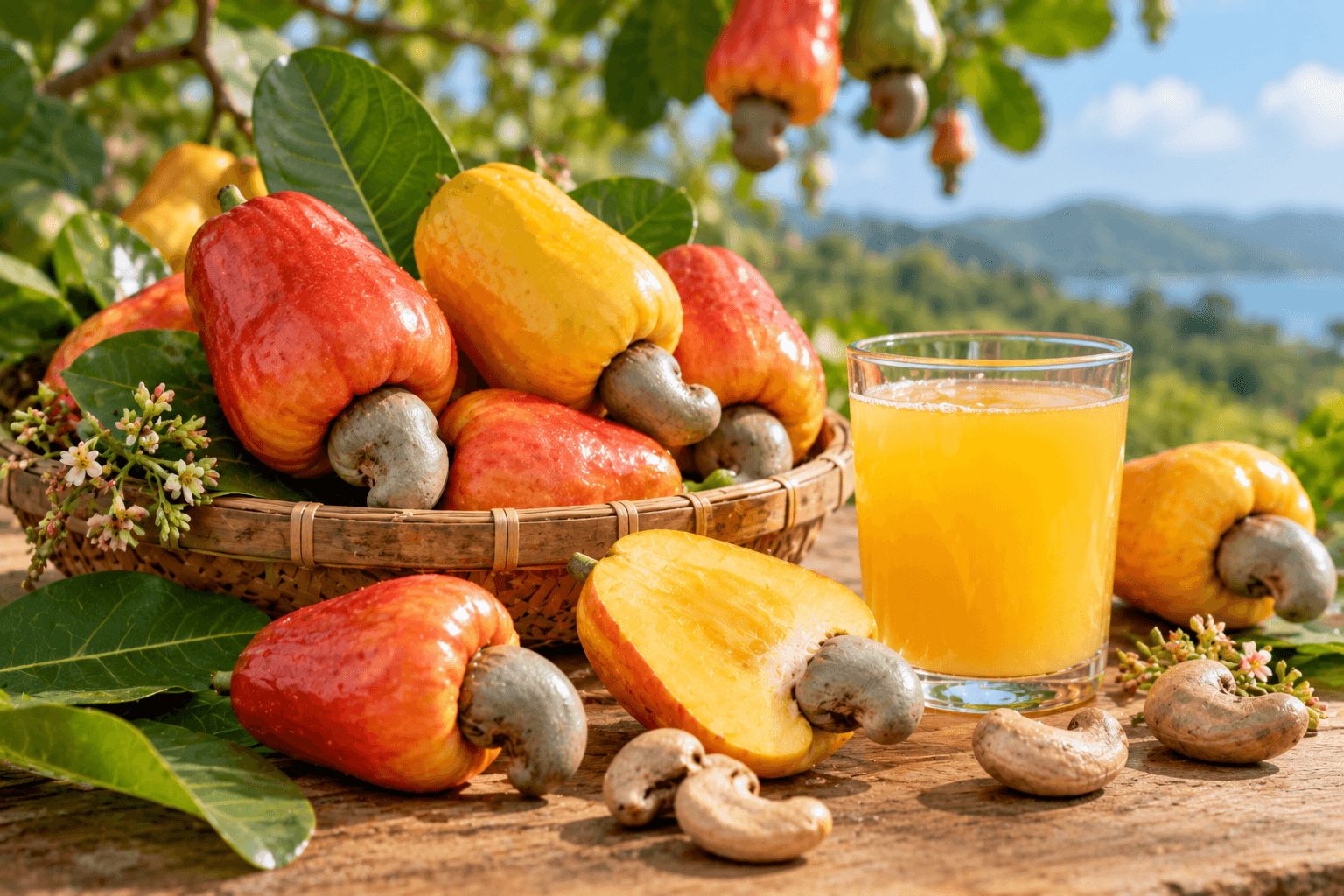
Cashew fruit, commonly called the cashew apple, is the fleshy structure attached to the cashew nut.
The cashew tree (Anacardium occidentale) originated in tropical South America. Today, cashew trees are cultivated in many tropical regions around the world.
The cashew apple usually develops a yellow, orange, or red appearance when mature. Its flesh is juicy and has a distinctive sweet-tart flavor.
Interestingly, the familiar cashew nut grows outside the bottom of the cashew apple. This unusual structure makes the cashew tree visually different from many other fruit-bearing plants.
Is Cashew Fruit the Same as Cashew Nuts?
No. Although they come from the same plant, cashew fruit and cashew nuts are different parts of the cashew tree.
The cashew apple is the fleshy, juicy portion. The cashew nut is the seed attached to its lower end.
Their nutritional characteristics also differ. Cashew nuts are known for fats, protein, copper, and other minerals. Cashew fruit is particularly notable for its vitamin C and juicy fruit composition.
Understanding this distinction is important when discussing the benefits of cashew fruit.
II/ What Nutrients Are Found in Cashew Fruit?
The nutritional composition of cashew apples can vary. Factors include variety, growing conditions, ripeness, and processing methods.
However, cashew fruit can provide several important dietary components.
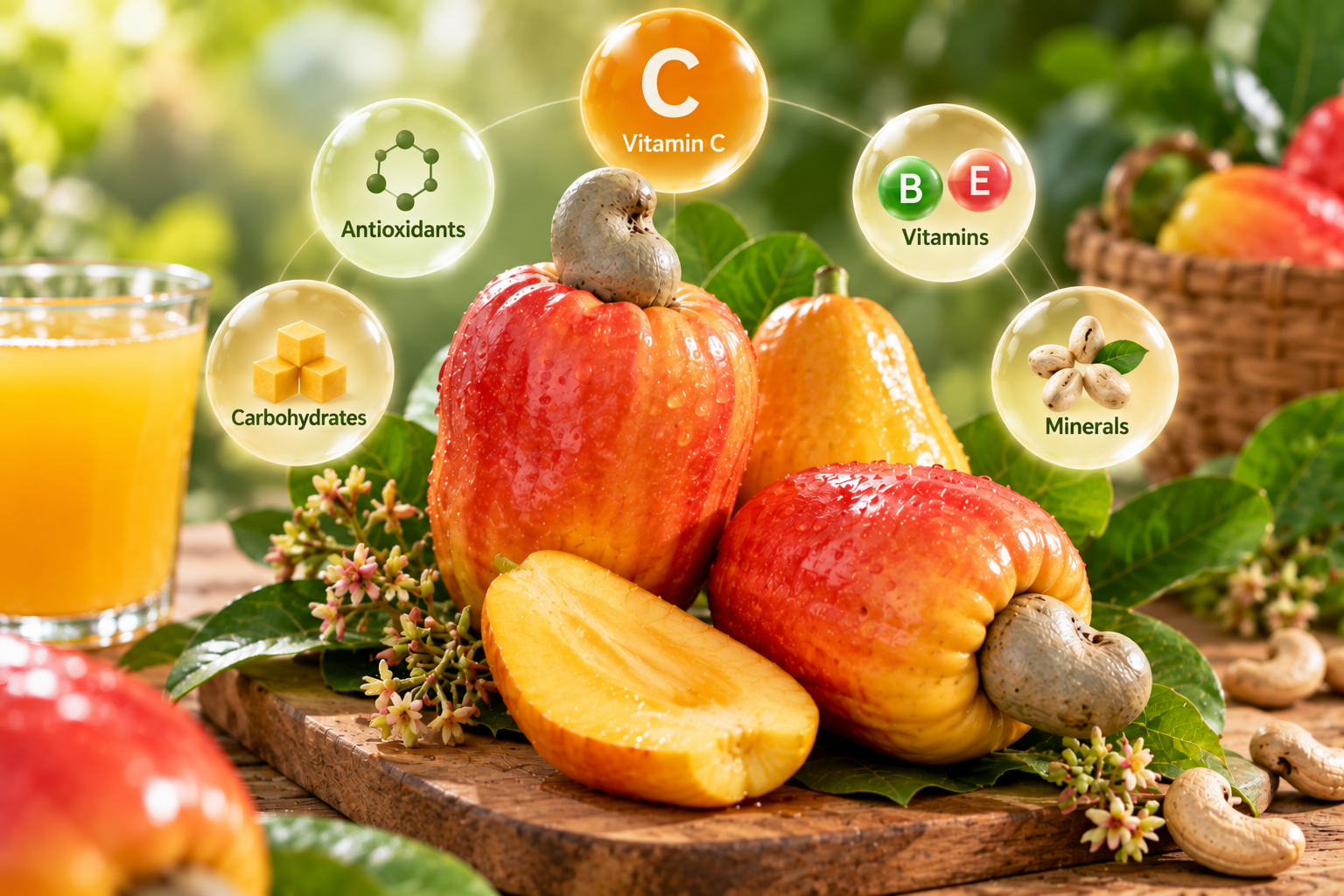
1. Vitamin C
One of the most notable nutritional characteristics of cashew fruit is its vitamin C content.
Vitamin C is an essential nutrient that contributes to normal immune function. It also supports collagen formation and helps protect cells from oxidative stress.
The exact amount can vary significantly between fresh fruit and processed beverages.
2. Antioxidant Compounds
Cashew apples contain naturally occurring plant compounds with antioxidant activity.
Antioxidants help protect cells against oxidative damage caused by free radicals. Fruits and vegetables provide many different antioxidants, which is one reason variety matters in a balanced diet.
3. Carbohydrates
Like many fruits, cashew apples naturally contain carbohydrates, including sugars.
These contribute to the fruit's characteristic sweetness and provide a source of dietary energy.
4. Minerals and Other Plant Compounds
Cashew fruit also contains various minerals and bioactive plant compounds.
However, its nutritional profile should not be confused with cashew nuts. The nut contains considerably more fat and protein than the fleshy fruit.
III/ What Are the Potential Benefits of Cashew Fruit?
The nutritional characteristics of cashew apples make them an interesting addition to a varied diet.
Here are several potential cashew fruit benefits worth knowing.
1. Provides Vitamin C
Vitamin C is perhaps the most notable nutrient associated with cashew apples.
The human body cannot produce vitamin C on its own. Therefore, it needs to come from dietary sources.
Vitamin C contributes to several normal body functions. These include immune function, collagen formation, and protection of cells from oxidative stress.
Cashew fruit can therefore contribute to dietary vitamin C intake.
2. Provides Antioxidants
Cashew apples contain antioxidant compounds that contribute to their nutritional profile.
Oxidative stress occurs when there is an imbalance between free radicals and antioxidant defenses. A varied diet containing fruits and vegetables provides many compounds with antioxidant activity.
Cashew fruit can be one of these dietary sources.
3. Can Contribute to Daily Fluid Intake
Fresh cashew apples have a high water content. Cashew fruit juice can also provide fluids as part of daily beverage consumption.
This makes cashew-based beverages particularly appealing in tropical climates and during warm weather.
However, hydration needs vary between individuals. Water should remain an important part of daily fluid intake.
4. Adds Variety to Fruit Consumption
A balanced diet benefits from variety rather than relying on a single food.
Cashew fruit provides a different flavor and nutritional profile from more familiar tropical fruits. It can therefore expand the range of fruits consumed as part of a varied diet.
Its distinctive sweet and tart character also works well in beverages and blended fruit products.
5. Offers a Distinctive Tropical Flavor
Not every benefit of a fruit needs to be nutritional.
Cashew apples provide a unique sensory experience. Their flavor combines sweetness, acidity, and noticeable astringency.
This makes the fruit suitable for juices and other beverage applications. Processing can also help create a more approachable flavor experience for consumers unfamiliar with fresh cashew apples.
IV/ How Can You Consume Cashew Fruit?
Fresh cashew apples are delicate and highly perishable. This is one reason they may be less familiar internationally than cashew nuts.
In cashew-growing regions, the fruit can be consumed or processed in several ways:
Fresh cashew fruit - eaten when ripe where locally available.
Cashew fruit juice - processed into a convenient beverage.
Smoothies - combined with other tropical fruits.
Jams and preserves - processed for a longer-lasting product.
Blended beverages - paired with other fruit flavors.
Among these options, juice provides a convenient way to experience the distinctive flavor of cashew fruit.

V/ What Is Cashew Fruit Juice?
Cashew fruit juice is produced using the fleshy cashew apple rather than the cashew nut.
The fruit's naturally juicy texture makes it suitable for beverage processing. Depending on the formulation, manufacturers may combine cashew fruit with water or other ingredients to achieve a specific taste and texture.
Cashew juice can retain some of the fruit's characteristic sweet and tart profile. Processing methods and formulation can influence its final nutritional composition.
When purchasing packaged cashew juice, consumers should check:
Ingredient list
Fruit or juice content
Added sugar
Serving size
Calories
Nutrition information
Checking the product label provides a more accurate picture than assuming all cashew beverages have the same nutritional characteristics.
VI/ Cashew Fruit vs. Cashew Nut: What Is the Difference?
Although both come from the same plant, their characteristics are quite different.
Feature | Cashew Fruit | Cashew Nut |
|---|---|---|
Also called | Cashew apple | Cashew seed/nut |
Texture | Juicy and fleshy | Firm and crunchy after processing |
Flavor | Sweet, tart, astringent | Rich and nutty |
Notable nutrition | Vitamin C and plant compounds | Fats, protein and minerals |
Common uses | Juice, fresh fruit, preserves | Snacks, cooking, nut products |
Position | Fleshy portion above the nut | Attached below the cashew apple |
Both can be part of a varied diet, but they should not be treated as nutritionally identical foods.
VII/ VINUT Cashew Juice
For consumers who may not have access to fresh cashew apples, VINUT Cashew Juice provides another way to experience this tropical fruit in beverage form.
Cashew fruit has a distinctive profile that differs from familiar fruits such as mango, orange, or pineapple. Its balance of sweetness, tartness, and tropical character creates an interesting drinking experience.
Packaged cashew juice also makes the fruit more accessible beyond areas where fresh cashew apples are grown.
As with any packaged beverage, consumers should review the product label for its specific ingredients and nutrition information.
VIII/ Are There Any Considerations When Drinking Cashew Fruit Juice?
Cashew fruit can be part of a varied diet, but a few practical considerations are worth remembering.
First, packaged juices can differ considerably in sugar and fruit content. Always check the label before comparing products.
Second, juice generally provides a different eating experience from whole fruit. Processing can also change characteristics such as fiber content.
Finally, cashew fruit should not be treated as a medicine or a solution for specific health conditions. Its value comes from its nutrients and its role within an overall balanced dietary pattern.
IX/ Conclusion
The benefits of cashew fruit primarily come from its nutritional composition. Cashew apples can provide vitamin C, antioxidant compounds, carbohydrates, fluids, and other naturally occurring plant components.
The fruit also brings variety to the diet through its unusual sweet, tart, and slightly astringent flavor. It can be enjoyed fresh where available or processed into juice and other products.
Most importantly, cashew fruit should not be confused with cashew nuts. They come from the same plant but have different structures, uses, and nutritional characteristics.
For consumers curious about tropical beverages, cashew fruit juice provides an accessible way to discover another side of the familiar cashew tree.
FAQ
1. What Are the Benefits of Cashew Fruit?
Cashew fruit provides vitamin C and naturally occurring antioxidant compounds. Its high water content can also contribute to fluid intake. Like other fruits, it can add variety to a balanced diet.
2. Is Cashew Fruit the Same as Cashew Nuts?
No. Cashew fruit, or cashew apple, is the fleshy portion of the plant. The cashew nut is the seed attached below it. They have different textures, uses, and nutritional profiles.
3. Can You Drink Cashew Fruit Juice?
Yes. Cashew apples can be processed into juice and other beverages. When choosing packaged cashew juice, check the ingredient list, fruit content, added sugar, serving size, and nutrition information.
About this article

The VINUT editorial team publishes articles about beverage ingredients, product characteristics, and practical information for readers and international buyers.