
Buyer Briefing
4 min read · 775 words
For HoReCa buyers, pairing RTD tea with food is a key opportunity to enhance menus and meet demand for sophisticated non-alcoholic options. This strategy elevates the dining experience while offering significant operational advantages. RTD teas provide consistency, convenience, and efficiency, allowing businesses to create complementary flavor pairings that drive revenue and guest satisfaction.
- Meet guest demand for sophisticated non-alcoholic options by adding RTD tea to your menu.
- Simplify service and reduce prep time with convenient, ready-to-serve RTD tea formats.
- Deliver consistent, high-quality taste in every serving, eliminating brewing variations.
- Create balanced pairings by complementing, contrasting, or cutting through a dish's flavors.
- Improve operational efficiency and lower labor costs with no brewing or mixing required.
- Enhance your menu and drive revenue by offering curated RTD tea and food pairings.
RTD Tea Food Pairing - The art of food and beverage pairing is evolving. Once dominated by wine lists, modern menus are now embracing a wider spectrum of non-alcoholic options to elevate the dining experience. For hotels, restaurants, cafes, and catering (HoReCa) businesses, ready-to-drink (RTD) tea presents a significant opportunity to meet this demand, enhance culinary offerings, and drive revenue.
As consumer preferences shift towards healthier, more sophisticated non-alcoholic choices, understanding the principles of RTD tea food pairing becomes a valuable skill for beverage buyers. It allows businesses to move beyond simple convenience and create memorable, complementary flavor experiences for their guests.
Why RTD Tea is a Strategic Choice for HoReCa Menus
Beyond its growing popularity, RTD tea offers tangible operational advantages that make it an ideal fit for the fast-paced HoReCa environment. It provides a seamless solution that satisfies both guest expectations and business needs.
Key operational benefits include:
Consistency: Every serving delivers the same high-quality taste and strength, eliminating variations common with freshly brewed beverages.
Convenience: The ready-to-serve format drastically reduces preparation time and simplifies service, especially during peak hours.
Efficiency: With no brewing or mixing required, RTD tea lowers labor costs and allows staff to focus on guest service.
Inventory Management: Stable shelf life and standardized packaging make storage, tracking, and stock rotation straightforward.
These factors make RTD tea a versatile product for full-service restaurants, hotel minibars, cafe grab-and-go displays, and large-scale catering events.
The Principles of RTD Tea Food Pairing
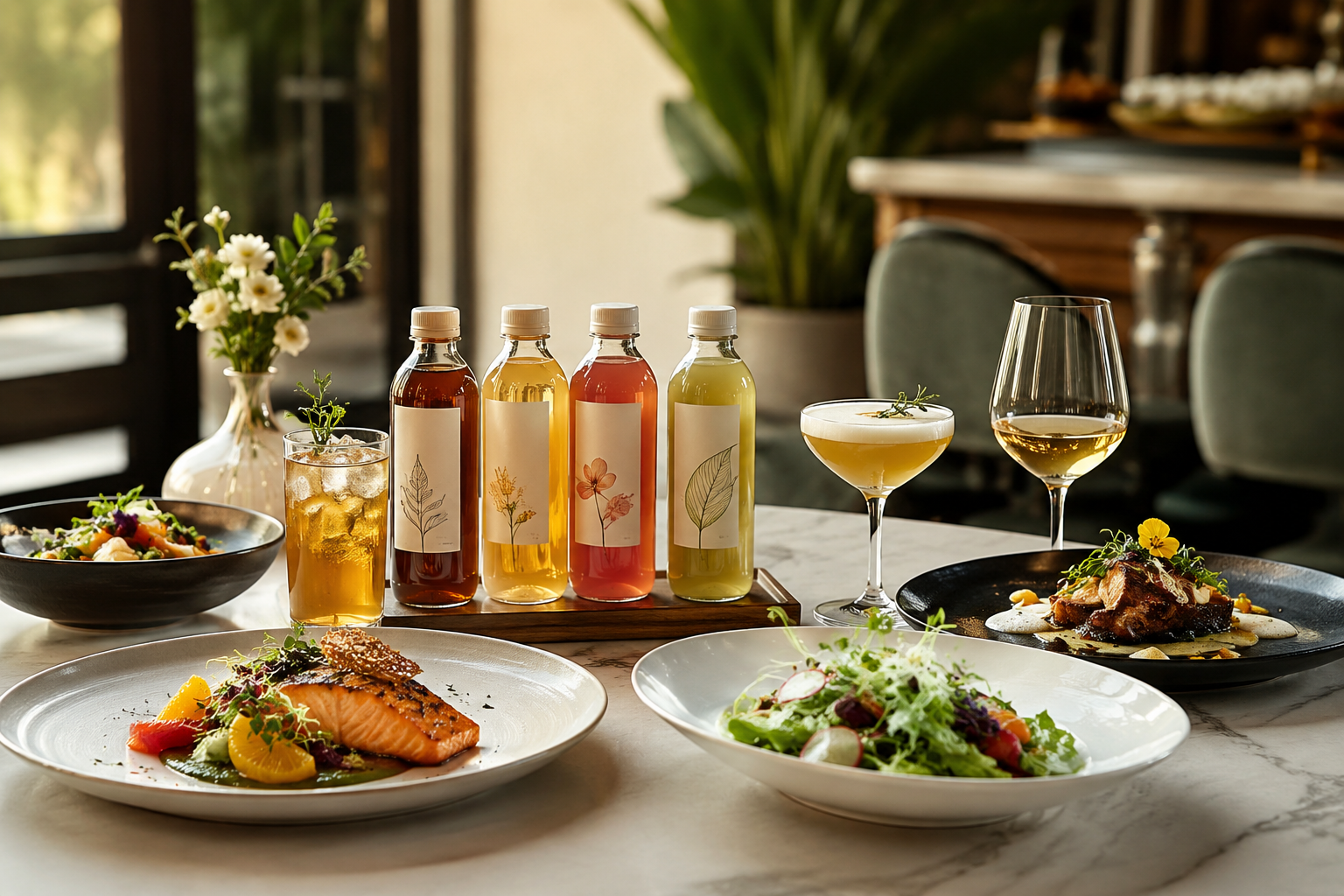
Successful food pairing hinges on creating balance. The goal is to select a beverage that complements, contrasts, or cuts through the flavors of a dish without overpowering it. Key elements to consider are flavor intensity, aroma, sweetness, acidity, and mouthfeel. Different types of RTD tea offer distinct profiles that pair well with a wide range of cuisines.
Green Tea: The Partner for Delicate Flavors
With its light, refreshing, and often grassy notes, green tea is the perfect companion for more delicate dishes. Its clean profile enhances subtle flavors rather than masking them.
Ideal Pairings: Seafood, sushi, fresh salads, light chicken dishes, and vegetable-based meals.
Why it Works: Green tea's gentle character and minimal bitterness cleanse the palate, making it an excellent choice for healthy menus and lunch combinations.
Black Tea: A Robust Companion for Hearty Dishes
Black tea possesses a fuller body and more robust, malty flavors. Its natural astringency, derived from tannins, allows it to stand up to rich and heavily seasoned foods.
Ideal Pairings: Grilled or roasted meats, savory sandwiches, spicy cuisine, and rich bakery products.
Why it Works: The bold character of black tea can cut through fats and balance the intensity of savory, fried, or spicy foods, creating a satisfying and well-rounded experience.
Fruit-Flavored Tea: Versatility for Modern Palates
Fruit-infused teas, such as peach or lemon tea, introduce an additional layer of sweetness and acidity, making them exceptionally versatile. They can bridge the gap between sweet and savory, appealing to a broad demographic.
Ideal Pairings: Spicy Asian cuisine, fried chicken, desserts, and afternoon snacks.
Why it Works: The fruit notes can provide a refreshing contrast to spicy or savory dishes while also complementing the sweetness in desserts. This versatility makes them a popular choice for family dining and casual menus.
A Buyer's Checklist for Sourcing Quality RTD Tea
To successfully integrate RTD tea into your menu, it's essential to partner with a reliable supplier and select products that align with your brand and operational needs. Before making a purchasing decision, HoReCa buyers should evaluate the following criteria:
Flavor Variety: Does the supplier offer a balanced portfolio, including green, black, and popular fruit flavors, to enable diverse food pairings?
Ingredient Quality: Review nutritional information, sugar levels, and caffeine content. Sourcing products made with natural ingredients can appeal to health-conscious consumers.
Packaging Formats: The right packaging enhances both customer experience and operational flow. PET bottles are ideal for room service and grab-and-go, while aluminum cans are perfect for chilled displays and catering. Choosing the right packaging sizes can help your brand scale effectively.
Supplier Reliability: Ensure your supplier can provide consistent quality, stable supply, and necessary certifications. For international sourcing, confirm they can provide all required import documentation and meet regulatory standards.
Unlocking New Revenue Streams
A well-curated RTD tea selection does more than just expand your beverage list; it creates new commercial opportunities. By training staff on basic RTD tea food pairing, you can empower them to upsell and enhance the guest experience. Incorporate RTD teas into set menus, lunch specials, and catering packages to increase average check size and showcase the versatility of your culinary offerings.
As the demand for premium non-alcoholic beverages continues to rise, RTD tea is no longer just an alternative but a destination category. By thoughtfully selecting and pairing these products, HoReCa businesses can delight guests, streamline operations, and build a more profitable beverage program.
FAQ
Why is RTD tea a strategic choice for HoReCa menus?
RTD tea meets growing consumer demand for sophisticated non-alcoholic options and offers significant operational benefits like consistency, convenience, and efficiency, enhancing both guest experience and revenue.
What are the main operational advantages of serving RTD tea in a restaurant or hotel?
The key benefits include consistent quality in every serving, reduced preparation time, lower labor costs, and simplified inventory management due to its ready-to-serve format and stable shelf life.
What is the fundamental principle of pairing RTD tea with food?
The goal is to create balance by selecting a tea that either complements, contrasts, or cuts through the flavors of a dish without overpowering it, considering elements like flavor intensity, aroma, and sweetness.
VINUT Team
VINUT Content Team - Published June 22, 2026
Expert insights on beverages, health benefits, and global beverage industry trends. VINUT is Vietnam's leading product beverage manufacturer.