
Buyer Briefing
5 min read · 1,027 words
Cashews are nutrient-dense foods that provide plant-based protein, unsaturated fats, magnesium, copper, phosphorus, zinc, and iron. When consumed in moderation, cashews can complement a balanced diet and may support heart health, normal body functions, and overall nutritional intake.
- Cashews provide protein, healthy fats, vitamins, and essential minerals.
- Most of the fat in cashews comes from unsaturated fatty acids.
- Cashews provide magnesium, copper, phosphorus, zinc, and iron.
- Moderate portions can fit into a balanced diet and weight-management plan.
- Unsalted cashews are generally preferable when limiting sodium intake.
- Cashews can be used in snacks, salads, smoothies, sauces, and beverages.
Listen to the article summary
AI-generated voice · English · 3:12
Read transcript
Cashews, originally native to Brazil and now cultivated in many tropical regions, are seeds produced by the cashew tree. This tree yields both the familiar cashew nut and a fleshy cashew apple. Cashew nuts are versatile, used in snacks, plant-based milk, sauces, and desserts, while the cashew apple can be processed into beverages and jams. Nutritionally, cashews are a concentrated source of energy, healthy fats, protein, carbohydrates, vitamins, and minerals. According to USDA data, one ounce, or about 28 grams, of raw cashews provides approximately 157 calories, 5.2 grams of protein, 12.4 grams of total fat, and 8.6 grams of carbohydrates. They are particularly noted for their unsaturated fat content and provide important minerals such as magnesium, copper, phosphorus, zinc, and iron. When consumed in appropriate portions as part of a balanced diet, cashews offer several potential health benefits. They may support healthy weight management due to their protein, fat, and fiber content, which can increase satiety, though portion size is crucial given their calorie density. Cashews may also support heart health, as they contain mainly unsaturated fats, and minerals like magnesium and potassium, which are involved in cardiovascular functions. Choosing unsalted cashews is recommended to limit sodium intake. Furthermore, cashews provide essential minerals that support various body processes. Copper aids energy metabolism and iron transport, iron is vital for hemoglobin production, magnesium contributes to muscle and nerve function, and phosphorus supports healthy bones and teeth. They also offer nutrients like zinc, copper, and antioxidant compounds that contribute to normal cellular functions and may support skin and eye health, though they are not a treatment for conditions. For individuals with diabetes, unsalted cashews can fit into many balanced eating patterns due to their protein, healthy fats, and modest carbohydrate content, but portion size and overall diet should be considered. Cashews are highly versatile and can be easily incorporated into your diet. They can be enjoyed as a snack, added to salads, blended into smoothies or sauces, or included in oatmeal and stir-fries. Cashew-based beverages are also an option. However, it's important to remember portion control due to their energy density. People with tree-nut allergies should avoid cashews, and checking nutrition labels for salted or flavored products is advised to manage sodium or sugar intake. In conclusion, cashews combine flavor, convenience, and nutritional value, offering plant-based protein, unsaturated fats, and several important minerals. They are most beneficial when consumed as part of a varied and balanced diet, complementing overall nutritional intake and supporting normal body functions.
Cashew health benefits come from their rich combination of protein, healthy fats, vitamins, and minerals. Known for their creamy texture and mild flavor, cashews are also highly versatile. They can be enjoyed as a snack or incorporated into many everyday recipes.
Originally native to Brazil, cashew trees are now cultivated across many tropical regions. Vietnam has also developed a significant cashew processing and export industry.
But what makes cashews nutritious? This article explores their nutritional profile, potential health benefits, and simple ways to include them in your diet.
I/ What Are Cashews?
Cashews are seeds produced by the cashew tree (Anacardium occidentale). The tree produces both the familiar cashew nut and a fleshy structure known as the cashew apple.
Cashew nuts can be roasted, salted, unsalted, or incorporated into different foods. They are commonly used in plant-based milk, sauces, spreads, desserts, and savory dishes.
The cashew apple can also be processed into beverages, jams, and other food products. This makes the cashew tree valuable for both culinary and commercial applications.
II/ What Is the Nutritional Value of Cashews?
Cashews provide a concentrated combination of energy, healthy fats, protein, carbohydrates, vitamins, and minerals.
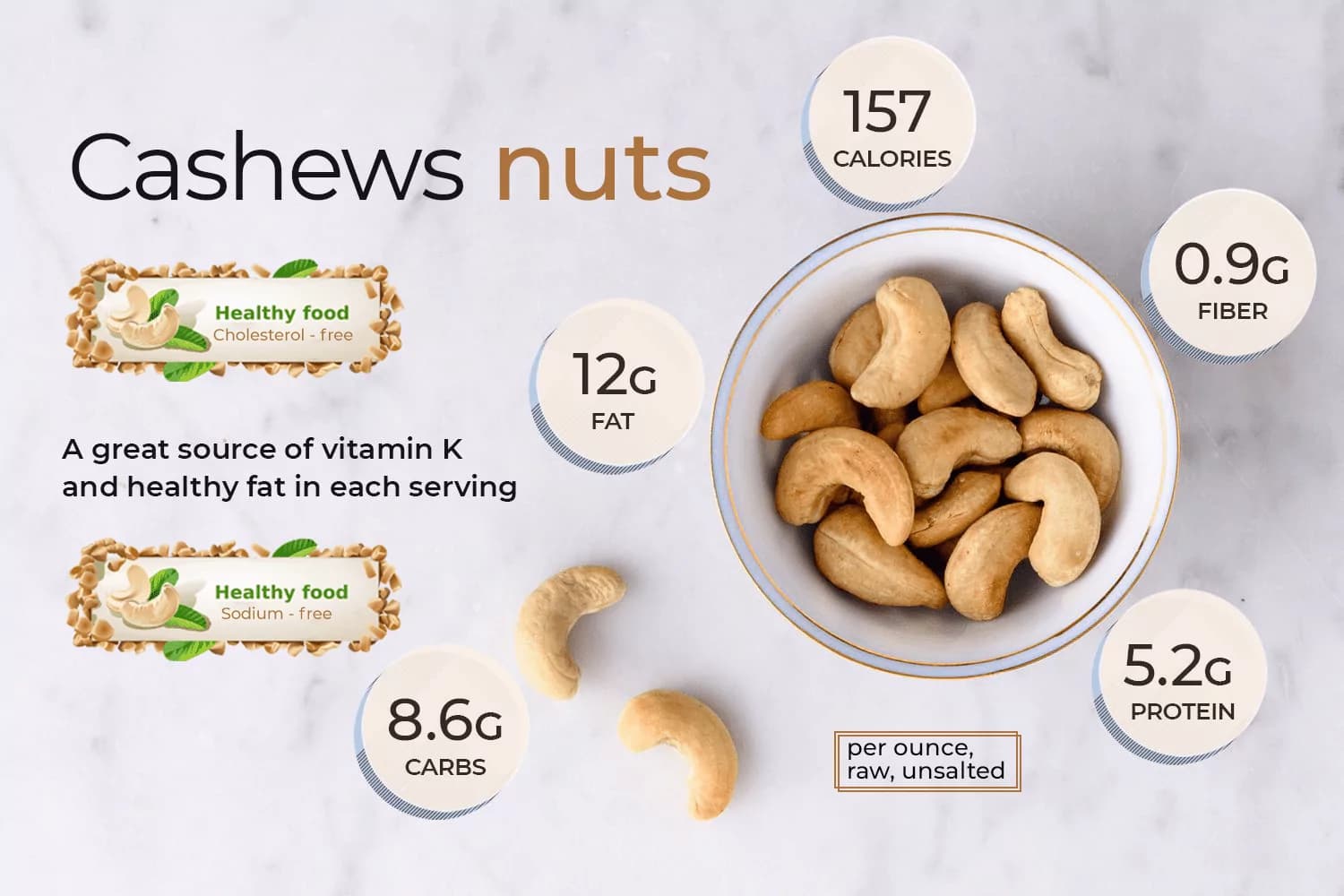
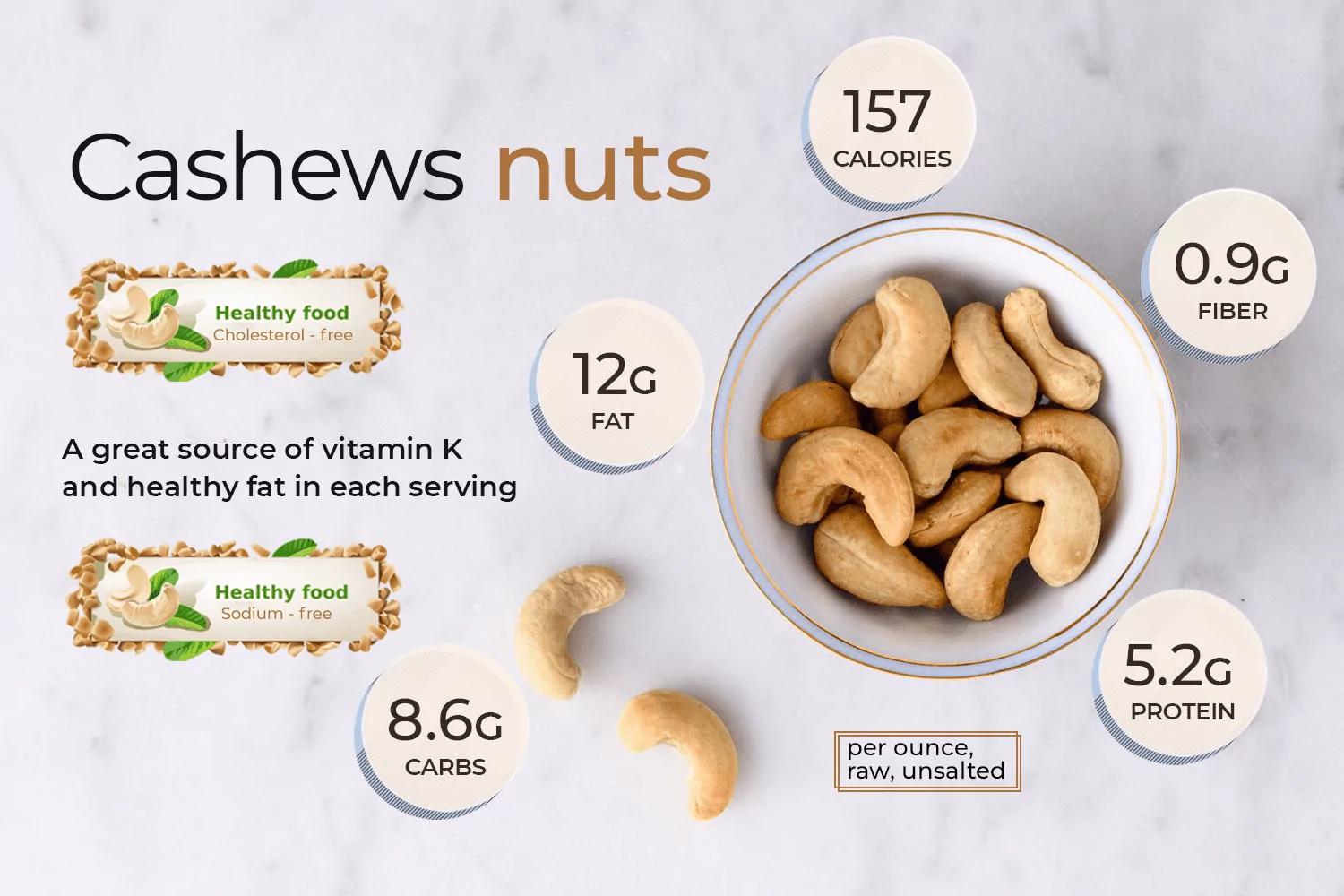
According to USDA data, approximately one ounce (28.35 grams) of raw cashews provides about:
157 calories
8.6 g of carbohydrates
1.7 g of sugar
0.9 g of dietary fiber
5.2 g of protein
12.4 g of total fat
10 mg of calcium
1.9 mg of iron
83 mg of magnesium
168 mg of phosphorus
187 mg of potassium
3 mg of sodium
1.6 mg of zinc
Cashews are particularly known for their unsaturated fat content. They also provide important minerals, including magnesium, copper, phosphorus, zinc, and iron.
Together, these nutrients make cashews a nutrient-dense addition to a balanced diet.
III/ What Are the Health Benefits of Cashew Nuts?
Cashews contain several nutrients associated with normal body functions. When consumed in appropriate portions, they can complement a varied and balanced diet.
Here are five potential benefits of including cashews in your regular eating routine.
1. May Support Healthy Weight Management
Although cashews are calorie-dense, they also provide protein, fat, and some dietary fiber. These nutrients can help make meals and snacks more satisfying.
Cashews can be added to salads, oatmeal, stir-fries, soups, or other dishes. A small portion can also work as a convenient snack between meals.
Portion size remains important because nuts contain a relatively high number of calories.
2. May Support Heart Health
Cashews contain mainly unsaturated fats, including monounsaturated and polyunsaturated fatty acids. Replacing some saturated fats with unsaturated fats can support a heart-healthy eating pattern.
Cashews also contain magnesium and potassium. These minerals are involved in many normal cardiovascular functions.
For the healthiest option, consider choosing unsalted or lightly salted cashews. This can help limit unnecessary sodium intake.
3. Provide Important Minerals for the Body
Cashews are a useful source of copper, magnesium, iron, zinc, and phosphorus. These minerals support several essential processes in the body.
Copper, for example, contributes to normal energy metabolism and iron transport. Iron plays an important role in producing hemoglobin, which carries oxygen through the blood.
Magnesium contributes to normal muscle and nerve function. Meanwhile, phosphorus supports healthy bones and teeth.
Eating cashews alongside other nutrient-rich foods can help create a more varied diet.
4. Provide Nutrients That Support Skin and Eye Health
Cashews contain zinc, copper, and antioxidant compounds. These nutrients contribute to normal cellular functions and help support overall health.
Zinc plays a role in maintaining normal skin. Copper also contributes to connective tissue formation and normal pigmentation.
However, cashews should not be considered a treatment for skin or eye conditions. Their benefits are best understood as part of an overall balanced diet.

5. May Fit Into a Diabetes-Friendly Diet
Cashews contain protein, healthy fats, and relatively modest amounts of carbohydrates per serving. Unsalted cashews can therefore fit into many balanced eating patterns.
Nuts may also be useful when replacing snacks that contain large amounts of refined carbohydrates or added sugars.
However, people with diabetes should consider portion size and their overall dietary plan. Individual nutritional needs can vary significantly.
IV/ How Can You Add Cashews to Your Diet?
One advantage of cashews is their versatility. Their mild and creamy flavor works well in both sweet and savory recipes.
Here are several simple ways to enjoy cashews:
Eat them as a snack: Choose unsalted or lightly roasted cashews for a simple option.
Add them to salads: Chopped cashews can provide extra texture and a nutty flavor.
Blend them into smoothies: Soaked cashews can create a smoother and creamier texture.
Use them in sauces: Blended cashews can form the base of creamy plant-based sauces.
Add them to oatmeal: Combine cashews with fruit and oats for a satisfying breakfast.
Use them in stir-fries: Cashews pair particularly well with vegetables and Asian-inspired dishes.
Try cashew-based beverages: Cashews can also be incorporated into milk alternatives and other beverages.
These options make it easy to enjoy cashews without relying on the same preparation every day.
V/ Are There Any Considerations When Eating Cashews?
Cashews can be nutritious, but portion control is still important. Nuts are energy-dense, so consuming large quantities can quickly increase calorie intake.
People with tree-nut allergies should avoid cashews unless advised otherwise by a healthcare professional.
Salted and flavored products may also contain significant amounts of sodium, sugar, or other ingredients. Checking the nutrition label can help you select an option that suits your dietary needs.
VI/ Why Are Cashews a Valuable Addition to a Balanced Diet?
Cashews combine flavor, convenience, and nutritional value in one versatile food. They provide plant-based protein, unsaturated fats, and several important minerals.
Their versatility also makes them easy to incorporate into different eating patterns. You can enjoy them alone or add them to meals, snacks, sauces, and beverages.
However, no single food provides everything your body needs. Cashews are most beneficial when consumed as part of a varied and balanced diet.
VII/ Conclusion
Cashews are much more than a tasty snack. They provide protein, unsaturated fats, magnesium, copper, phosphorus, zinc, and other valuable nutrients.
Regular consumption in appropriate portions can complement a balanced diet. Cashews may also support heart health, normal body functions, and overall nutritional intake.
Their versatility makes them particularly convenient. You can enjoy cashews as a snack or incorporate them into many sweet and savory recipes.
VINUT also brings the distinctive taste of cashew into beverage formats for consumers seeking new tropical drink experiences.
As a Vietnamese beverage manufacturer, VINUT provides a diverse portfolio for international markets. The company also offers product and product development beverage manufacturing solutions for business partners.
FAQ
1. Are cashews healthy?
Yes. Cashews provide protein, unsaturated fats, magnesium, copper, phosphorus, zinc, and other nutrients. Portion control is important because cashews are calorie-dense.
2. What are the main health benefits of cashews?
Cashews may support heart health and overall nutrient intake. They also provide minerals needed for normal muscle, nerve, bone, and cellular functions.
3. How many cashews should you eat per day?
A common serving of cashews is about one ounce, or 28 grams. Individual needs vary based on calorie requirements and overall diet.
4. Are cashews good for heart health?
Cashews contain mostly unsaturated fats. Replacing some saturated fats with unsaturated fats can support a heart-healthy dietary pattern.
5. Can people with diabetes eat cashews?
Cashews can fit into many balanced diets for people with diabetes. However, portion sizes and the overall meal plan should be considered.
6. What nutrients are found in cashews?
Cashews contain protein, unsaturated fats, magnesium, copper, phosphorus, potassium, iron, and zinc.
7. What is the healthiest way to eat cashews?
Unsalted or lightly roasted cashews are simple choices. They can be eaten alone or added to salads, oatmeal, smoothies, and other dishes.
About this article

The VINUT editorial team publishes articles about beverage ingredients, product characteristics, and practical information for readers and international buyers.