
Buyer Briefing
11 min read · 2,283 words
Choosing the right beverage packaging format, such as aluminum cans, PET bottles, PP bottles, or glass bottles, is crucial for product quality, logistics, retail presentation, cost planning, and brand positioning. Nam Viet Group supports these four main formats. The best choice depends on factors like the beverage formula, market, shelf-life target, distribution needs, and specific product category, with no single format being universally superior for all beverage projects.
- Beverage packaging format significantly impacts shelf life, transportation, retail presentation, brand positioning, and overall cost planning.
- Nam Viet Group supports four main beverage packaging formats: aluminum cans, PET bottles, PP bottles, and glass bottles.
- Aluminum cans are suitable for energy drinks, RTD coffee, tea, and sparkling drinks, offering lightweight and export-friendly characteristics.
- PET bottles are ideal for convenient daily beverages like juice, tea, aloe vera, and smoothies, due to their lightweight nature and multiple size options.
- PP bottle suitability must be evaluated based on the specific beverage formula, production process, and target market, as it's not universally compatible.
- Glass bottles are often chosen for premium products, HORECA, and specific coffee lines, enhancing consumer perception and product visibility.
- The selection of the right packaging format depends on the beverage category, formula, production process, target market, distribution channel, and commercial objectives.
- Buyers should prepare detailed information such as beverage category, formula, target market, preferred format, and expected volume when requesting a quotation.
For an international beverage buyer, choosing among different beverage packaging formats is not simply a design decision. The selected format can influence shelf life, transportation and logistics, retail presentation, brand positioning, and overall cost planning. For an product, product development, or distribution partnership project, buyers need to evaluate the relationship between the beverage formula, production process, target market, distribution channel, and packaging requirements before requesting a quotation.
Nam Viet Group supports beverage projects using four main formats—aluminum cans, PET bottles, PP bottles, and glass bottles—depending on the product formula, production process, shelf-life target, and market requirements.
1. Why Packaging Format Matters for Beverage Brands
Packaging affects more than how a beverage looks on a retail shelf. For B2B buyers, the format should be considered as part of the complete product and supply-chain plan.
Transportation and logistics: Packaging weight, durability, dimensions, and handling requirements can influence transportation planning and logistics costs. A lightweight format may be advantageous for certain distribution models, while heavier packaging may require additional consideration during transportation.
Consumer experience: The way a consumer holds, opens, pours, and consumes a beverage can influence how suitable a package is for daily use, convenience retail, travel, or HORECA channels.
Sales channels: A format that works well for supermarkets may have different advantages in convenience stores, foodservice, travel retail, or HORECA. Buyers should therefore consider where the finished beverage will be distributed.
Brand image: Packaging contributes to visual positioning. Aluminum cans can provide a modern, shelf-ready appearance, while glass bottles can support a more premium perception and stronger product visibility.
Product quality requirements: Packaging selection must also work with the beverage formula and production process. Compatibility, processing conditions, filling method, and shelf-life targets should be evaluated before the final format is selected.
For this reason, the right packaging decision should be made as part of the overall beverage project rather than treated as a separate design choice.
2. Overview of Beverage Packaging Formats Supported by Nam Viet Group
distribution partnership product product development Beverage Packaging Formats
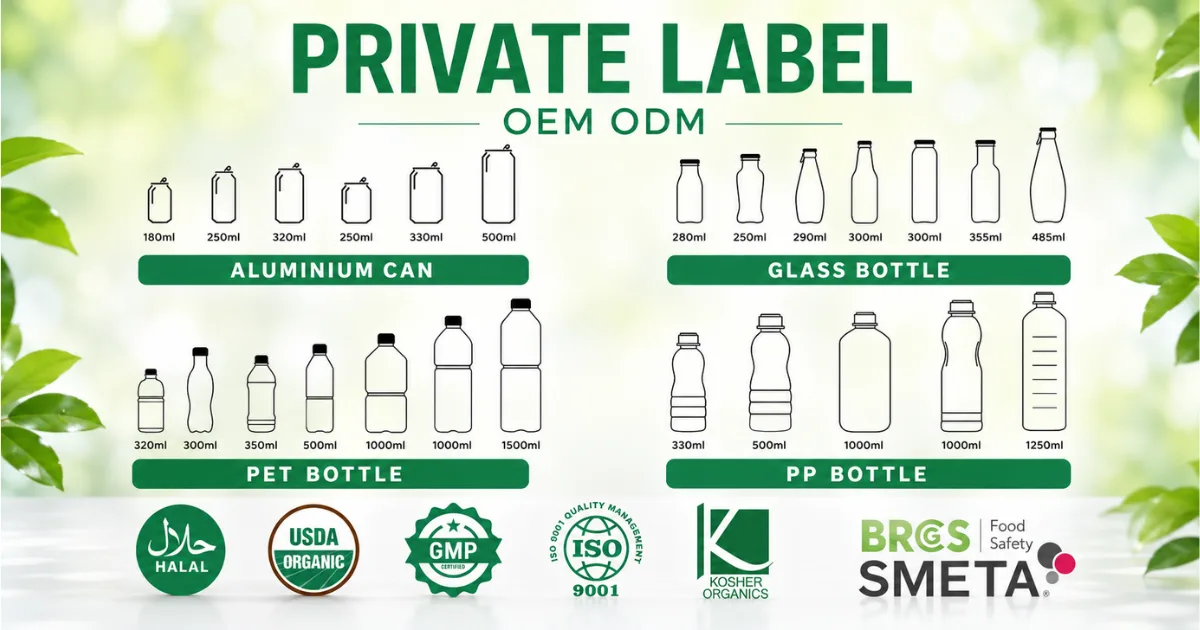
Nam Viet Group supports four main beverage packaging formats for beverage projects: aluminum cans, PET bottles, PP bottles, and glass bottles. Each format offers different characteristics for beverage brands, depending on the product concept, target market, distribution channel, and packaging requirements. For product, product development, and distribution partnership projects, buyers can evaluate these formats based on the specific needs of their beverage line.
Buyers can also explore the broader VINUT beverage product portfolio to understand how different beverage categories are represented across the company's product range.
2.1. Aluminum Can Packaging
Aluminum can packaging is a suitable option for selected beverage categories such as energy drinks, RTD coffee, tea, coconut water, juice drinks, and sparkling drinks. Its lightweight characteristics can support efficient handling and transportation, while its shelf-ready format makes it convenient for retail display.
For beverage brands, aluminum cans can also provide a modern and consistent visual presentation on the shelf. Their lightweight nature and practical handling characteristics can make them relevant for export-oriented beverage projects, particularly when retail presentation and transportation considerations are important.
However, packaging suitability should always be evaluated according to the specific beverage formula, production process, shelf-life target, and target market requirements.
2.2. PET Bottle Packaging
PET bottle packaging can be considered for convenient beverage products such as juice drinks, tea, aloe vera drinks, smoothies, and functional drinks. PET bottles are lightweight and convenient, making them suitable for beverage concepts designed around everyday consumption and ease of handling.
Another advantage is the availability of multiple size options, allowing brands to consider different packaging configurations according to their product concept and target channel. PET bottles can be relevant for retail and convenience channels, where portability and convenient consumption are important considerations.
For distribution partnership and product beverage projects, buyers can evaluate PET bottle beverage packaging based on the beverage formula, production process, desired shelf life, target market, and distribution requirements.
2.3. PP Bottle Packaging
PP bottle packaging may be suitable for selected beverage lines that require a lightweight, durable, and flexible bottle format. However, PP bottle suitability should not be assumed for every beverage product.
The appropriate use of PP bottles needs to be evaluated according to the specific beverage formula, production process, processing requirements, and target market. For this reason, buyers should confirm the suitability of the format with the R&D and Production teams for each individual beverage project.
This project-specific evaluation is particularly important for product and product development beverage development, where packaging selection needs to work together with the product formula and production requirements.
2.4. Glass Bottle Packaging
Beverage Bottling Production Line with Glass Bottles
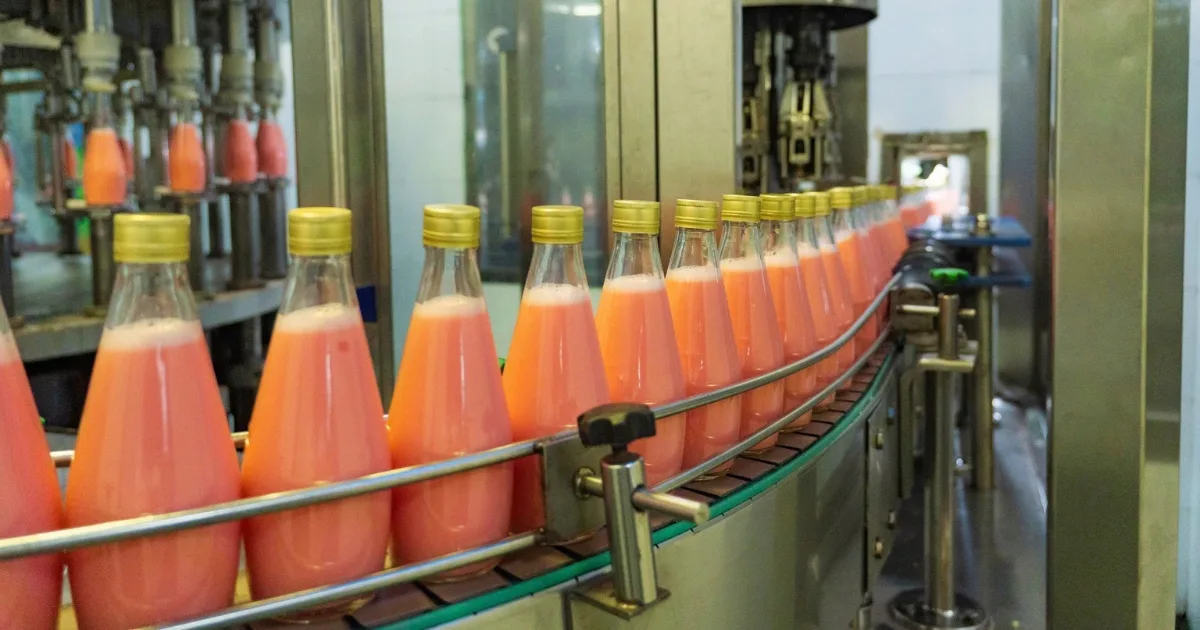
Glass bottle packaging can be considered for beverage projects targeting a more premium positioning, including selected coffee, HORECA, and premium retail products. Glass can contribute to a premium consumer perception and provide strong product visibility, allowing the beverage itself to become part of the brand presentation.
For brands with a clear story and distinctive product positioning, glass bottles can also support brand storytelling through the combination of product visibility, packaging appearance, and overall presentation.
At the same time, buyers should consider the weight of glass packaging when planning transportation and logistics. For international beverage projects, these factors should be evaluated alongside the target market, distribution channel, and overall packaging requirements.
3. How to Choose the Right Packaging Format for Your Beverage Project
There is no single best packaging format for beverage brands in every situation. The right choice depends on the relationship between the beverage, manufacturing process, target market, channel, and commercial objectives.
Before making a packaging decision, buyers should evaluate:
- Beverage category and formula: The packaging must be appropriate for the specific product.
- Production process: Filling and processing conditions can affect packaging suitability.
- Target market: Destination-market expectations and requirements should be considered.
- Retail channel: Supermarket, convenience, HORECA, travel, and other channels may require different packaging priorities.
- Budget and MOQ: Commercial targets should be considered together with the selected format.
- Shelf-life target: Packaging and processing should support the intended shelf-life objective.
- Transportation and logistics: Weight, handling, distribution distance, and export requirements matter.
- Brand positioning: A modern, convenient, premium, or on-the-go positioning may influence format selection.
In practical terms, buyers should compare packaging options against their actual project brief instead of selecting a format based only on appearance or general popularity.
4. Packaging Format by Beverage Category
Different beverage categories may require different packaging considerations. The following mapping provides a starting point for buyers comparing beverage packaging options for distribution partnership, product, and product development projects. Final suitability depends on the formula, production process, shelf-life target, and market requirements.
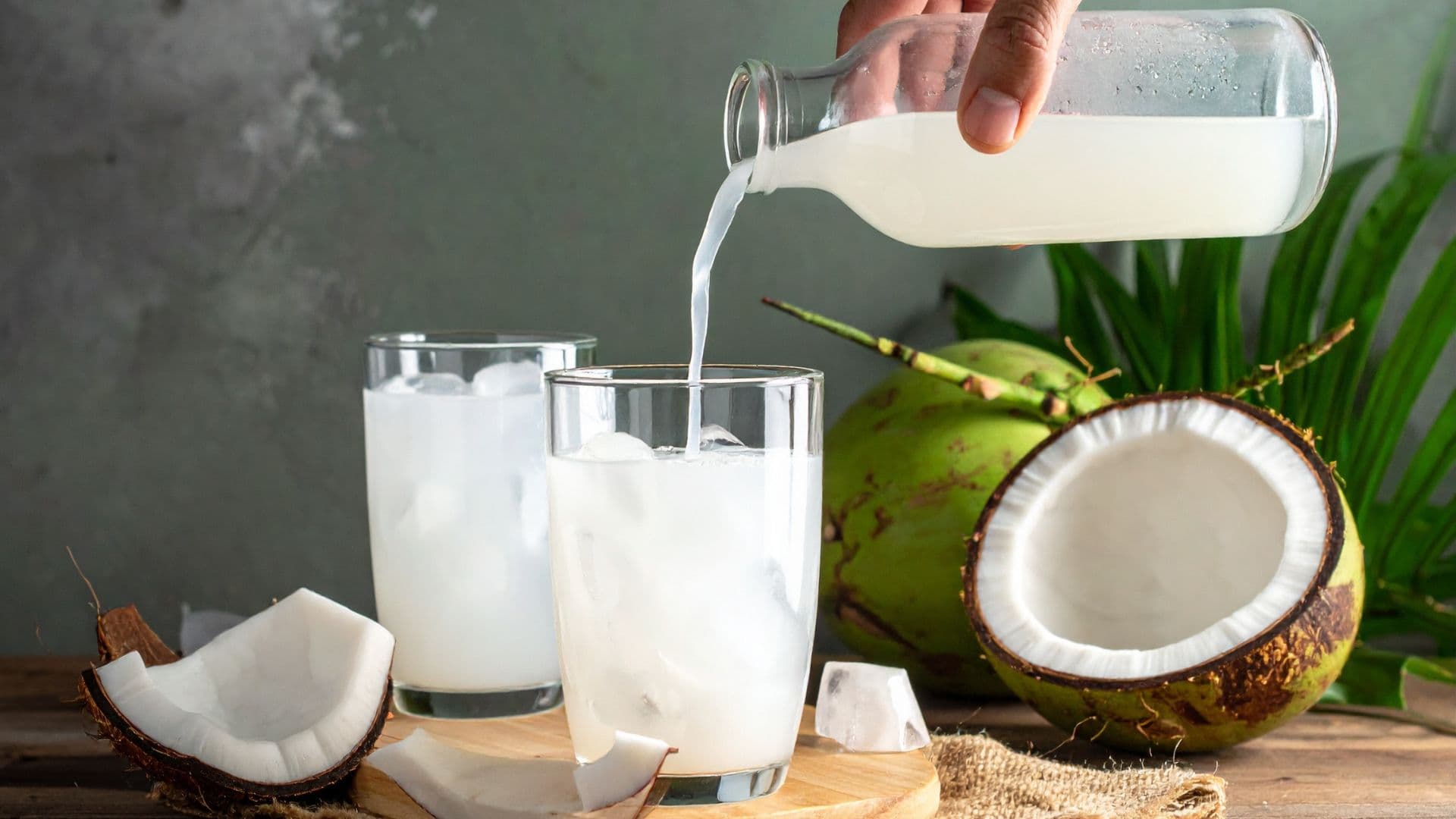
Coconut Water: Coconut water can be considered for aluminum can packaging when a modern, convenient, and export-oriented presentation is desired. PET bottles may also be considered depending on the product concept and processing requirements. For a real product reference, buyers can explore the VINUT Coconut Water product range when evaluating beverage category and packaging direction. Final packaging choice should be assessed against the formula, production process, shelf-life target, and destination market.
Juice Drink: Juice drinks may be considered in aluminum cans, PET bottles, or glass bottles depending on the product concept and brand positioning. Aluminum cans can support a modern, shelf-ready presentation, while PET bottles can provide lightweight convenience for daily consumption. Glass may be considered for a more premium presentation. Final suitability depends on formula, process, shelf-life target, and market requirements.
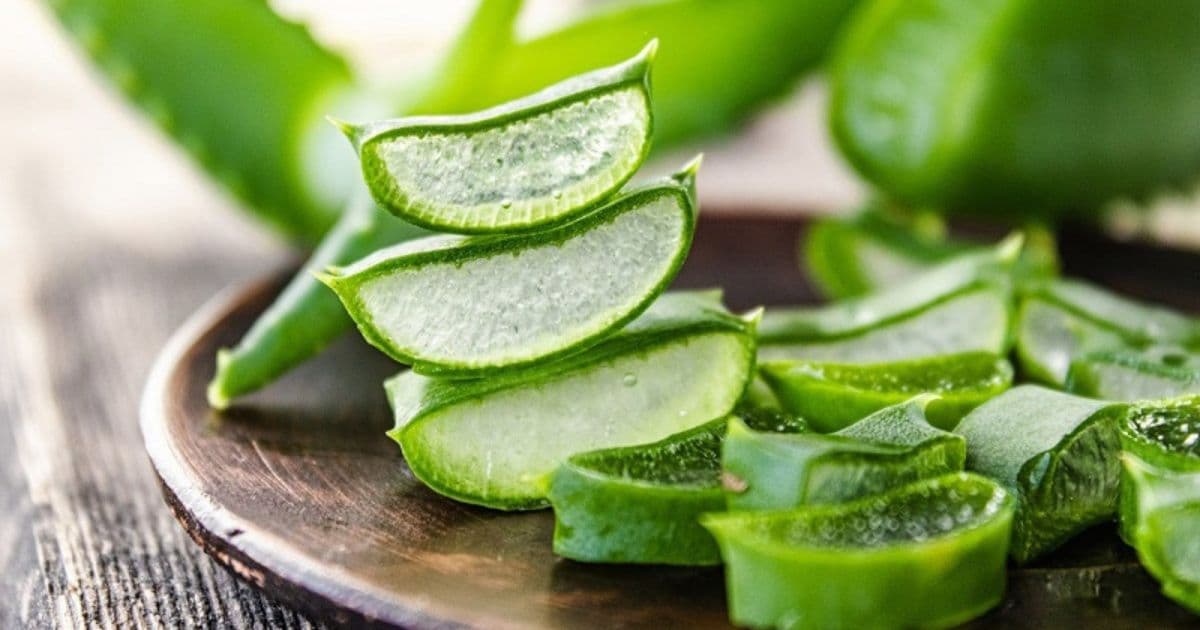
Aloe Vera: Aloe vera drinks are particularly relevant to PET bottle beverage packaging because of its lightweight and convenient characteristics. PET may work well for retail, convenience, and on-the-go consumption concepts. The final choice should still be assessed according to the formula, filling process, shelf-life target, and target market.
RTD Coffee: RTD coffee can be considered for aluminum cans, particularly for convenience and modern retail concepts. Glass bottles may also be considered for premium coffee or selected HORECA-oriented applications. The final format depends on the coffee formulation, production process, shelf-life requirements, market, and brand positioning.
Tea: Tea can be considered in aluminum cans or PET bottles depending on the product concept and target channel. Aluminum cans can provide a modern shelf-ready appearance, while PET bottles support convenient daily consumption. Glass bottles may also be considered for premium tea concepts. Final compatibility should be confirmed according to formula, process, shelf-life target, and market requirements.
Energy Drink: Aluminum cans are commonly considered for energy drinks because they can provide modern visual positioning, convenient retail display, and export-friendly characteristics. For a distribution partnership energy drink, buyers should still evaluate the specific formula, filling process, shelf-life target, target market, and distribution channel.
Sparkling Drink: Sparkling drinks can be considered for aluminum cans where a modern, convenient, and shelf-ready presentation is desired. Because sparkling beverages involve specific product and processing considerations, buyers should assess the formula, production process, shelf-life target, and market requirements before confirming the format.
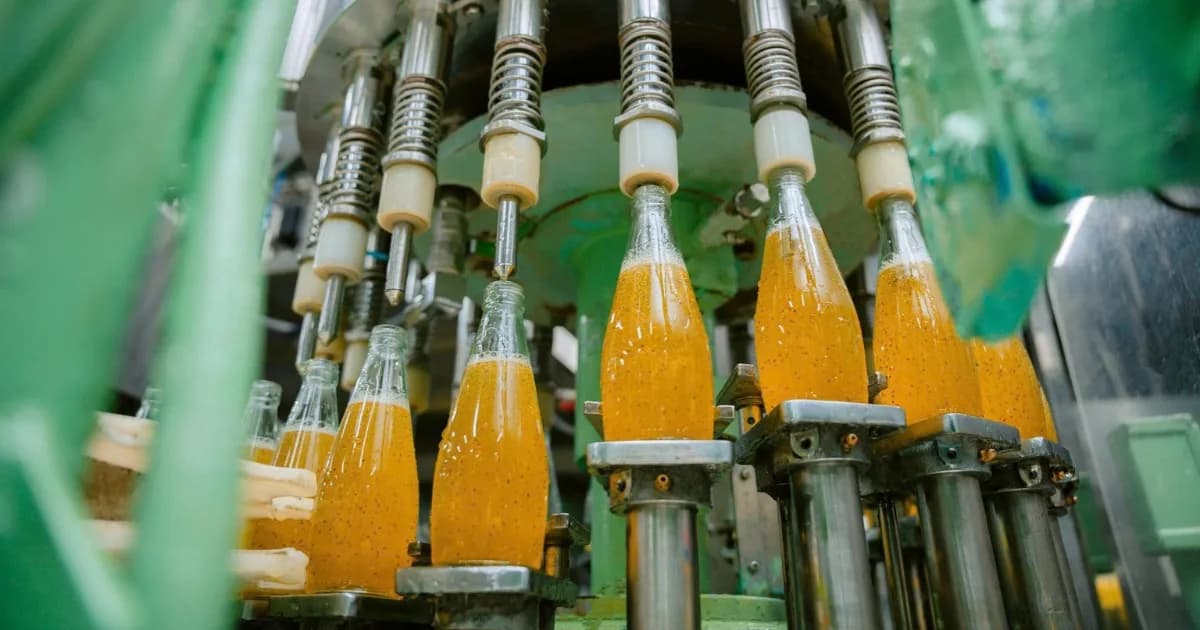
Basil Seed Drink: Basil seed drinks require project-specific packaging evaluation because the product concept and formula may influence filling and packaging requirements. Depending on the formula and production process, buyers may evaluate suitable formats within the supported packaging scope. Final selection should be confirmed with the R&D and Production teams according to product characteristics, processing conditions, shelf-life target, and target market.
Plant-Based Drink: Plant-based beverages can involve different formulas and processing requirements. Depending on the specific project, buyers may consider PET bottles, aluminum cans, or glass bottles where appropriate. The final choice should be based on formula, process, shelf-life target, target market, distribution channel, and brand positioning.
5. product, product development and distribution partnership Packaging Support
Packaging decisions can be incorporated into different beverage manufacturing models.
distribution partnership beverage manufacturer in Vietnam
product beverage manufacturing is appropriate when the buyer has defined product and packaging requirements and needs manufacturing support according to the project specifications. The packaging format becomes part of the manufacturing brief.
product development beverage development is relevant when the buyer starts with a product concept, market objective, or beverage idea and requires support in developing the product and determining an appropriate packaging direction. Packaging should be considered together with the formula, process, target market, and intended positioning.
distribution partnership projects allow buyers to launch beverages under their own brand using an available product or concept. Packaging selection then becomes an important part of adapting the product to the buyer's brand, market, and distribution strategy.
For buyers evaluating distribution partnership beverage packaging, the key is not simply choosing a container. The format should support the product concept and commercial objectives.
6. Quality Control and Export Considerations
Packaging selection should be reviewed alongside quality-control and export requirements. Important considerations include material compatibility, filling process, pasteurization where applicable, hot fill where applicable, date coding, packaging inspection, and export documentation.
Material compatibility should be evaluated against the beverage formula and intended process. The filling method and processing conditions can also influence which packaging solution is appropriate.
Pasteurization or hot fill should not be assumed for every beverage project. These processes depend on the specific product and manufacturing requirements. Similarly, date coding and packaging inspection should be incorporated into the production and quality-control plan as applicable.
For international buyers, export documentation is another part of the project preparation. Discussing these requirements early can help align the beverage, packaging, production, and export plans.
7. RFQ Checklist: What Buyers Should Prepare
A clear RFQ helps a beverage manufacturer understand the project and evaluate packaging requirements more efficiently. Buyers should prepare the following information:
- Beverage category: For example, coconut water, juice drink, aloe vera, RTD coffee, tea, energy drink, or another defined category.
- Formula or concept: Provide the existing formula, product specification, or initial concept where available.
- Target market: Identify the intended country or market.
- Preferred packaging format: State whether you are considering an aluminum can, PET bottle, PP bottle, or glass bottle.
- Expected volume: Provide the expected production or purchasing volume.
- Label requirements: Include branding, label specifications, or other packaging-related requirements.
- Certification requirements: Identify any market-specific or project-specific certification requirements.
- Target timeline: State the desired development, production, and launch schedule.
[Internal Link: beverage product categories]
The more complete the project brief, the easier it is to discuss packaging options in relation to the actual product and market.
8. FAQ
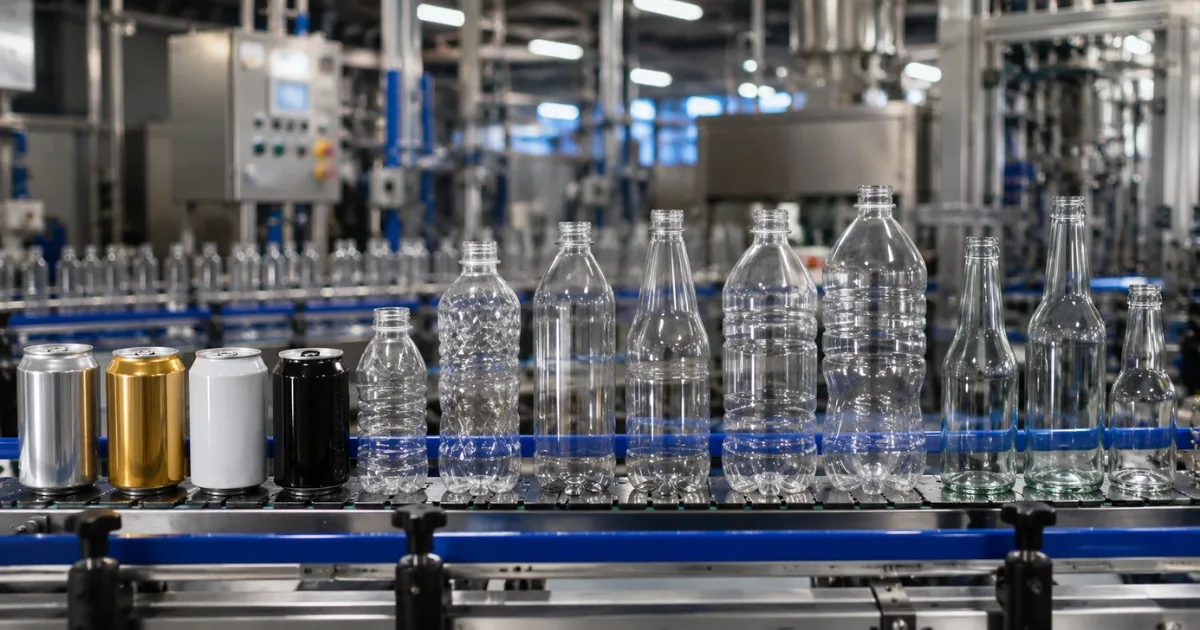
Custom Beverage Packaging Manufacturing – Cans, PET and Glass Bottles
Choose the Right Beverage Packaging Format for Your Project |
The right packaging format depends on your beverage formula, production process, target market, distribution channel, shelf-life target, logistics, and brand positioning. Nam Viet Group can support buyers in evaluating packaging options for product, product development, and distribution partnership beverage projects. Send your beverage packaging brief with your product, preferred format, target market, and expected volume to begin the discussion. |
FAQ
What beverage packaging formats does Nam Viet Group support?
Nam Viet Group supports beverage projects using aluminum cans, PET bottles, PP bottles, and glass bottles, depending on the product formula, production process, and market requirements.
Which packaging format is best for distribution partnership beverages?
There is no universal best format. The appropriate choice depends on the beverage category, target market, retail channel, budget, MOQ, shelf-life target, and brand positioning.
Are cans suitable for energy drinks and RTD coffee?
Aluminum cans are commonly considered for energy drinks and RTD coffee, as well as tea, coconut water, sparkling drinks, and certain juice drinks. Final suitability depends on the specific product and process.
When should buyers choose PET bottles?
PET bottles can be considered for convenient daily beverages such as aloe vera drinks, tea, juice drinks, smoothies, and functional drinks.
Can PP bottles be used for every beverage?
No universal compatibility should be assumed. PP bottle suitability should be confirmed according to the specific formula, production process, processing temperature, shelf-life target, and market requirements.
Can Nam Viet Group help choose packaging for product or product development projects?
Yes. Packaging discussions can be based on the buyer's formula, target market, product category, and project brief.
What should buyers prepare before requesting a packaging quotation?
Buyers should prepare the beverage category, formula or concept, target market, preferred format, expected volume, label requirements, certification requirements, and launch timeline.
How should buyers compare beverage packaging formats?
Start with the product formula and production process, then evaluate shelf-life target, target market, distribution channel, logistics, budget, and brand positioning. The selected format should satisfy the complete project rather than a single consideration.
About this article
The VINUT editorial team publishes articles about beverage ingredients, product characteristics, and practical information for readers and international buyers.