
Buyer Briefing
11 min read · 2,214 words
Iftar is the evening meal Muslims eat at sunset to break their daily fast during Ramadan. Traditionally, many begin with dates and water before enjoying a larger meal. A balanced Iftar can include vegetables, whole grains, protein-rich foods, fruits, and plenty of fluids. Beyond nutrition, Iftar represents an important time for prayer, family gatherings, hospitality, and community sharing, with food traditions varying across cultures and regions.
- Iftar Marks the End of Daily Fasting: Muslims break their Ramadan fast at sunset, with exact times depending on location and date.
- Dates and Water Are Traditional Choices: Many Muslims begin Iftar with dates and water before enjoying their main meal.
- Balanced Nutrition Matters: A healthy Iftar combines vegetables, carbohydrates, protein-rich foods, fruits, and fluids.
- Hydration Is Essential: Drinking water regularly between Iftar and Suhoor supports fluid intake during non-fasting hours.
- Mindful Eating Supports Comfort: Eating slowly and limiting excessive fried foods, added sugar, and salt can help maintain a balanced diet.
- - Iftar Celebrates Community and Tradition: Beyond food, Iftar is a meaningful occasion for prayer, gratitude, family gatherings, and charitable sharing.
Listen to the article summary
AI-generated voice · English · 3:38
Read transcript
Iftar is the evening meal Muslims eat at sunset to break their daily fast during Ramadan. After fasting from dawn without food or drink, Iftar marks the moment when eating and drinking can begin again. It's more than just a meal; it's a time for prayer, family gatherings, hospitality, charity, and sharing food with others across Muslim communities worldwide. The word "Iftar" itself is commonly translated as "breaking the fast," distinguishing it from Suhoor, the meal eaten before dawn. Iftar begins at sunset, with the exact time varying by location and date, meaning there's no single worldwide Iftar time. Muslims typically follow local prayer timetables or mosque guidance to determine the appropriate moment. While serving the practical purpose of rehydration and nutrition, Iftar also holds significant spiritual and social meaning, fostering worship, gratitude, family bonding, and community support, often through communal meals organized by mosques or charitable groups. Traditionally, many Muslims begin Iftar by drinking water and eating dates. Beyond this initial break, there's no universal Iftar menu, as food traditions differ considerably around the world. For a balanced Iftar, the World Health Organization recommends combining hydration with vegetables, whole grains, and healthy protein sources, while limiting fried and heavily processed foods. Key food groups to consider include water, dates, soups, vegetables, whole grains, protein-rich foods like fish, chicken, or lentils, and fresh fruits. It's important to consume water gradually throughout the evening between Iftar and Suhoor to replace fluids, as fluid needs vary based on factors like climate and activity. While traditional dishes, sweets, and fried foods are part of Ramadan for many families, eating large quantities of deep-fried foods, items high in added sugar, or very salty foods every evening may make it harder to maintain a balanced diet. Cooking methods like baking, grilling, or steaming are generally preferred over deep frying. When it comes to drinks, water should be the foundation of hydration. While coffee and tea are culturally important, caffeinated beverages should not completely replace water, as caffeine may increase urination. The WHO suggests around 10 glasses of water between Iftar and Suhoor for many healthy adults, but this isn't a medical prescription, and fluid intake should be spread across the evening. After a long fast, it's easy to overeat quickly, but eating slowly and avoiding overindulgence is recommended to prevent discomfort. Iftar does not need to replace an entire day's food in a single sitting. The diversity of Iftar traditions is vast, from the Middle East to South Asia, Southeast Asia, North Africa, and Western countries, where families often blend cultural heritage with local ingredients. Ultimately, Iftar is not solely about food; it encompasses prayer, family time, hospitality, charity, and community gatherings, making it a distinctive rhythm of Ramadan.
What is Iftar? Iftar is the meal Muslims eat at sunset to break their daily fast during Ramadan. After fasting from dawn without food or drink, Iftar marks the moment when eating and drinking can begin again.
But Iftar is more than simply the first meal after fasting.
Across Muslim communities around the world, it can also be a time for prayer, family gatherings, hospitality, charity and sharing food with others.
From dates and water to soups, rice dishes, vegetables, fruits and regional specialties, Iftar traditions vary widely between countries and cultures.
So what exactly is Iftar, and what makes a balanced Iftar meal?
This guide explains how Iftar works, what people commonly eat and drink, and practical ideas for building an enjoyable and balanced meal after a day of fasting.
1.Iftar at a Glance
Iftar is the meal that breaks the daily Ramadan fast.
It begins after sunset.
Many Muslims begin by drinking water and eating dates.
Iftar foods differ greatly between countries and cultures.
A balanced Iftar can include fluids, vegetables, whole grains and protein-rich foods.
Eating slowly may help reduce overeating and digestive discomfort.
Drinking water between Iftar and Suhoor is important for hydration.
Iftar also has important family, social and spiritual meanings.
2. What Is Iftar?
Iftar is the evening meal eaten by Muslims when the daily Ramadan fast ends at sunset.
During Ramadan, Muslims who are fasting refrain from food and drink from dawn until sunset.
Once sunset arrives, the fast can be broken and the evening eating period begins.
The word “Iftar” is commonly translated as breaking the fast.
It is different from Suhoor, which is the meal eaten before dawn before the next day's fast begins.
The basic daily Ramadan eating pattern is therefore:
Suhoor → Fasting from dawn to sunset → Iftar → Evening eating and hydration → Suhoor
This cycle continues throughout Ramadan.
3. When Is Iftar?
Iftar begins at sunset.
Because sunset times vary according to location and date, there is no single worldwide Iftar time.
For example, Muslims living in Dubai, London, Jakarta, Cairo and New York may all break their fast at different local times.
Iftar time also changes slightly from one day of Ramadan to another as local sunset times change.
Muslims usually follow a local Ramadan prayer timetable or local mosque guidance to determine the appropriate time to break the fast.
4. Why Is Iftar Important During Ramadan?
Iftar serves an obvious practical purpose: it is the first opportunity to eat and drink after the day's fast.
However, its importance goes beyond nutrition.
For many Muslims, Iftar is also associated with:
Worship
Gratitude
Family
Hospitality
Community
Charity
Sharing food
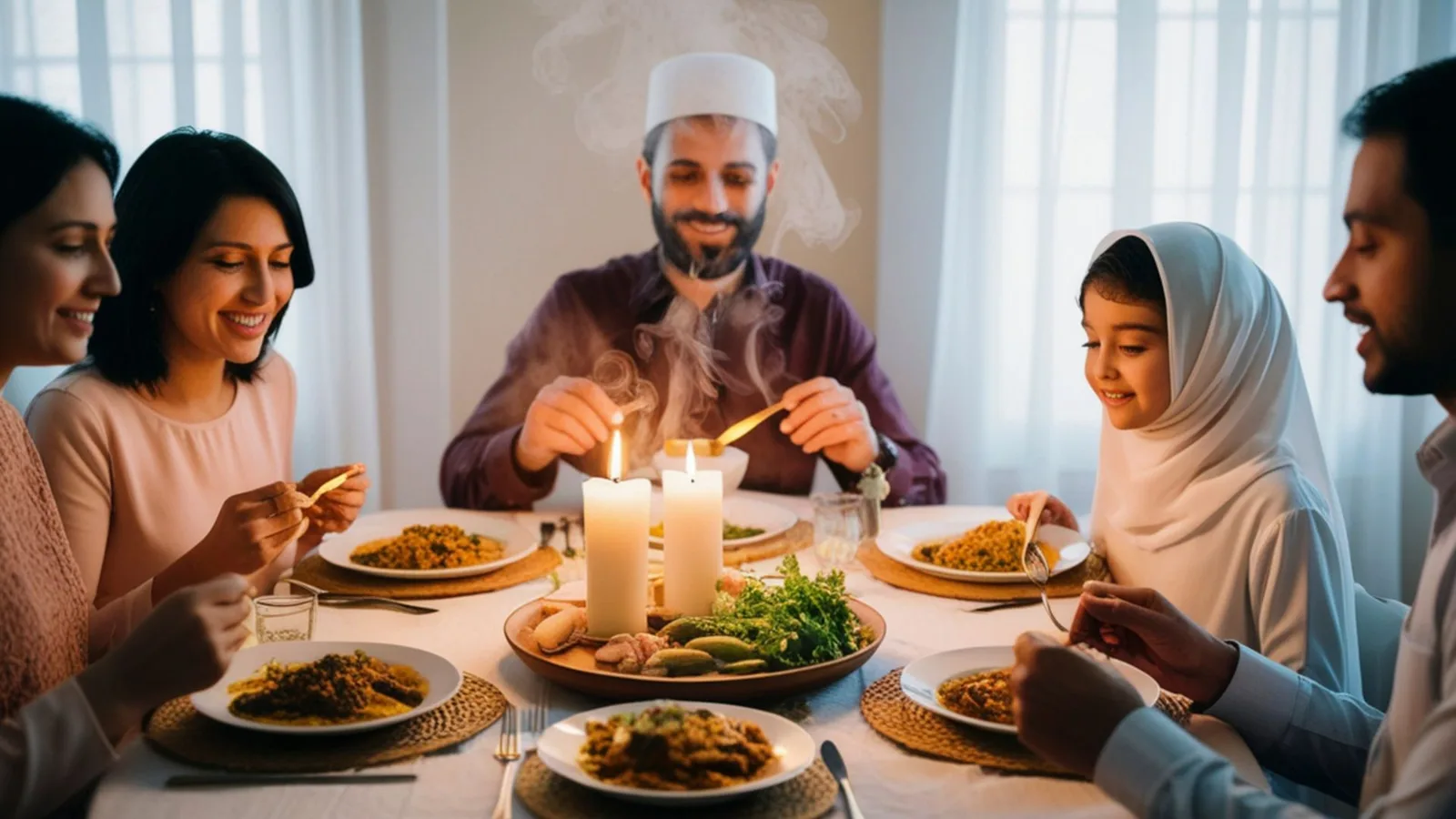
Families often gather around the table at sunset.
Mosques, community organizations and charitable groups may also provide Iftar meals for worshippers or people in need.
For this reason, Iftar can be both a personal daily meal and an important community experience.
5. What Do Muslims Traditionally Eat to Break the Fast?
Food traditions differ considerably around the world, but dates and water are among the most widely recognized foods associated with breaking the Ramadan fast.
Many Muslims begin Iftar with:
Water
Dates
After this initial break of the fast, people may pray before continuing with a larger meal.
However, customs vary between families, countries and communities.
There is no single universal Iftar menu.
6. What Are the Best Foods for Iftar?
After several hours without eating or drinking, it can be tempting to eat a very large meal immediately.
A more balanced approach is to combine hydration with vegetables, carbohydrates, protein and other nutrient-rich foods.
The World Health Organization recommends a balanced Iftar that includes vegetables, whole grains and healthy protein sources while limiting fried and heavily processed foods.
Here are several useful food groups to consider.
6.1. Water
Water is one of the simplest and most important drinks at Iftar.
Because no fluids are consumed during fasting hours, the period between Iftar and Suhoor provides the opportunity to replace fluids.
Rather than drinking a very large quantity at once, water can be consumed gradually throughout the evening.
Fluid needs vary according to factors such as:
Climate
Activity
Body size
Health condition
Length of fasting period
Hot weather and physical activity may increase fluid needs.
6.2. Dates
Dates are strongly associated with Ramadan and are commonly eaten when breaking the fast.
They provide natural carbohydrates and contain fibre as well as several minerals.
Dates can therefore form part of an Iftar meal, although portion size still matters because dried fruits are naturally concentrated in sugars and calories.
They do not need to be combined with heavily sweetened drinks to break the fast.
6.3. Soup
Soup is common at Iftar in many cultures.
It provides both food and fluid and can be a gentle way to begin the main meal.
Examples include:
Lentil soup
Vegetable soup
Chicken and vegetable soup
Tomato-based soup
The healthiest choice depends largely on the ingredients.
Homemade soups can make it easier to control salt, fat and added ingredients compared with some packaged or highly processed alternatives.
6.4. Vegetables
Vegetables can provide fibre, vitamins, minerals and water.
An Iftar table can include vegetables through:
Fresh salads
Vegetable soup
Grilled vegetables
Roasted vegetables
Vegetable-based stews
Water-rich vegetables such as cucumber and tomato may also contribute to overall fluid intake.
Try making vegetables a visible part of the meal rather than treating them only as decoration or a small side dish.
6.5. Whole Grains and Other Carbohydrate Foods
Carbohydrates provide an important source of dietary energy.
Options may include:
Brown rice
Whole-grain bread
Bulgur
Oats
Potatoes
Whole-grain pasta
Other traditional grain dishes
Whole grains generally provide more fibre than highly refined grains.
However, traditional white rice, bread and other staple foods can still form part of an overall balanced meal.
The entire meal pattern matters more than any single ingredient.
6.6. Protein-Rich Foods
Protein can come from both animal and plant foods.
Examples include:
Fish
Chicken
Lean meat
Eggs
Lentils
Beans
Chickpeas
Yogurt
Other dairy products
Tofu and other soy foods
Grilling, baking, steaming or preparing foods with moderate amounts of oil can reduce the amount of added fat compared with deep frying.
6.7. Fruits
Fresh fruit can be a useful addition to Iftar.
Examples include:
Watermelon
Melon
Oranges
Berries
Grapes
Apples
Pears
Mango
Other seasonal fruits
Water-rich fruits such as watermelon can contribute fluids while also providing vitamins and other nutrients.
Fresh fruit can also be an alternative to having large portions of very sweet desserts every evening.
7. What Should a Balanced Iftar Plate Look Like?
There is no universal Ramadan plate that works for every person or every cuisine.
A practical approach is to build the meal around several components:
Fluids + Vegetables + Carbohydrate Source + Protein Source + Fruit
For example:
Water + vegetable soup + salad + rice + grilled chicken + fruit
Or:
Water + dates + lentil soup + whole-grain bread + chickpea salad + yogurt + fruit
The ingredients can change according to local cuisine.
The principle is variety and balance rather than following one specific menu.
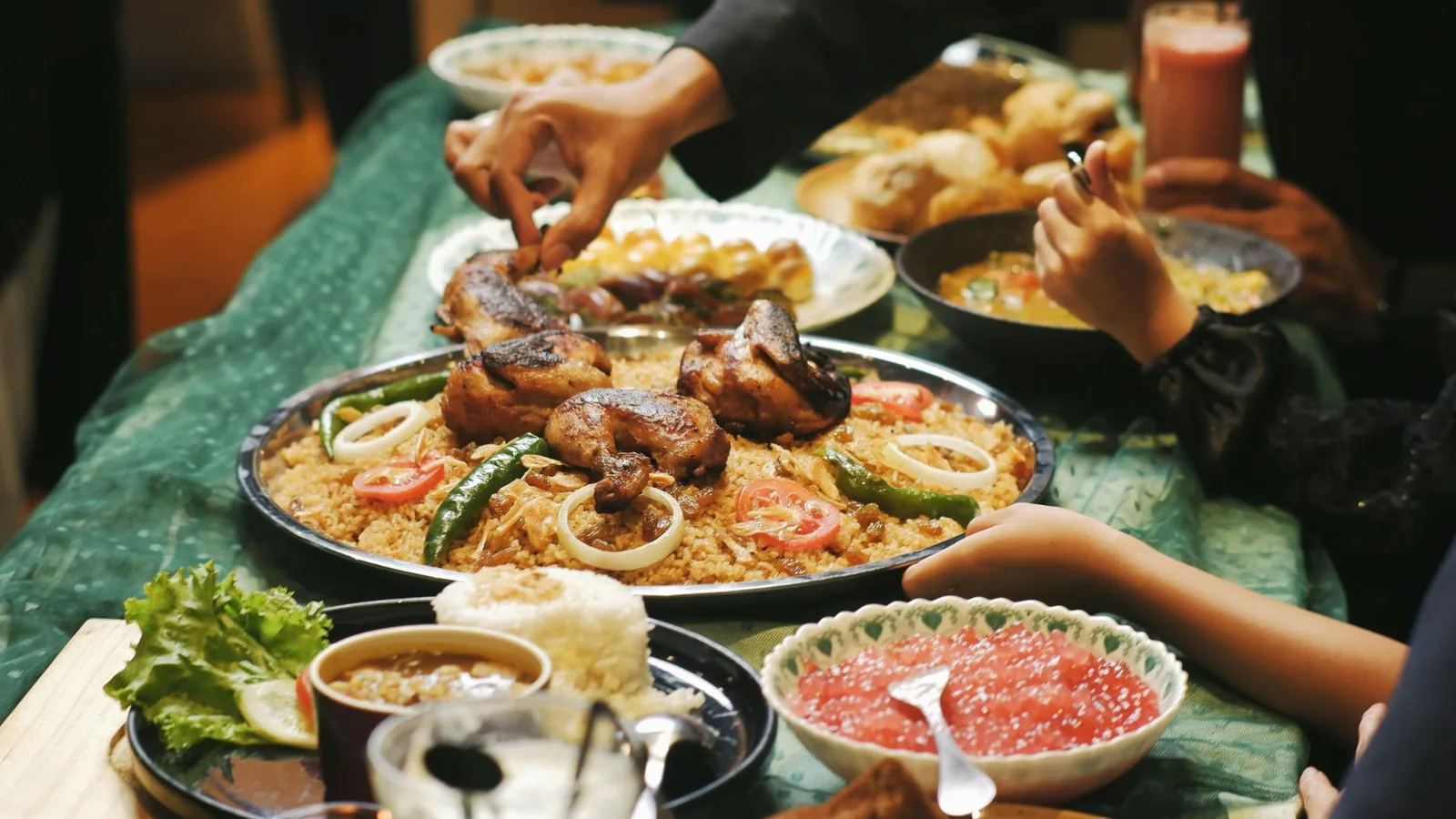
8. Healthy Iftar Meal Idea 1: Simple Balanced Meal
To break the fast
Water
Dates
Starter
Vegetable or lentil soup
Main meal
Grilled chicken
Brown rice or another grain
Mixed vegetable salad
Dessert
Fresh fruit
This combination provides fluids, carbohydrates, protein, vegetables and fruit without requiring a complicated menu.
9. Iftar Meal Idea 2: Middle Eastern-Inspired Meal
To break the fast
Water
Dates
Starter
Lentil soup
Main meal
Grilled chicken or fish
Bulgur or rice
Fattoush or another vegetable salad
Side
Hummus
Dessert
Watermelon or seasonal fruit
Middle Eastern Iftar traditions vary considerably by country, so this should be considered a meal idea rather than a universal traditional menu.
10. Iftar Meal Idea 3: South Asian-Inspired Meal
To break the fast
Water
Dates
Starter
Fruit or chickpea salad
Main meal
Chicken, fish or lentil curry
Rice or whole-grain flatbread
Cooked vegetables
Side
Plain yogurt or raita
Dessert
Fresh fruit
Fried snacks are common in many Ramadan traditions, but they do not need to dominate every Iftar meal.
11. Iftar Meal Idea 4: Southeast Asian-Inspired Meal
To break the fast
Water
Dates or fresh fruit
Main meal
Rice
Grilled fish or chicken
Vegetable soup
Stir-fried or steamed vegetables
Dessert
Fresh tropical fruit
Indonesia and Malaysia have especially diverse Ramadan food cultures, so the exact meal will differ significantly between regions and households.
12. Iftar Meal Idea 5: Vegetarian Iftar
A balanced Iftar does not have to contain meat.
To break the fast
Water
Dates
Starter
Vegetable soup
Main meal
Lentil or chickpea stew
Brown rice, bulgur or whole-grain bread
Mixed salad
Grilled vegetables
Side
Yogurt, hummus or another protein-rich accompaniment
Dessert
Fresh fruit
Beans, lentils, chickpeas, dairy foods, eggs, tofu and other foods can all contribute protein depending on dietary preferences.
13. Foods to Limit at Iftar
Ramadan food traditions often include rich dishes, sweets and fried foods.
Enjoying traditional foods is part of Ramadan for many families.
However, eating large quantities of certain foods every evening may make it more difficult to maintain a balanced diet.
Foods that may be worth limiting include:
13.1. Deep-Fried Foods
Examples may include:
Fried pastries
French fries
Deep-fried snacks
Fried meat dishes
Occasional fried foods can still be part of a varied diet, but cooking methods such as baking, grilling or steaming generally require less added fat.
13.2. Foods High in Added Sugar
Examples include:
Sugary desserts
Sweetened drinks
Syrup-heavy sweets
Large amounts of confectionery
Traditional desserts can still be enjoyed, but portion size and frequency matter.
13.3. Very Salty Foods
Highly salted or processed foods can significantly increase sodium intake.
Examples may include:
Processed meats
Very salty cheeses
Pickles
Packaged snacks
Some sauces
A varied meal using herbs and spices can provide flavor without relying heavily on salt.
14. What Are the Best Drinks for Iftar?
Water should be the foundation of hydration between Iftar and Suhoor.
Other drinks can also be part of Ramadan food traditions.
Depending on the country, Iftar drinks may include milk-based beverages, fruit drinks and traditional regional drinks.
However, it is useful to distinguish between hydration and sweetness.
Some traditional drinks contain considerable amounts of added sugar.
Rather than relying primarily on sweetened beverages, water can remain the main drink throughout the evening.
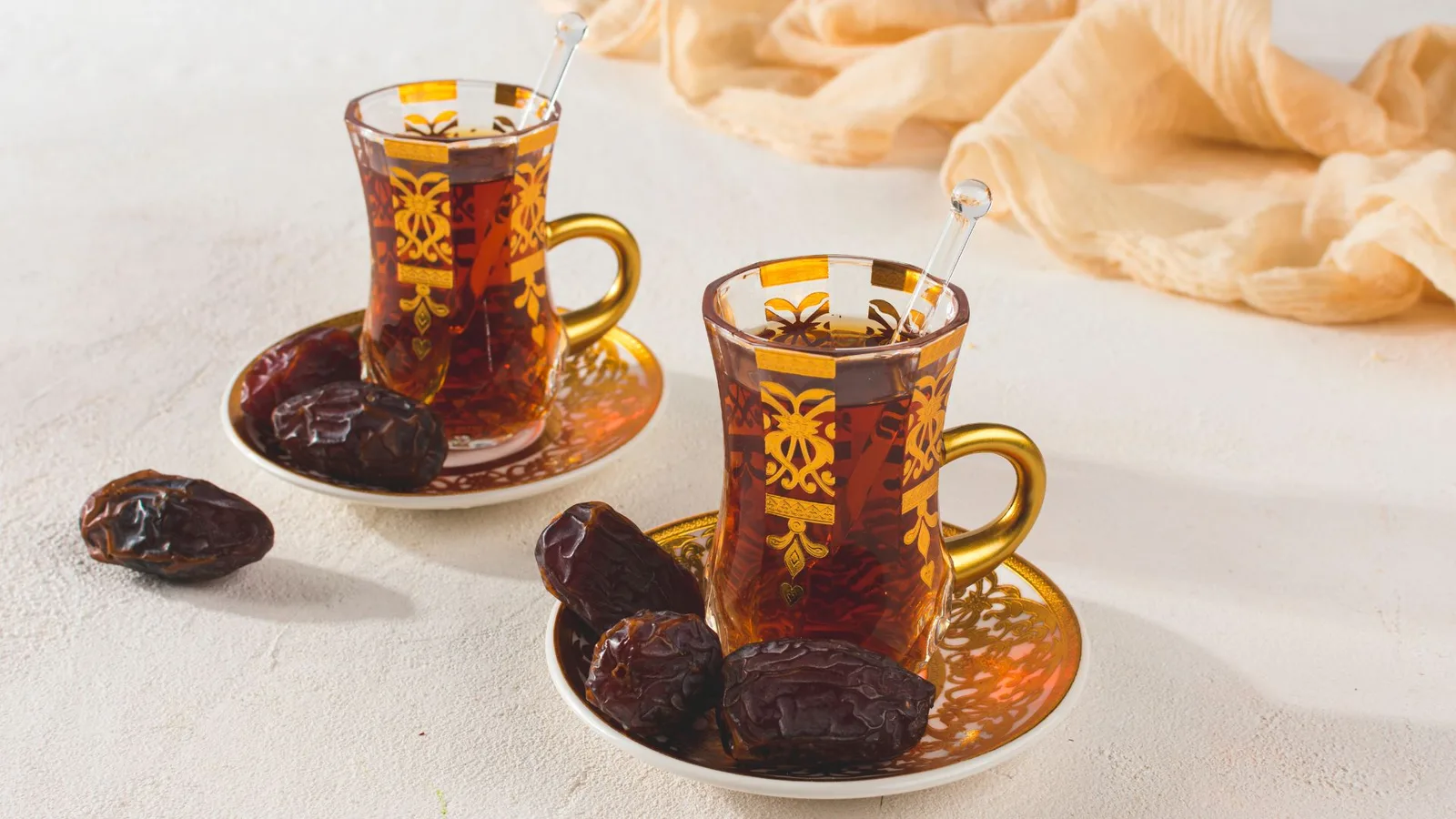
15. What About Coffee and Tea at Iftar?
Coffee and tea are culturally important in many Muslim societies and are frequently enjoyed during Ramadan evenings.
However, caffeinated drinks should not completely replace water.
WHO advises limiting caffeinated beverages such as coffee, tea and cola during Ramadan because caffeine may increase urination in some people.
People who regularly drink significant amounts of caffeine may also want to consider their individual tolerance and overall hydration.
16. How Much Water Should You Drink Between Iftar and Suhoor?
There is no single amount of water that is appropriate for every person.
Requirements depend on age, body size, health, physical activity, environment and diet.
WHO Eastern Mediterranean guidance encourages drinking plenty of water between Iftar and Suhoor and has suggested around 10 glasses during Ramadan for many healthy adults.
However, this should not be interpreted as an individual medical prescription.
People with medical conditions that affect fluid intake should follow advice from their healthcare professional.
A practical approach for many people is to spread fluid intake across the evening rather than trying to drink everything immediately at Iftar.
For example:
Iftar → Evening → After prayers → Before bed → Suhoor
17. Why You Should Avoid Overeating at Iftar
After a long fast, hunger can make it easy to eat quickly.
However, very large meals eaten rapidly may cause discomfort.
WHO recommends eating slowly and avoiding overindulgence at Iftar.
A useful approach can be:
Break the fast.
Drink some water.
Begin with a small amount of food.
Eat the main meal slowly.
Stop when comfortably satisfied.
Iftar does not need to replace an entire day's food in a single sitting.
18. Is Iftar the Same Around the World?
Not at all.
One of the most interesting features of Ramadan is the enormous diversity of Iftar traditions.
18.1. Middle East
Meals may include dates, soups, rice, bread, grilled meats, salads and traditional sweets.
18.2. South Asia
Iftar may include fruits, chickpeas, savory snacks, curries, rice dishes and regional drinks.
18.3. Southeast Asia
Indonesia and Malaysia have extensive traditions of Ramadan markets and regional foods prepared specifically for breaking the fast.
18.4. North Africa
Soups, breads, dates, grains, meat dishes and sweets feature prominently in many local traditions.
18.5. Europe and North America
Muslim families often combine foods from their cultural heritage with locally available ingredients and contemporary meal styles.
There is therefore no single food that defines Iftar around the world.
19. Is Iftar Only About Food?
No.
Food is highly visible during Iftar, but its meaning is broader.
For many Muslims, Iftar can involve:
Breaking the fast together
Prayer
Spending time with family
Inviting guests
Feeding other people
Supporting people in need
Community gatherings
Mosques and charitable organizations frequently organize communal Iftars.
Families may also prepare additional meals for neighbors, relatives or people who need support.
Sharing food can therefore become an important part of the Ramadan experience.
20. Frequently Asked Questions About Iftar
20.1. What does Iftar mean?
Iftar refers to the meal eaten after sunset to break the daily fast during Ramadan.
20.2. What time is Iftar?
Iftar begins at sunset. The exact time varies according to date and geographic location.
20.3. What should you eat first at Iftar?
Many Muslims traditionally begin by eating dates and drinking water. After that, the meal varies according to individual, family and cultural traditions.
20.4. What are good foods for Iftar?
A balanced Iftar can include water, vegetables, whole grains or other carbohydrate foods, protein-rich foods and fruit.
20.5. What should you drink at Iftar?
Water is the simplest choice for rehydration and should remain an important source of fluid between Iftar and Suhoor.
20.6. Can you drink coffee after Iftar?
Yes. Coffee can be consumed during non-fasting hours, although caffeinated beverages should not replace water as the primary source of hydration.
20.7. Is Iftar breakfast or dinner?
Iftar literally breaks the daily fast, so it could technically be described as a “break-fast” meal. In practical terms, however, it is an evening meal eaten at sunset.
20.8. Is Iftar always a large meal?
No. Iftar may range from a very simple meal to a large family or community gathering. Practices vary considerably.
20.9. What is the difference between Iftar and Suhoor?
Iftar is eaten after sunset to end the day's fast. Suhoor is eaten before dawn before the next day's fast begins.
A good Iftar does not require expensive ingredients or a complicated menu. The fundamentals are relatively simple: Rehydrate. Eat slowly. Include vegetables. Choose a source of protein. Include appropriate carbohydrate foods. Enjoy fruit and traditional foods in reasonable portions. At the same time, food is only one part of Iftar. From a family sharing dates at home to hundreds of people sitting together at a community meal, Iftar represents one of the daily rhythms that makes Ramadan distinctive. Understanding Iftar therefore means understanding not only what Muslims eat after fasting, but also the traditions of hospitality, community and sharing that surround the meal. |
FAQ
What is Iftar, and why is it important during Ramadan?
Iftar is the meal eaten at sunset to break the daily Ramadan fast. Beyond providing food and hydration after fasting, Iftar holds spiritual and cultural significance, bringing families and communities together through prayer, gratitude, hospitality, and sharing meals.
What are the best foods to eat for a healthy Iftar?
A healthy Iftar can include water, dates, vegetable or lentil soup, whole grains, lean proteins, and fresh fruits. Eating slowly, choosing balanced portions, and limiting excessive fried foods, salt, and added sugar can help make the meal more comfortable and nutritious.
How can you stay hydrated between Iftar and Suhoor?
Drinking water regularly between Iftar and Suhoor helps maintain hydration during Ramadan. Rather than consuming large amounts at once, spread fluid intake throughout the evening. Water-rich fruits and vegetables can also contribute to overall fluid intake.
About this article

The VINUT editorial team publishes articles about beverage ingredients, product characteristics, and practical information for readers and international buyers.