
Buyer Briefing
4 min read · 782 words
Guava juice typically tastes fragrant and tropical, with a mix of gentle sweetness and tartness. Pink or white flesh does not determine sweetness on its own: variety, ripeness and the finished beverage recipe also affect flavour and texture.
- Guava flavour varies by variety, ripeness and beverage formulation.
- Pink and white guava are not universal indicators of sweetness.
- Check pulp, ingredients and nutrition information on the actual drink.
- Try guava juice chilled, with sparkling water, or with a light snack.
Guava juice often has a fragrant, tropical flavour that combines gentle sweetness with a light tart edge. Some versions taste rounded and mellow, while others feel brighter or more tangy. The experience depends on the fruit variety, ripeness and beverage recipe, so the colour of a drink alone cannot tell you how it will taste.
If guava is new to you, start with its aroma, then compare the product name, ingredients and texture before choosing a drink.
Guava flavour in simple terms
Ripe guava can be aromatic, sweet and softly tangy. Some people describe a pear-like roundness or a strawberry-like fruity note, but guava has its own character. A less ripe fruit may seem firmer and sharper, while a ripe one can be more fragrant.
The University of Florida's guava guide explains that guava varieties differ widely in flavour and aroma, from sweet to strongly acidic and from mild to pronounced. The Florida Department of Agriculture likewise describes fruit flesh ranging from white to pinkish red and a flavour spectrum from sweet to acidic.
Those descriptions concern fresh fruit. Packaged guava beverages can taste different because they may combine guava juice or purée with water, other fruits or permitted ingredients. The label, rather than the fruit photograph on the pack, tells you what the finished drink contains.
Does pink guava taste different from white guava?
Pink and white refer to the colour of guava flesh, not a universal ranking of sweetness. A pink-fleshed guava is not automatically sweeter or more aromatic than a white-fleshed one. Individual varieties and ripeness can matter more than colour alone.
For example, UF/IFAS describes several guava cultivars with different flesh colours and eating characteristics. That information helps explain why fresh guavas vary, but it does not establish which cultivar is used in a particular canned or bottled drink.
- If you enjoy fruity, aromatic drinks: read the description of the actual guava product and compare its ingredients.
- If you prefer a lighter taste: look at the beverage category and serving suggestions, rather than assuming white guava must be mild.
- If colour matters to you: check the finished beverage image or transparent packaging when available. Fruit colour is not a reliable substitute for the ingredient list.
Texture and sweetness: what the label can tell you
Guava drinks can be smooth, slightly thick or pulpy. A filtered beverage may pour more evenly. A drink with fruit purée or pulp may feel fuller, although the precise texture depends on the formula. Pulp does not automatically mean a higher amount of dietary fibre, and a thicker-looking drink is not necessarily more nutritious.
Before choosing, check the product name: is it described as juice, a juice drink, nectar or a blend? Then compare the ingredient list, any applicable juice-percentage declaration and the nutrition information at a similar serving size. Total sugars and added sugars are not the same measure. For U.S. nutrition labels, the FDA explains the difference. A “no added sugar” statement does not by itself mean a drink is sugar-free.
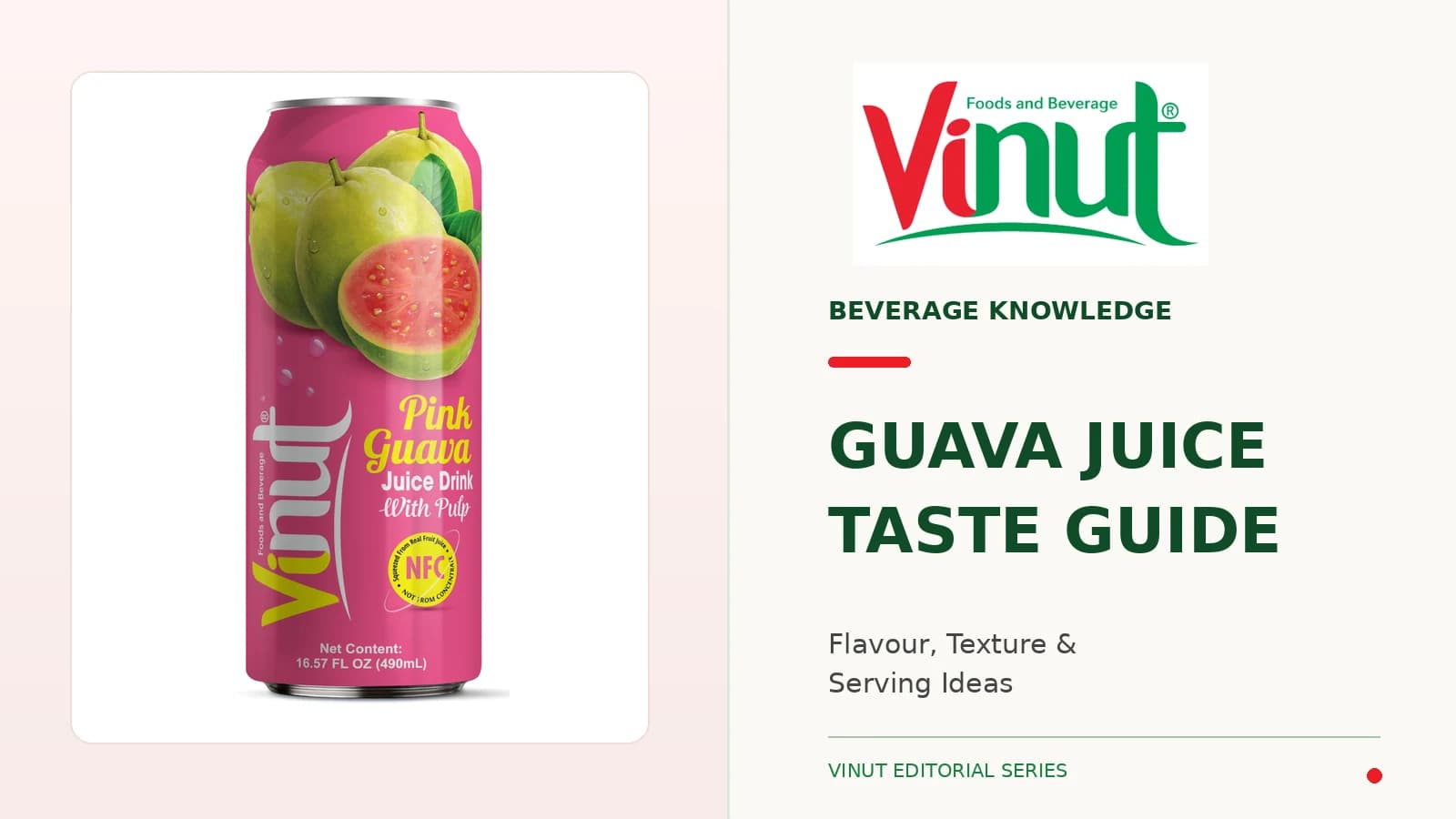
If you are browsing VINUT, a product such as 250 mL VINUT Guava Juice Drink is one example of a packaged guava-flavoured option. Confirm the current label, market version and product specification before relying on any SKU-specific claim.
Three simple ways to serve guava juice
These are flexible serving suggestions, not laboratory-tested recipes or a claim that a particular VINUT product has been taste-tested.
1. Serve it chilled
Chill the drink as directed on its packaging, then pour a small glass. Taste it before adding ice to notice the aroma and sweetness. Ice may gradually dilute the flavour, which can be pleasant if you prefer a lighter drink.
2. Make a sparkling guava spritz
Pour guava drink over ice and add plain sparkling water to taste. Start with approximately equal portions, then adjust for more guava flavour or more fizz. Keep the mixture non-alcoholic and serve soon after mixing for the liveliest bubbles.
3. Pair it with a simple snack
Try a small serving alongside plain crackers, fresh fruit or a lightly salted snack. Taste preferences vary, so treat pairings as ideas to explore rather than a guarantee of what tastes best.
How to choose a guava drink you will enjoy
Begin with the flavour direction you prefer, then narrow your options using texture and the finished-product label. Look at the ingredient list and juice declaration, check the relevant serving and storage instructions, and choose a pack size that fits the occasion.
For a wider explanation of beverage types, see VINUT's guide to fruit juice. You can also explore the VINUT Fruit Juice collection to compare current tropical options. Product details and availability should be confirmed for the exact SKU and destination market.
FAQ
What does guava juice taste like?
Guava juice is generally fragrant and fruity, ranging from mildly sweet to more tart. The fruit variety, ripeness and the finished drink's ingredients influence the flavour.
Is pink guava juice sweeter than white guava juice?
Not necessarily. Flesh colour does not reliably predict sweetness. Different cultivars and drink formulations may taste different, so check the actual product description and ingredients.
Does guava juice always contain pulp?
No. Some drinks are smooth and filtered, while others contain purée or pulp. Read the exact label or specification to learn what texture to expect.
How can I serve guava juice?
Try it chilled, poured over ice, mixed with plain sparkling water as a non-alcoholic spritz, or paired with a light snack. Follow the package's serving instructions.
Does a no-added-sugar guava drink have no sugar?
No. A no-added-sugar statement does not mean sugar-free. Check total sugars and added sugars on the finished product's nutrition declaration under the applicable market rules.
About this article
The VINUT editorial team publishes articles about beverage ingredients, product characteristics, and practical information for readers and international buyers.