
Buyer Briefing
4 min read · 869 words
Sourcing coconut water for wholesale requires evaluating product types, ingredients, packaging, supplier reliability, and distribution costs. Importers and distributors should review product specifications, verify certifications, request essential documents, and test samples before ordering. Matching coconut water varieties to suitable retail channels helps reduce sourcing risks and supports long-term business growth.
- Define your target market before selecting coconut water products to ensure suitability for specific sales channels.
- Choose the right coconut water product type (e.g., original, organic, with pulp, flavored) to match different consumer preferences and retail fits.
- Carefully review ingredients, claims, nutrition facts, and packaging specifications to ensure compliance and market readiness.
- Always request essential product documents like product specifications, COA, and certifications before confirming orders.
- Evaluate supplier reliability beyond just price, focusing on consistent quality, communication, and on-time delivery.
- Test product samples before scaling up to assess taste, appearance, packaging quality, and market acceptance.
- Plan pricing and distribution economics comprehensively, considering all costs from product to retail margins.
- Avoid common sourcing mistakes such as skipping sample evaluations, ignoring documentation, or failing to match products with retail channels.
To source coconut water for wholesale and distribution, buyers must consider more than supplier prices. Product quality, packaging, labeling, documentation, and logistics all influence successful sourcing decisions.
Importers and distributors should also understand their target markets. Supermarkets, convenience stores, and foodservice businesses often require different product formats and pricing strategies.
This guide explains how to source coconut water for wholesale. It covers product selection, supplier evaluation, quality checks, and distribution considerations for international buyers.
1. Define Your Market Before Choosing a Product
Successful sourcing begins with understanding your target market rather than selecting products from a catalog.
Different sales channels have different expectations regarding package size, price positioning, product claims, and shelf presentation.
Common distribution channels include:
Channel | Primary Focus |
|---|---|
Supermarkets | Shelf appeal and broad consumer demand |
Convenience stores | Ready-to-drink single servings |
Wholesale distributors | Competitive case pricing |
E-commerce | Durable packaging and shipping efficiency |
HoReCa | Flexible beverage options |
Specialty retail | Premium or niche products |
Understanding your sales channel helps narrow the most suitable coconut water formats before requesting quotations.
2. Choose the Right Coconut Water Product Type
Not all coconut water products serve the same purpose.
Several product categories are commonly available:
Product Type | Best Retail Fit |
|---|---|
Original Coconut Water | Mainstream hydration |
Organic Coconut Water | Premium and natural retailers |
Coconut Water with Pulp | Consumers seeking texture |
Flavored Coconut Water | Younger and flavor-focused shoppers |
Rather than selecting a single format for every market, distributors often build a portfolio that matches different consumer preferences.
3. Review Ingredients, Claims, and Nutrition Facts
Before placing an order, buyers should carefully compare product labels.
Key areas include:
Ingredient list
Calories
Total sugars
Added sugars
Sodium
Potassium
Serving size
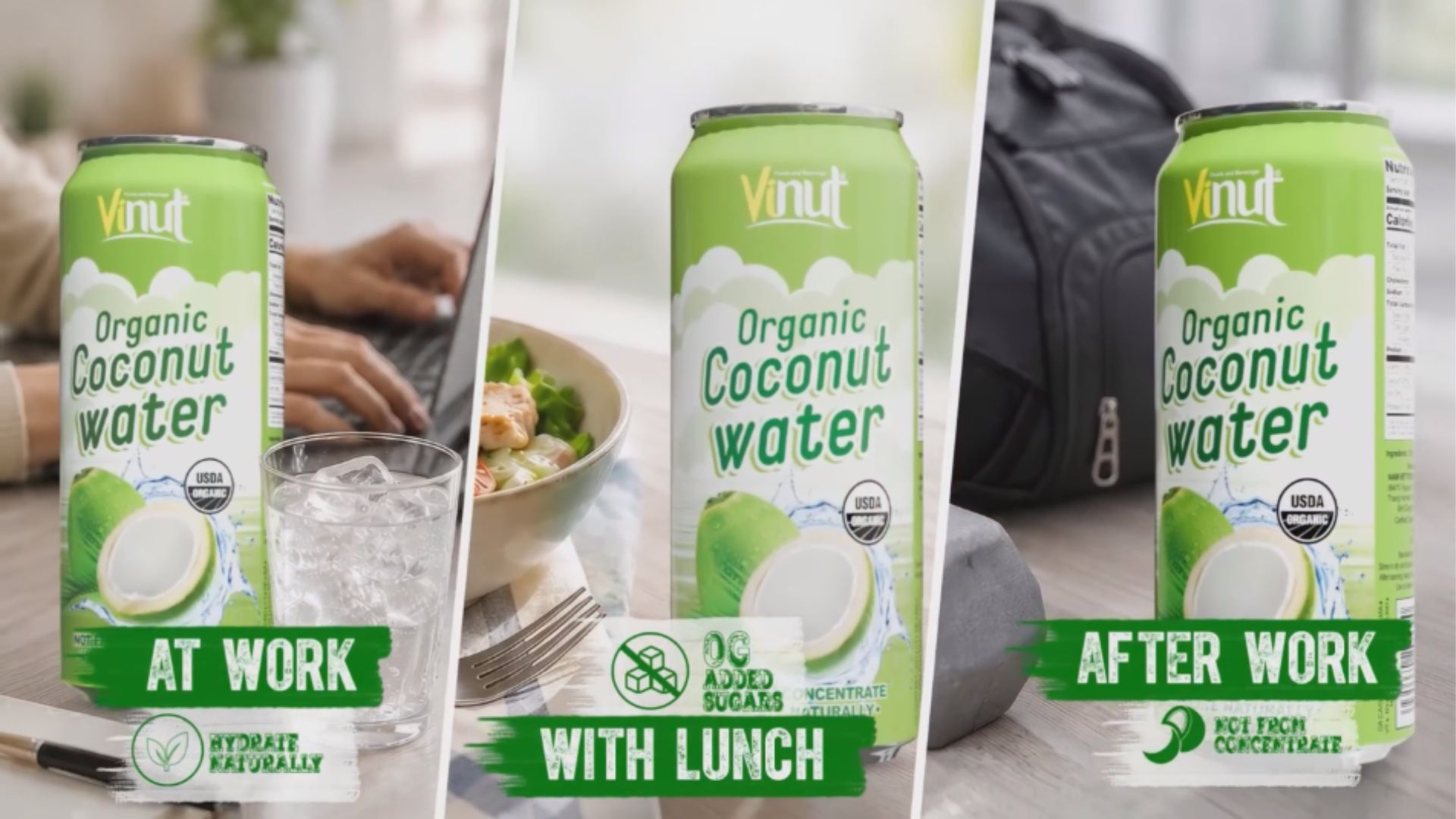
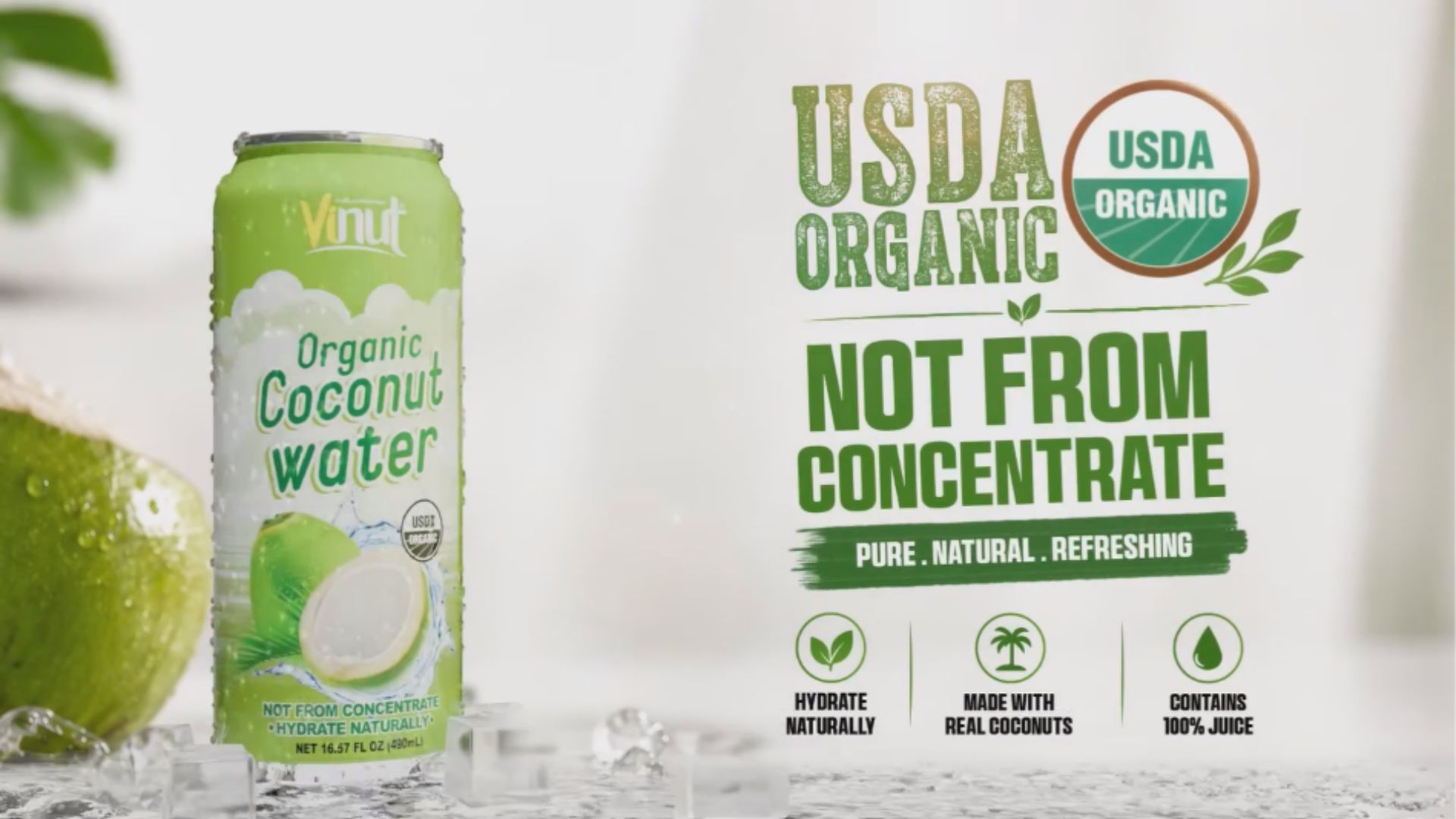
Claims such as Not From Concentrate, Natural Hydration, or Organic should always be supported by the product label and supporting documentation.
If ingredients such as sulfites or other additives are present, they should be clearly declared according to the importing market's labeling requirements.
4. Check Packaging and Shelf Readiness
Packaging influences transportation costs, warehouse efficiency, and retail presentation.
When evaluating canned coconut water, buyers should confirm:
Package dimensions
Net content
Case configuration
Barcode availability
Shelf life
Storage recommendations
Pallet configuration
Packaging should also meet the practical needs of retailers, making products easy to stock, display, and replenish.
5. Request Product Documents Before Ordering
Professional sourcing requires more than reviewing product photos.
Before confirming an order, buyers should request documentation such as:
Document | Purpose |
|---|---|
Product specification sheet | Product information |
Ingredient list | Label verification |
Nutrition Facts | Regulatory review |
Certificate of Analysis (COA) | Batch quality verification |
Certification documents | Compliance confirmation |
Barcode information | Retail setup |
Packaging specifications | Logistics planning |
Reviewing these documents early helps reduce delays during product registration, customs clearance, and retailer approval.
6. Evaluate Supplier Reliability
Choosing a supplier based only on price can increase long-term risk.
Reliable suppliers typically demonstrate:
Consistent product quality
Stable production capacity
Clear communication
On-time delivery
Complete documentation
Responsive after-sales support
A supplier should also be able to answer technical questions regarding product specifications, shelf life, storage conditions, and destination-market requirements.
Long-term partnerships are often built on reliability rather than the lowest quotation.
7. Test Samples Before Scaling Up
Product samples provide an opportunity to evaluate both the beverage and its packaging before committing to larger orders.
A sample review may include:
Taste and aroma
Product appearance
Packaging quality
Label readability
Barcode placement
Carton condition
Shelf presentation
Testing products with local retailers or consumers can also provide valuable feedback before a full market launch.
8. Plan Pricing and Distribution Economics
Wholesale pricing should be evaluated as part of the overall distribution strategy.
Important considerations include:
Product cost
Freight charges
Import duties
Warehousing expenses
Retail margins
Promotional budgets
Forecasted sales volume
A product with strong consumer appeal may still perform poorly if distribution costs are not aligned with the target retail price.
Requesting a complete quotation - including logistics and packaging details - provides a more accurate picture than comparing unit prices alone.
9. Match Product Types to Retail Channels
Different coconut water formats often serve different market roles.
For example:
Product Type | Typical Market Role |
|---|---|
Organic | Premium and natural food retailers |
Original | Core everyday coconut water |
With Pulp | Specialty and Asian grocery channels |
Flavored | Seasonal promotions and younger consumers |
Offering multiple formats allows distributors to meet a wider range of customer preferences while creating a more balanced beverage portfolio.
10. Common Sourcing Mistakes to Avoid
Many sourcing challenges can be avoided with careful planning.
Common mistakes include:
Selecting suppliers based only on price
Skipping product sample evaluations
Overlooking ingredient and allergen declarations
Ignoring packaging specifications
Not requesting product documentation
Assuming all certification claims are valid without verification
Failing to match products with the intended retail channel
A structured sourcing process helps reduce these risks and supports smoother product launches.
11. Frequently Asked Questions
12. Conclusion
Sourcing coconut water successfully involves much more than selecting the lowest price. Buyers should evaluate product type, ingredients, packaging, documentation, supplier reliability, and distribution economics before making purchasing decisions.
By following a structured sourcing process and matching each product to the appropriate retail channel, importers and distributors can build a coconut water portfolio that supports long-term market growth and customer satisfaction.
FAQ
How do I source coconut water for wholesale?
Begin by defining your target market, selecting the appropriate product type, reviewing product specifications, requesting documentation, testing samples, and evaluating supplier reliability.
What should buyers check before importing coconut water?
Key areas include ingredients, nutrition facts, packaging specifications, shelf life, certifications, product documents, and compliance with destination-market labeling requirements.
Which coconut water format is best?
There is no single best option. Original coconut water is often suitable for mainstream retail, while organic, flavored, or pulp varieties may better fit premium or specialty markets.
Is canned coconut water suitable for retail?
Yes. Canned coconut water is widely used in supermarkets, convenience stores, and other retail channels because it is easy to transport, display, and store.
What documents should a supplier provide?
Typical documents include product specifications, Nutrition Facts, ingredient lists, Certificate of Analysis (COA), packaging specifications, barcode information, and any applicable certifications.
Why are product samples important?
Samples allow buyers to evaluate taste, packaging quality, labeling, and shelf presentation before placing larger wholesale orders.
About this article
The VINUT editorial team publishes articles about beverage ingredients, product characteristics, and practical information for readers and international buyers.