Buyer Briefing
5 min read · 981 words
Popping boba is made by creating a thin gel membrane around a flavored liquid, commonly using a process called spherification. Food-grade sodium alginate and calcium interact to form the membrane that gives popping boba its signature burst. Unlike tapioca pearls, popping boba has a liquid center rather than a chewy starch-based texture.
- Popping boba is different from tapioca pearls.
- It contains a liquid center surrounded by a thin gel membrane.
- Spherification creates its characteristic bursting texture.
- Sodium alginate and calcium are commonly used for gel formation.
- Ingredient ratios can affect texture and sphere formation.
- Fruit flavors are especially suitable for popping boba.
- Popping boba works well in tea, smoothies, desserts, and cold drinks.
- Gelatin alternatives generally produce a different texture.
Listen to the article summary
AI-generated voice · English · 2:45
Read transcript
Popping boba, a popular addition to bubble tea, smoothies, and desserts, features a thin outer membrane surrounding a flavorful liquid center that bursts when bitten. This distinctive texture is typically achieved through a food preparation technique called spherification. Unlike traditional chewy, starch-based tapioca pearls, popping boba is designed to release its liquid filling, with popular flavors including mango, strawberry, lychee, and other tropical fruits. VINUT explores how popping boba works, highlighting the crucial role of sodium alginate, a food ingredient derived from brown algae. When sodium alginate interacts with calcium ions, it forms a delicate gel membrane. A food-grade calcium ingredient supplies these ions, and the precise ratios of ingredients are vital, as too much or too little can affect the membrane's consistency. The acidity and calcium content of the flavored liquid also influence the process, making it important to follow tested food-grade spherification recipes. To make homemade popping boba, essential ingredients include flavored juice, food-grade sodium alginate, a suitable food-grade calcium ingredient, and water. The general process involves preparing the flavored liquid and the alginate or calcium mixture, allowing any air bubbles to settle, and then carefully introducing small portions of the liquid into a setting bath using a dropper or spoon. After a brief setting time, the spheres are gently removed with a slotted spoon and rinsed in clean water before serving. Common mistakes in homemade spherification include irregular spheres, membranes that are too thick or too fragile, and mixtures containing bubbles. Troubleshooting often involves adjusting ingredient ratios, calcium content, or acidity, and allowing blended mixtures to rest. While fruit flavors are especially popular for their refreshing profiles, it's important to remember that the acidity and mineral content of juices can affect spherification. Popping boba's colorful appearance and unique texture make it versatile beyond bubble tea. It can be added to fruit teas, used as a topping for smoothies, incorporated into yogurt and smoothie bowls, served with desserts like ice cream or pudding, and even used as a decorative and textural element in mocktails and cold drinks. It's important to note that while other ingredients like gelatin or agar can create gelled pearls, they generally produce a different texture than the classic liquid-filled popping boba created through spherification.
Popping boba recipe ideas have become increasingly popular as bubble tea, fruit tea, smoothies, and creative desserts continue to attract consumers around the world. Unlike traditional tapioca pearls, popping boba has a thin outer membrane surrounding a flavorful liquid center. When bitten, the sphere bursts and releases the filling.
The characteristic texture of popping boba is commonly created through a food preparation technique known as spherification. Sodium alginate and a calcium source interact to form a delicate gel membrane around a flavored liquid.
In this guide, VINUT explores how popping boba works, the ingredients and equipment involved, practical preparation tips, flavor ideas, and creative ways to use these colorful spheres.
I/ What Is Popping Boba?
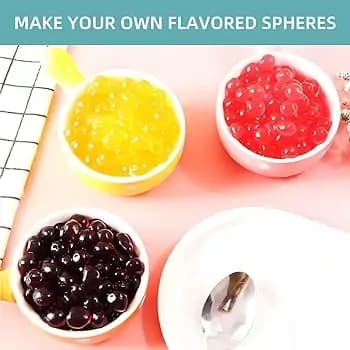
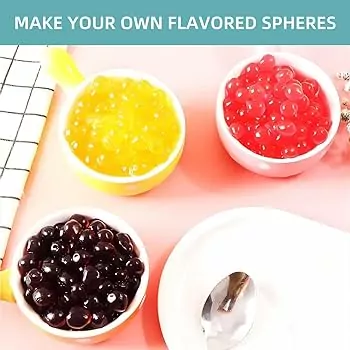
Popping boba consists of small, liquid-filled spheres commonly added to bubble tea and other beverages.
Unlike tapioca pearls, which are chewy and starch-based, popping boba is designed to burst when gently pressed or bitten. The center can contain fruit juice, flavored syrup, tea, or another suitable liquid.
Popular flavors include mango, strawberry, lychee, peach, passion fruit, and other tropical fruits.
II/ What Is the Difference Between Popping Boba and Tapioca Pearls?
Although both are popular bubble tea toppings, they are not the same product.
Feature | Popping Boba | Tapioca Pearls |
|---|---|---|
Texture | Thin shell with liquid center | Soft and chewy |
Main technique | Spherification | Cooking starch dough |
Common base | Flavored liquid | Tapioca starch |
Eating experience | Bursts in the mouth | Requires chewing |
Popular flavors | Fruit flavors | Brown sugar, original |
Understanding this difference is important before trying a homemade popping boba recipe.
III/ How Does Sodium Alginate Create Popping Boba?
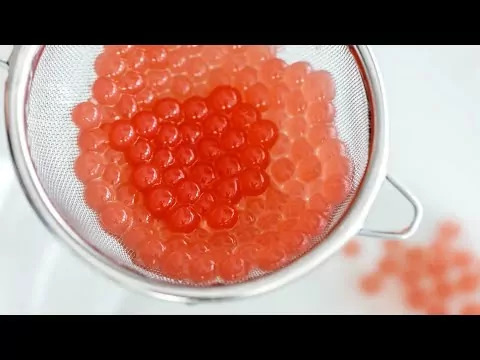
Sodium alginate is a food ingredient derived from brown algae. When alginate interacts with calcium ions under suitable conditions, a gel begins to form.
This reaction can be used to create a thin membrane around a flavored liquid, producing the characteristic sphere associated with popping boba.
The Role of Sodium Alginate
Sodium alginate acts as the gel-forming component. It must be properly dispersed in liquid to produce consistent results.
The Role of Calcium
A food-grade calcium ingredient supplies the calcium ions needed for gel formation.
Depending on the spherification technique, the calcium component may be placed in the bath or incorporated into the flavored liquid.
Why Ratios Matter
Too much or too little of an ingredient can affect the membrane. The acidity and calcium content of the flavored liquid can also influence the process.
For this reason, following a tested food-grade spherification recipe is preferable to improvising ingredient concentrations.
IV/ What Do You Need to Make Homemade Popping Boba?
The exact ingredients depend on the spherification method, but a basic setup may include:
Flavored juice or liquid
Food-grade sodium alginate
A suitable food-grade calcium ingredient
Water
Mixing bowl
Blender or whisk
Dropper, syringe, or small measuring spoon
Slotted spoon
Clean water for rinsing
Always use ingredients specifically labeled for food preparation.
V/ How Do You Make Popping Boba?
The exact procedure depends on whether you use direct or reverse spherification, but the general process follows several stages.
Step 1: Prepare the Mixtures
Prepare the flavored liquid and the appropriate alginate or calcium mixture according to your chosen recipe.
Mix thoroughly until the ingredients are evenly dispersed.
Step 2: Allow Bubbles to Settle
Blending can introduce air bubbles. Allowing the mixture to rest can produce smoother, more attractive spheres.
Step 3: Form the Spheres
Use a dropper or suitable spoon to carefully introduce small portions of the prepared liquid into the setting bath.
The droplets begin forming a gel membrane as the ingredients interact.
Step 4: Remove the Boba
Use a slotted spoon to gently remove the spheres after the appropriate setting time.
Leaving them in the bath too long may create a thicker membrane.
Step 5: Rinse and Serve
Transfer the spheres to clean water to rinse away excess solution.
They can then be incorporated into an appropriate drink or dessert.
VI/ What Are Common Popping Boba Mistakes?
Homemade spherification often requires some experimentation.
Common problems include:
Spheres are irregular: Droplets may be released too quickly or too close to the bath.
Membrane is too thick: The spheres may have remained in the setting bath too long.
Boba breaks easily: Gel formation may be insufficient.
Mixture contains bubbles: Allow blended mixtures time to rest.
Spheres do not form: Ingredient ratios, calcium content, or acidity may be interfering with gelation.
Changing one variable at a time makes troubleshooting easier.
VII/ What Flavors Work Well for Popping Boba?
Fruit flavors are especially popular because their bright, refreshing profiles pair naturally with tea and other cold drinks.
Try flavors such as:
Mango
Strawberry
Lychee
Peach
Passion fruit
Pineapple
Raspberry
Green apple
When experimenting with juices, remember that acidity and mineral content can affect spherification. Some recipes may therefore require adjustments.
VIII/ How Can You Use Popping Boba?
Popping boba is not limited to bubble tea. Its colorful appearance and distinctive texture make it suitable for many food and beverage applications.
Fruit Tea
Add mango, lychee, peach, or passion fruit boba to iced tea for contrasting flavor and texture.
Smoothies
Use popping boba as a topping rather than blending it into the smoothie. This preserves the liquid-filled spheres.
Yogurt and Smoothie Bowls
Fruit-flavored boba can add color and a playful burst to creamy yogurt and smoothie bowls.
Desserts
Popping boba can be served with ice cream, pudding, shaved ice, or other chilled desserts.
Mocktails and Cold Drinks
The spheres can also provide a decorative and textural element in sparkling drinks, lemonades, and alcohol-free cocktails.
IX/ Can You Make Popping Boba Without Sodium Alginate?
You can create small gelled pearls using other ingredients such as gelatin or agar, but the result is generally not identical to classic liquid-filled popping boba.
Gelatin typically creates a gel throughout the sphere rather than a thin membrane surrounding a liquid center.
Therefore, recipes marketed as "popping boba without sodium alginate" may produce enjoyable jelly pearls, but their texture and structure can differ significantly from spherified popping boba.
XII/ Conclusion
A homemade popping boba recipe combines culinary creativity with the fascinating science of spherification. Unlike chewy tapioca pearls, popping boba is known for its delicate outer membrane and flavorful liquid center.
Understanding how sodium alginate interacts with calcium makes it easier to achieve consistent spheres and troubleshoot common problems. Once the basic technique is understood, different fruit flavors can be explored and paired with teas, smoothies, desserts, yogurt bowls, and other refreshing creations.
Whether used as a bubble tea topping or a decorative element in desserts, popping boba provides an enjoyable combination of flavor, color, texture, and creativity.
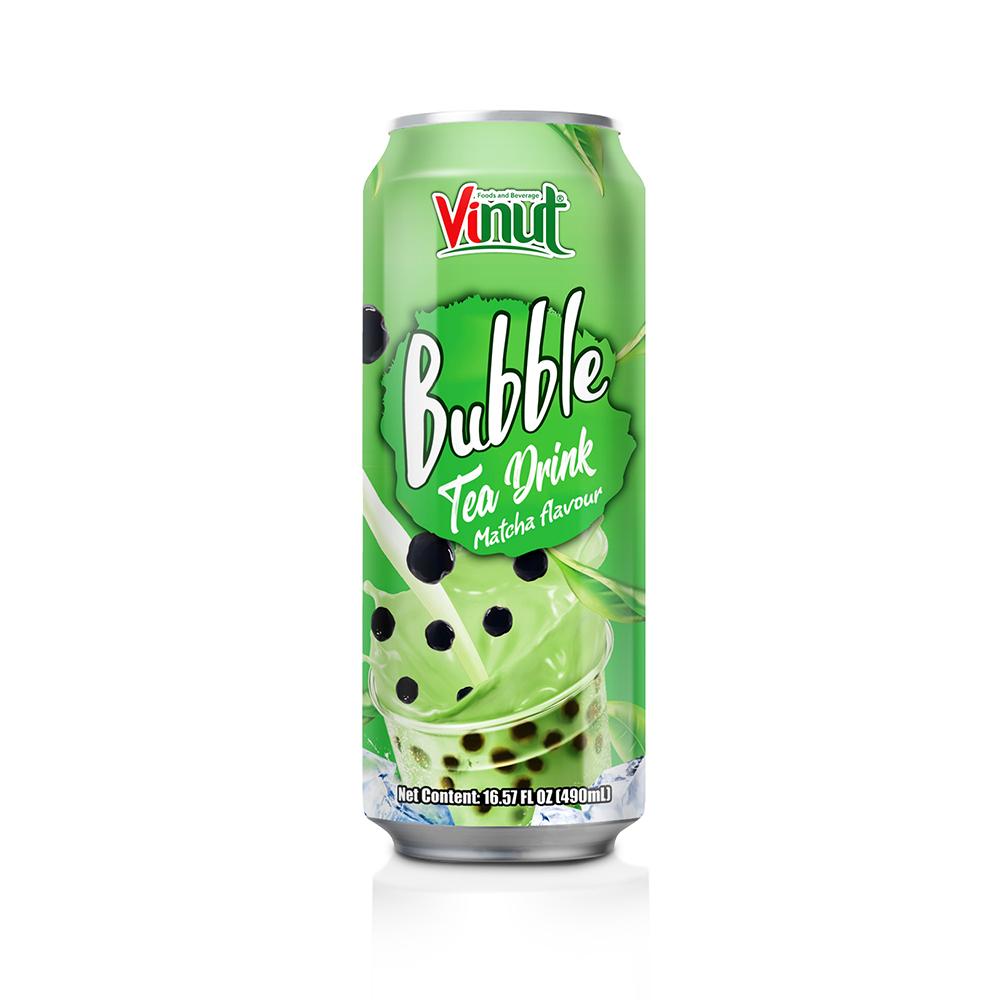
VINUT products
Explore related drinks
View ingredients, sizes and packaging.
FAQ
What is popping boba made of?
Popping boba typically consists of a flavored liquid surrounded by a thin gel membrane created through spherification.
Is popping boba made from tapioca starch?
Classic popping boba is different from tapioca pearls. Tapioca pearls are starch-based and chewy, while popping boba generally has a liquid center.
Why does popping boba pop?
A thin gel membrane surrounds its liquid center. Biting the sphere breaks this membrane and releases the filling.
Can I make popping boba at home?
Yes. It can be made at home with food-grade spherification ingredients and suitable kitchen equipment.
About this article
The VINUT editorial team publishes articles about beverage ingredients, product characteristics, and practical information for readers and international buyers.