Buyer Briefing
4 min read · 859 words
Soy milk is a plant-based drink made from soybeans and water. A cup provides about 7-8g of protein, is naturally lactose-free and cholesterol-free, and is low in saturated fat. Fortified versions supply calcium and vitamin D, making soy milk a solid dairy alternative for vegans and people who are lactose intolerant.
- Soy milk has roughly 7-8g of protein per cup, about the same as cow's milk.
- It is naturally lactose-free and cholesterol-free, and low in saturated fat.
- Calcium and vitamin D usually come from fortification, so choose fortified versions and check the label.
- Soy contains isoflavones and potassium that may support heart health, but the effects are modest and not a substitute for medical care.
- Unsweetened or lightly sweetened soy milk gives you the most control over sugar.
- Soy is a major food allergen, so avoid it if you are allergic.
Listen to the article summary
AI-generated voice · English · 2:52
Read transcript
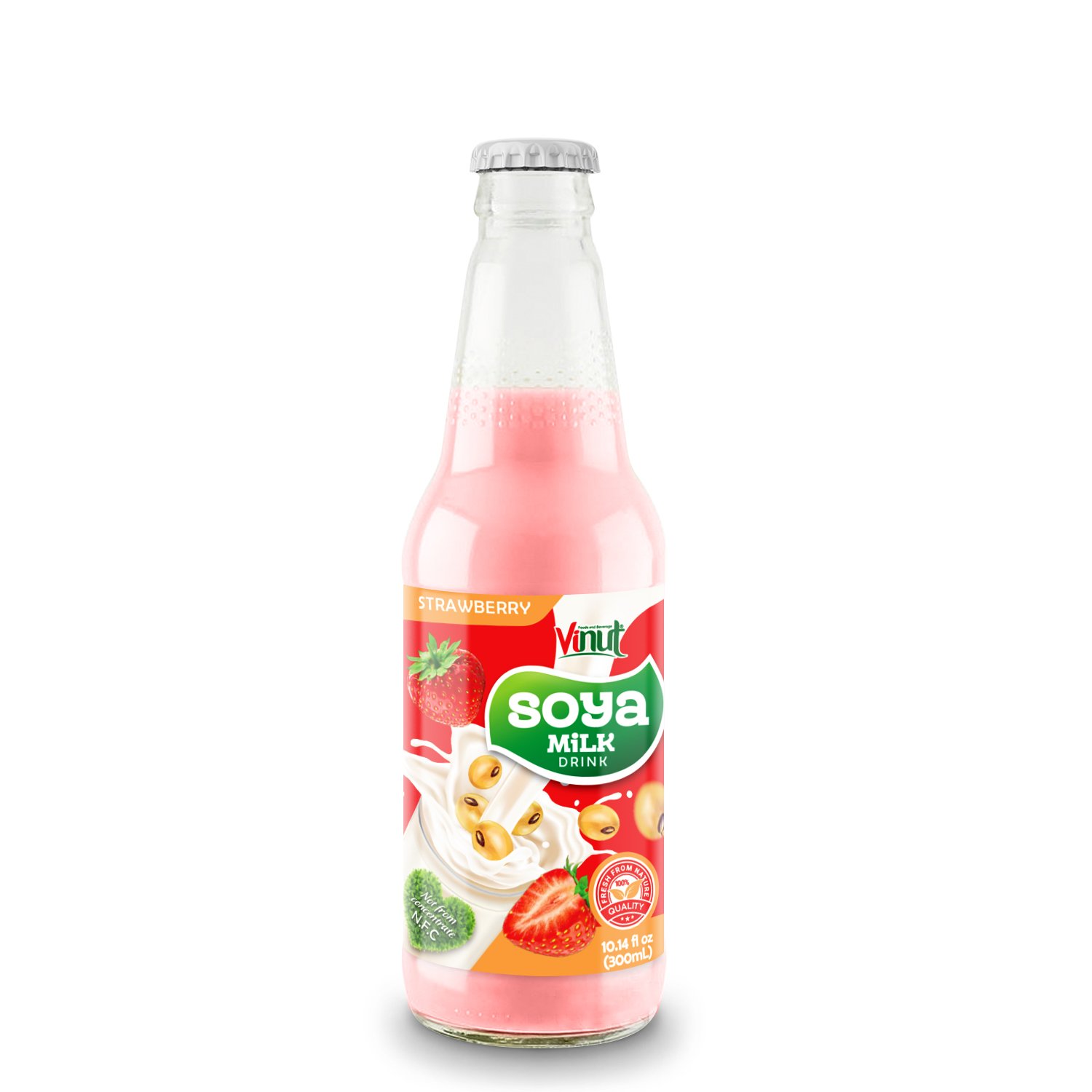
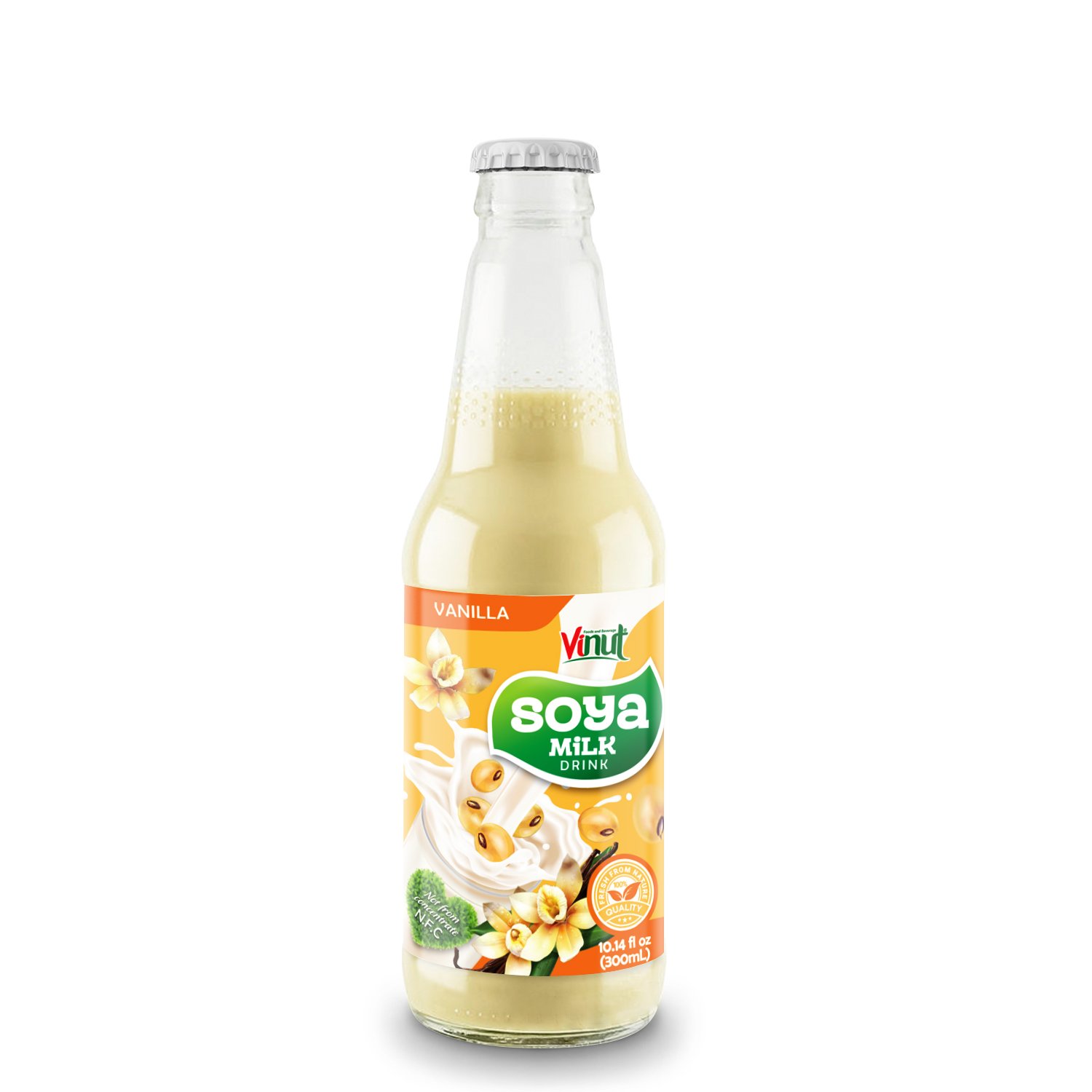
Soy milk is a plant-based beverage known for its creamy texture and nutritional value, making it a popular alternative for those following a plant-based lifestyle or managing lactose intolerance. VINUT highlights its uses as a substitute for cow's milk in various applications, including drinking, baking, cooking, and as an ingredient in smoothies, coffee, and tea. Nutritionally, soy milk is a good source of plant-based protein, providing approximately 7-8 grams per cup, making it one of the most protein-rich plant milks. It contains unsaturated fats, including omega-6 and smaller amounts of omega-3 fatty acids, which support brain function, though it shouldn't be your sole source of omega-3s. It offers a modest amount of fiber, around 1 gram per cup. Importantly, soy milk is naturally cholesterol-free and lactose-free, suitable for those with lactose intolerance or following vegan diets. For precise nutritional values, checking product labels is recommended as numbers can vary by brand. Soy milk offers several potential health benefits. It may support cardiovascular health through potassium, which helps maintain healthy blood pressure, and isoflavones and soy protein, which studies suggest may modestly lower LDL cholesterol when soy replaces higher-saturated-fat foods. These effects are best realized as part of an overall balanced diet. For bone health, fortified soy milk is an excellent source of calcium and vitamin D, crucial for maintaining bone density and reducing the risk of conditions like osteoporosis. It can also aid in weight management, as its low-calorie content, combined with protein and fiber, promotes a feeling of fullness. Furthermore, soy milk contains phytoestrogens like isoflavones, which may positively affect hormonal balance, potentially alleviating menopausal symptoms such as hot flashes and night sweats. Incorporating soy milk into your diet is simple. It can be enjoyed chilled on its own, used as a base for smoothies, or as a dairy substitute in coffee, tea, and hot chocolate, where it froths well. It's also suitable for breakfast cereals or oatmeal and works effectively in desserts like puddings, custards, and ice creams due to its creamy texture. When choosing soy milk, opt for unsweetened or lightly sweetened varieties to control sugar intake and look for products fortified with calcium and vitamin D. After opening, refrigerate soy milk and consume it within about a week, or as directed by the product label. Shelf-stable cartons last longer until opened, and shaking well before use ensures ingredients are evenly mixed. VINUT offers its Original Soya Milk Drink, along with Strawberry and Vanilla flavors, and invites those interested in sourcing for their market to request a catalog or contact their team.
Soy milk is packed with nutrients and has a creamy texture, which has made it a staple for people following a plant-based lifestyle or living with lactose intolerance. In this guide, VINUT covers soy milk nutrition, health benefits, simple ways to use it and how to choose and store it.
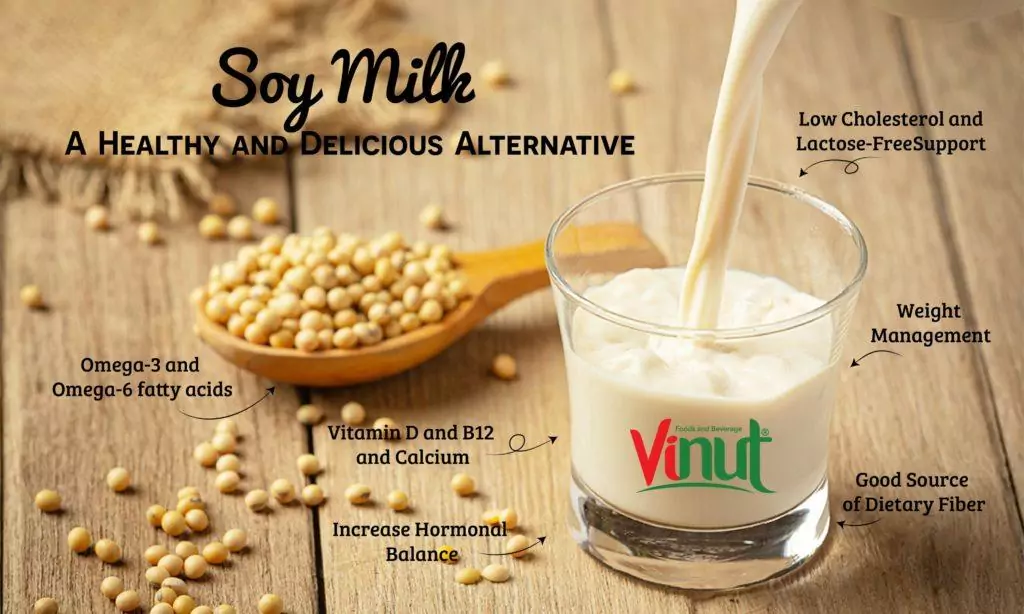
Soy Milk Benefits
1. What is Soy Milk?
Soy milk has a mild, slightly fatty flavor and a creamy texture similar to cow’s milk. It can be used as a substitute for cow’s milk in a variety of applications, including drinking, baking, and cooking, and as an ingredient in smoothies, coffee, and tea.
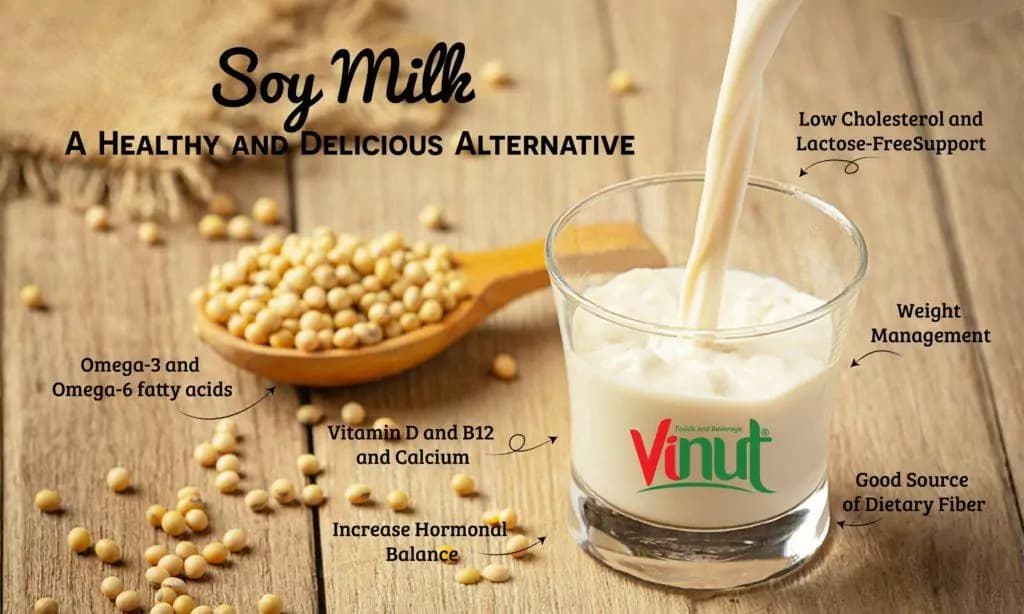
One of the main advantages of this milk is its nutritional composition. It is a good source of plant-based protein, essential fatty acids, and several vitamins and minerals. The milk is generally low in saturated fat and cholesterol free, making it a good choice for the heart.
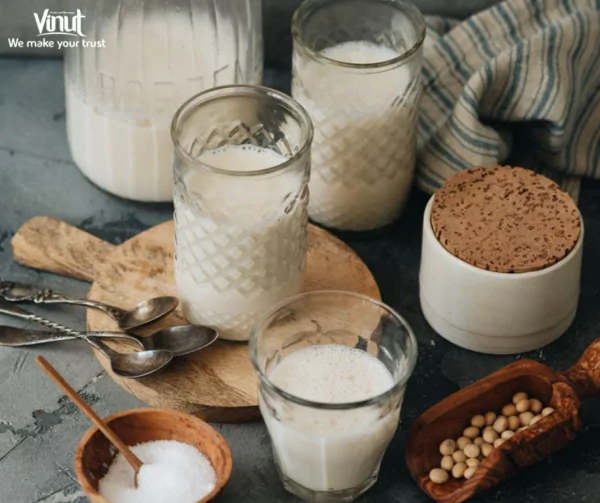
VINUT_What is Soy Milk?
2. Nutritional Profile of Soy Milk
2.1 Protein
A cup of soy milk provides approximately 7-8g of protein, which makes it one of the most protein-rich plant-based milks and a useful option if you want to increase your protein intake.
2.2 Healthy Fats
Yes. Soy milk contains unsaturated fats, including omega-6 fatty acids and smaller amounts of omega-3 (ALA). These fats support brain function and overall well-being, though soy milk should not be your only source of omega-3.
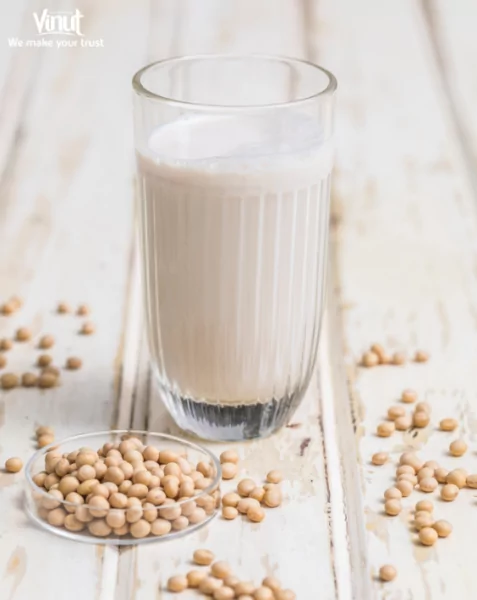
VINUT_Nutritional Profile of Soy Milk
2.3 Fiber
It provides a small amount of fiber, usually around 1g per cup, so it is better described as a modest contributor than a rich source. Pair it with whole grains, fruit or oats for a more filling meal.
2.4 Low Cholesterol and Lactose-Free
Unlike cow's milk, soy milk is naturally cholesterol-free and contains no lactose. This makes it suitable for people who are lactose intolerant and for those following a vegan or plant-based diet.
For exact nutrition values, see USDA FoodData Central and always check the product label, since numbers vary by brand.
VINUT_Nutritional Profile of Soy Milk
3. Potential Health Benefits
3.1 Cardiovascular Health
Soy milk may support heart health in a few ways:
Potassium: helps maintain healthy blood pressure.
Isoflavones and soy protein: studies suggest they may modestly lower LDL ("bad") cholesterol when soy replaces higher-saturated-fat foods.
Low saturated fat: replacing full-fat dairy with soy milk can reduce saturated fat intake.
These effects are modest and work best as part of an overall balanced diet. The Harvard T.H. Chan School of Public Health publishes independent guidance on plant-based foods and heart health.

VINUT_Supports Heart Health
3.2 Bone Health
Fortified soy milk is an excellent source of calcium, a mineral crucial for maintaining healthy bones and teeth. Calcium, combined with vitamin D, enhances the body’s ability to absorb and utilize calcium effectively. Including it in your diet can thus promote optimal bone density and reduce the risk of conditions such as osteoporosis.

VINUT_Bone Health
3.3 Weight Management
Soy milk is considered one of the drinks that can help control weight for people with health problems. This type of milk is low in calories, but the protein and fiber in milk promote a feeling of fullness, reducing the likelihood of overeating.

VINUT_Ash Gourd Juice for Weight Loss and Detoxification
3.4 Hormonal Balance
It contains natural compounds such as phytoestrogens, namely isoflavones, which are plant estrogens. These compounds have been found to have a positive effect on hormonal balance, especially in women going through menopause. Isoflavones may help alleviate menopausal symptoms such as hot flashes and night sweats.

VINUT_Hormonal Balance
4. How Can You Add Soy Milk to Your Diet?
4.1 How Can You Drink Soy Milk?
Enjoy a glass of chilled soy milk on its own.
Use it as a base for smoothies and shakes with berries or bananas.
Replace cow's milk in coffee, tea or hot chocolate. Soy milk froths well and works in lattes and cappuccinos.
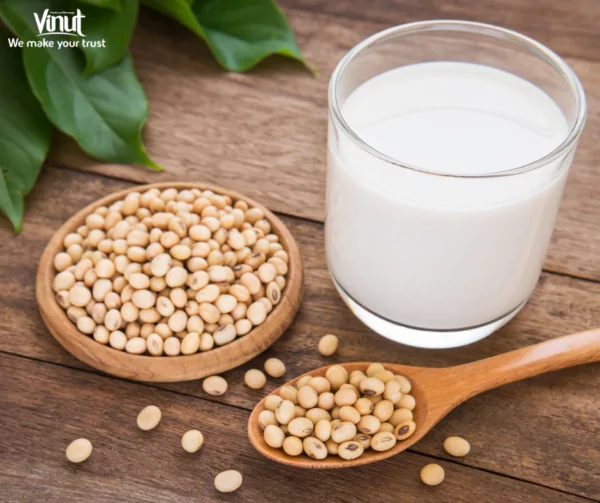
VINUT_Enjoy a refreshing glass of chilled soy milk

VINUT_ Soy milk in your hot chocolate
4.2 How Can You Use Soy Milk at Breakfast?
Pour soy milk over morning cereal or oatmeal. It adds creaminess and a hint of nuttiness to your breakfast bowl.
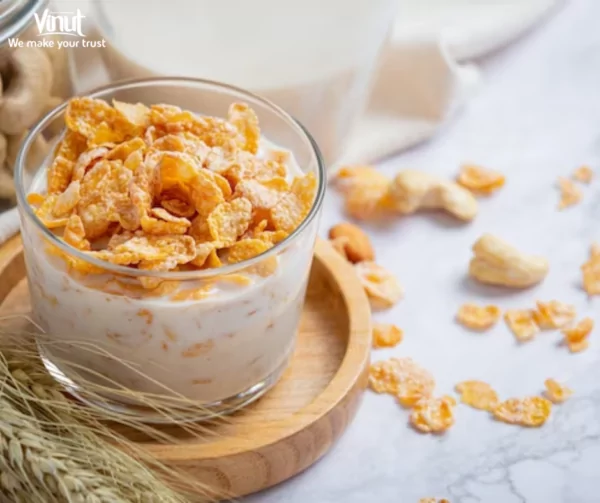
VINUT_Use soy milk in your morning cereal or oatmeal
4.3 Can You Make Desserts With Soy Milk?
Yes. Its creamy texture works well in puddings, custards and ice creams.

VINUT_ soy milk ice creams
5. How Do You Choose and Store Soy Milk?
Choose unsweetened or lightly sweetened soy milk to control the sugar in your drinks and recipes.
Look for fortified products with added calcium and vitamin D.
Refrigerate after opening and use it within about a week, or follow the label. Shelf-stable cartons and bottles keep longer until opened.
Shake well before each use so the ingredients are evenly mixed.
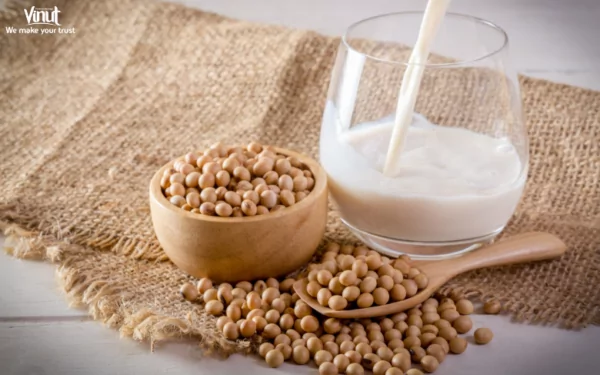
VINUT_ Soy Milk
VINUT products
Explore related drinks
View ingredients, sizes and packaging.
6. Conclusion
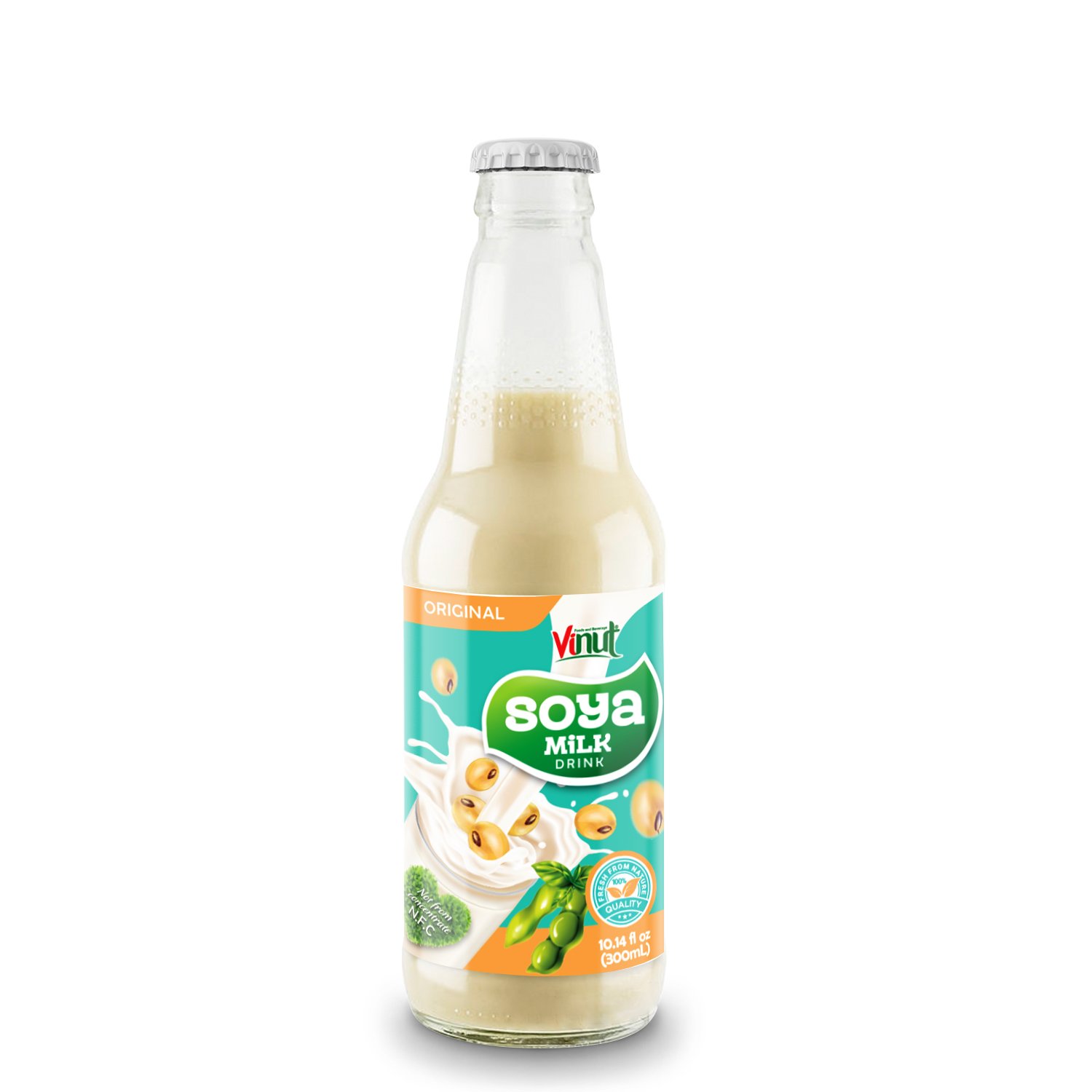
Soy milk is a nutritious, versatile milk alternative that offers protein, fortified calcium and a creamy taste for vegan and dairy-free diets. Compare labels for sugar and fortification before you choose a product. Explore VINUT's Original Soya Milk Drink, plus Strawberry and Vanilla flavors, or browse the Healthy Drink range. Interested in sourcing for your market? Request the catalog or contact our team.
Related VINUT Reading
Oat Milk: A Delicious and Nutritious Dairy-Free Alternative — compare soy milk with oat milk
The Top 7 Plant-Based Milk: A Comprehensive Guide — see how soy milk stacks up against other options
Rice Milk: A Nutritious Alternative for Dairy Milk — a nut-free and soy-free choice
Products: Healthy Drink · Soft Drinks
FAQ
Is soy milk healthy?
It can be. Soy milk offers plant protein, is cholesterol-free and lactose-free, and is low in saturated fat. Choose unsweetened, fortified versions for the best nutritional value.
Does soy milk have as much protein as cow's milk?
Nearly. A cup of soy milk has about 7-8g of protein, similar to the roughly 8g in a cup of cow's milk.
Is soy milk good for people who are lactose intolerant?
Yes. Soy milk contains no lactose, so it is a suitable dairy-free option.
Can you be allergic to soy milk?
Yes. Soy is one of the major food allergens. If you have a soy allergy, avoid soy milk and see Food Allergy Research & Education for guidance.
How long does soy milk last after opening?
Usually about a week in the fridge. Check the label, and discard it if it smells or tastes sour.
About this article
The VINUT editorial team publishes articles about beverage ingredients, product characteristics, and practical information for readers and international buyers.