

Buyer Briefing
2 min read · 356 words
Prebiotics are special plant fibers that help healthy bacteria grow in your gut, which improves the digestive system. They are indigestible carbohydrates that act as food for beneficial gut bacteria in the lower digestive tract.
- Prebiotics are plant fibers that feed beneficial gut bacteria and support digestive health.
- Common sources include bananas, apples, onions, garlic, oats, asparagus, and whole grains.
- Prebiotics and probiotics support gut health in different ways.
- Increasing prebiotic intake too quickly may cause gas, bloating, or digestive discomfort.
- Start with small amounts and prioritize prebiotic-rich whole foods.
I/ What Are Prebiotics?
Prebiotics are special plant fibers that help healthy bacteria grow in your gut. This makes your digestive system work better.
II/ Prebiotics vs. Probiotics
Both prebiotics and probiotics are good for your gut, but they help in different ways.
Prebiotics are a source of food for your gut’s healthy bacteria. They’re carbs your body can’t digest. So they go to your lower digestive tract, where they act like food to help the healthy bacteria grow.
Probiotics are live yeasts and good bacteria that live in your body and are good for your digestive system. You can take probiotics as supplements or get them through food.
III/ Prebiotic Foods
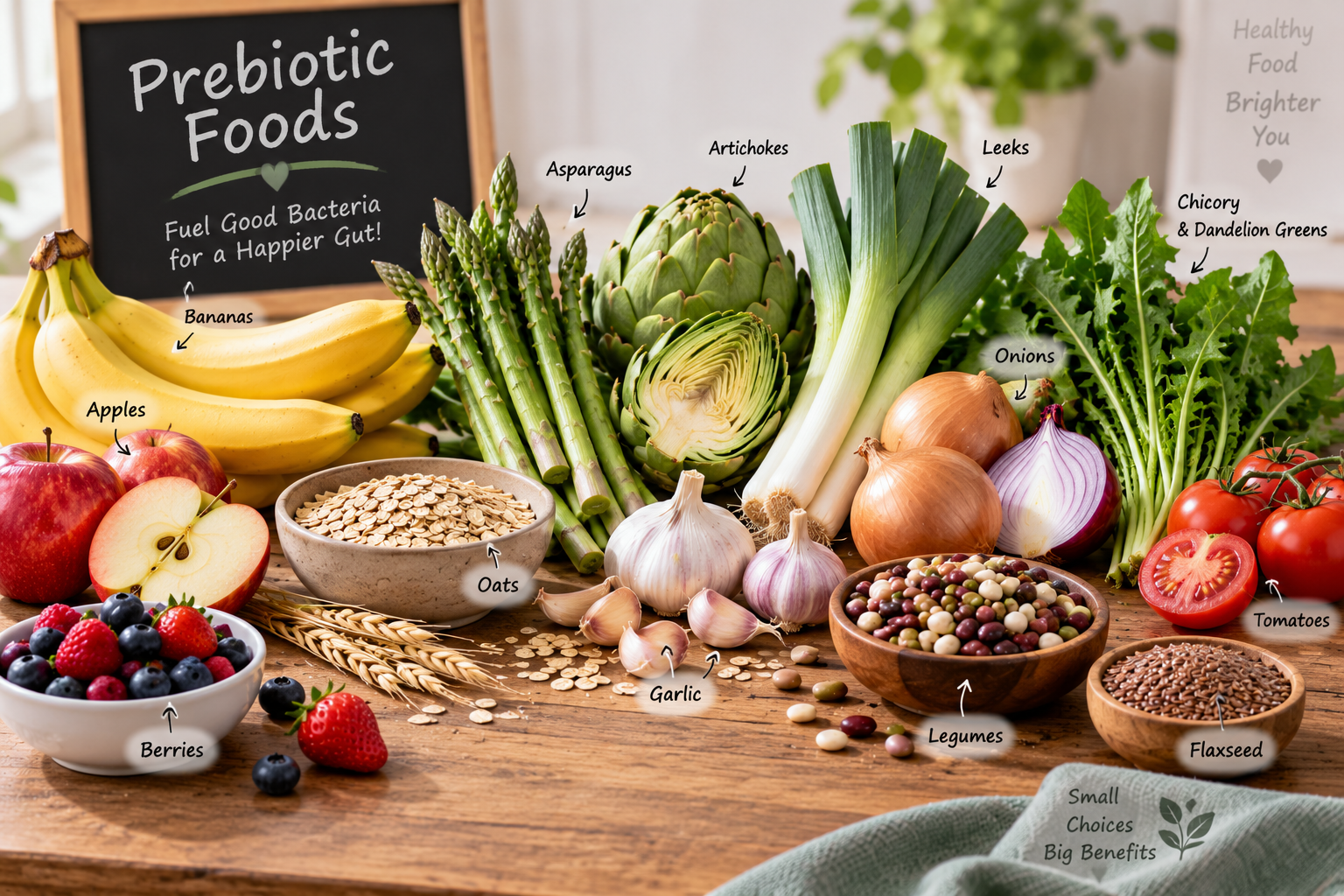
You’ll find prebiotics in many fruits, vegetables, and whole grains like:
Artichokes
Asparagus
Bananas
Barley
Berries
Chicory
Cocoa
Dandelion greens
Flaxseed
Garlic
Green vegetables
Konjac root
Leeks
Legumes (peas and beans)
Oats
Onions
Tomatoes
Soybeans
Wheat
Yacon root
Some products have added prebiotics. They may say “fortified with.” Some products that may have them include:
Baby formula
Bread
Cereal
Cookies
How to Identify Prebiotics on Food Labels
When you’re shopping for these products, you probably won’t see the word prebiotic on the label. Instead, look for terms like:
Galactooligosaccharides
Fructooligosaccharides
Oligofructose
Chicory fiber
Inulin
You can also find prebiotics in dietary supplement form. Babies can get them from their mother’s milk.
IV/ Prebiotic Benefits
In addition to feeding your good gut bacteria, prebiotics can:
Help you absorb calcium
Change the rate at which foods cause spikes in blood sugar (the glycemic index)
Ferment foods faster, so they spend less time in your digestive system. That helps you not get constipated.
Keep the cells that line your gut healthy
New studies are looking into whether prebiotics can help manage gut diseases like irritable bowel syndrome, and how they might play a role in controlling obesity.
V/ How to Use Prebiotics Safely
Try to get prebiotics from whole foods since they also have healthy vitamins, minerals, and antioxidants. Some experts say you should get at least 5 grams of prebiotics in your diet every day. Too much can lead to gas or bloating. Start with small amounts so your gut can get used to them.
Possible Side Effects of Prebiotics
Although side effects are rare, prebiotics aren’t for everyone. If you have IBS, prebiotics can make your symptoms worse, and you could have:
Bloating
Constipation
Diarrhea
Gas
You shouldn’t take prebiotics if you have small intestinal bacterial overgrowth (SIBO) or FODMAPs intolerance.
FAQ
What Are Prebiotics?
Prebiotics are special plant fibers that help healthy bacteria grow in your gut. This makes your digestive system work better.
What Is the Difference Between Prebiotics and Probiotics?
Prebiotics are types of fiber that feed beneficial bacteria already living in your gut. Probiotics, on the other hand, are live microorganisms found in certain foods and supplements. Both can support gut health, but they work in different ways.
Can You Eat Prebiotic Foods Every Day?
Prebiotic foods can be included as part of a balanced daily diet. Foods such as bananas, oats, onions, garlic, and asparagus are natural sources. However, increasing prebiotic intake too quickly may cause gas or bloating, so it is generally better to increase intake gradually.
About this article
The VINUT editorial team publishes articles about beverage ingredients, product characteristics, and practical information for readers and international buyers.