Buyer Briefing
5 min read · 904 words
Sparkling water and sparkling fruit drinks both contain dissolved CO2, but they may differ in their beverage bases, fruit juice, flavours and sugars. Choose using the actual ingredient list, juice information and serving-size label.
- Carbonation itself cannot tell you whether a drink contains sugar or juice.
- Sparkling water is primarily water-based, while sparkling fruit drinks are fruit-focused in formulation or flavour.
- Fruit flavour alone cannot verify juice percentage or a nutritional advantage.
- Use the exact product and market label to compare ingredients, sugars, servings and storage directions.
The main difference between sparkling water and a sparkling fruit drink is the beverage base, not the bubbles. Both contain dissolved carbon dioxide (CO2), which creates fizz. Sparkling water is primarily a carbonated water drink, while a sparkling fruit drink is presented around fruit juice, fruit flavour or a fruit-containing beverage formulation. Neither name alone tells you the exact sugars, juice percentage or nutritional profile.
To make a useful comparison, read the ingredient statement and serving information for the two products you are actually considering. That is more reliable than assuming every sparkling water has zero sugar or every sparkling fruit drink contains a fixed percentage of juice.
What makes both drinks sparkling?
Carbon dioxide is dissolved in the liquid under pressure. When the container is opened, some gas escapes as the familiar bubbles. The Open University explains that the dissolved gas also forms a small amount of carbonic acid, contributing to the tingling sensation. The exact fizz depends on the product, serving temperature, pouring and how long the container has been open.
Carbonation is not an ingredient list by itself. It cannot tell you whether a product contains added sugar, fruit juice, minerals or flavouring. It also does not establish that a drink improves digestion or has a special medical benefit.
What is sparkling water?
At its simplest, sparkling water is water with dissolved CO2. Depending on the category and manufacturer, it can also contain naturally occurring minerals, added mineral salts or flavour ingredients. Some flavoured sparkling waters are unsweetened, while other products carrying a similar name may use sweeteners or other ingredients. Check the actual pack before describing it as sugar-free or calorie-free.
How do soda water and sparkling mineral water fit in?
Soda water, sometimes called club soda, may contain added mineral salts. For example, the Schweppes club soda ingredient list includes sodium bicarbonate, salt and potassium sulfate. Mineral water gets its minerals from its source. In the United States, the bottled-water standard defines mineral water by its protected underground source and dissolved minerals, with no minerals added. These water categories do not establish whether a sparkling fruit drink contains juice.
What is a sparkling fruit drink?
A sparkling fruit drink combines carbonation with a fruit-focused formulation or flavour profile. Some are made with fruit juice, some use fruit flavouring and others combine juice with water and additional ingredients. Different varieties can also contain different sweeteners, juice percentages and serving sizes. A bright orange or mango image does not establish the proportion of fruit juice inside.
In the United States, 21 CFR 101.30 addresses juice-percentage declarations for beverages that purport to contain fruit or vegetable juice, including carbonated drinks. The precise labelling requirement depends on the product's presentation and ingredients. This U.S. rule should not be presented as identical to every destination market's regulations.
Can a product sit between the two categories?
Yes. A sparkling water may be fruit-flavoured, or it may contain a small amount of fruit juice. A beverage described as sparkling coconut water uses a different starting base again. Those products cannot always be classified from the category name alone. Instead of forcing every can into one rigid box, check what the finished formulation actually declares.
Five details to compare on the label
- Beverage description: identify whether the label calls the product sparkling water, juice, juice drink or a fruit-flavoured beverage.
- Ingredients and fruit content: find any named fruit juice, fruit flavour, sweetener and mineral additions. Check the juice declaration where applicable.
- Total and added sugars: compare the actual finished product. On U.S. Nutrition Facts labels, Total Sugars includes naturally occurring and added sugars, while Added Sugars is reported separately.
- Serving size and package volume: one can may contain a single serving while a larger bottle may contain more. Compare nutrients on an equivalent quantity or labelled serving basis.
- Storage and opening instructions: check the actual product for chilled serving, unopened storage and after-opening requirements rather than guessing from the container type.
The U.S. FDA's Added Sugars guidance and Nutrition Facts guide explain why total sugars, added sugars and the number of servings should be read separately. A “no added sugar” statement does not mean the finished drink contains no sugar at all.
Which one should you choose?
If you want a water-forward drink
Start with sparkling water and choose the flavour intensity you prefer. Plain water-based options are a useful starting point when you want a neutral fizzy drink or a mixer, but do not assume that every flavoured variant has the same ingredient or sugar profile.
If you want a fruit-forward drink
Explore sparkling fruit drinks in flavours you enjoy, then check whether the label identifies fruit juice, flavouring or both. A named fruit can suggest what you might like, but a specific sweetness level or flavour strength cannot be established without the actual recipe or a documented tasting.
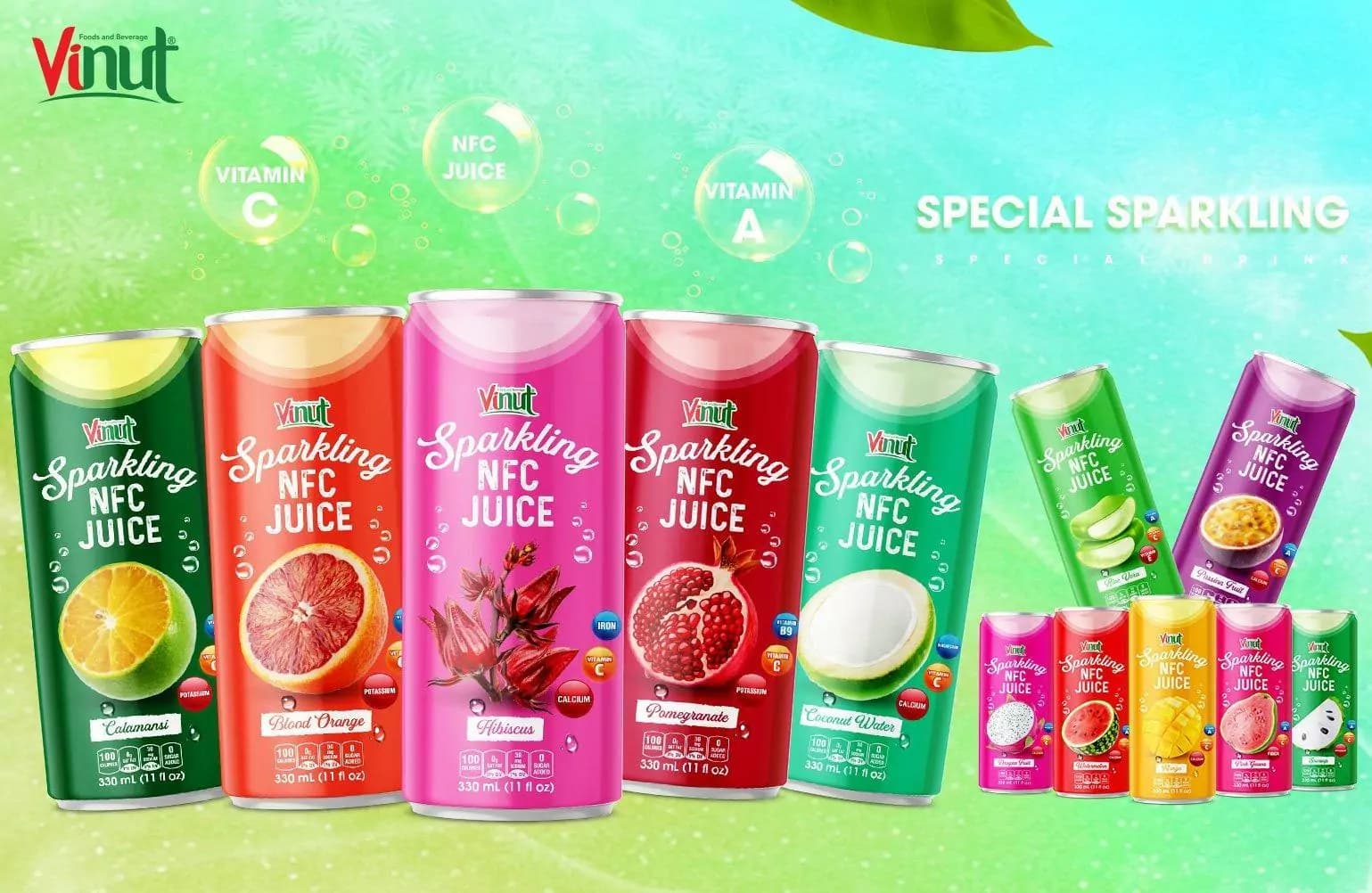
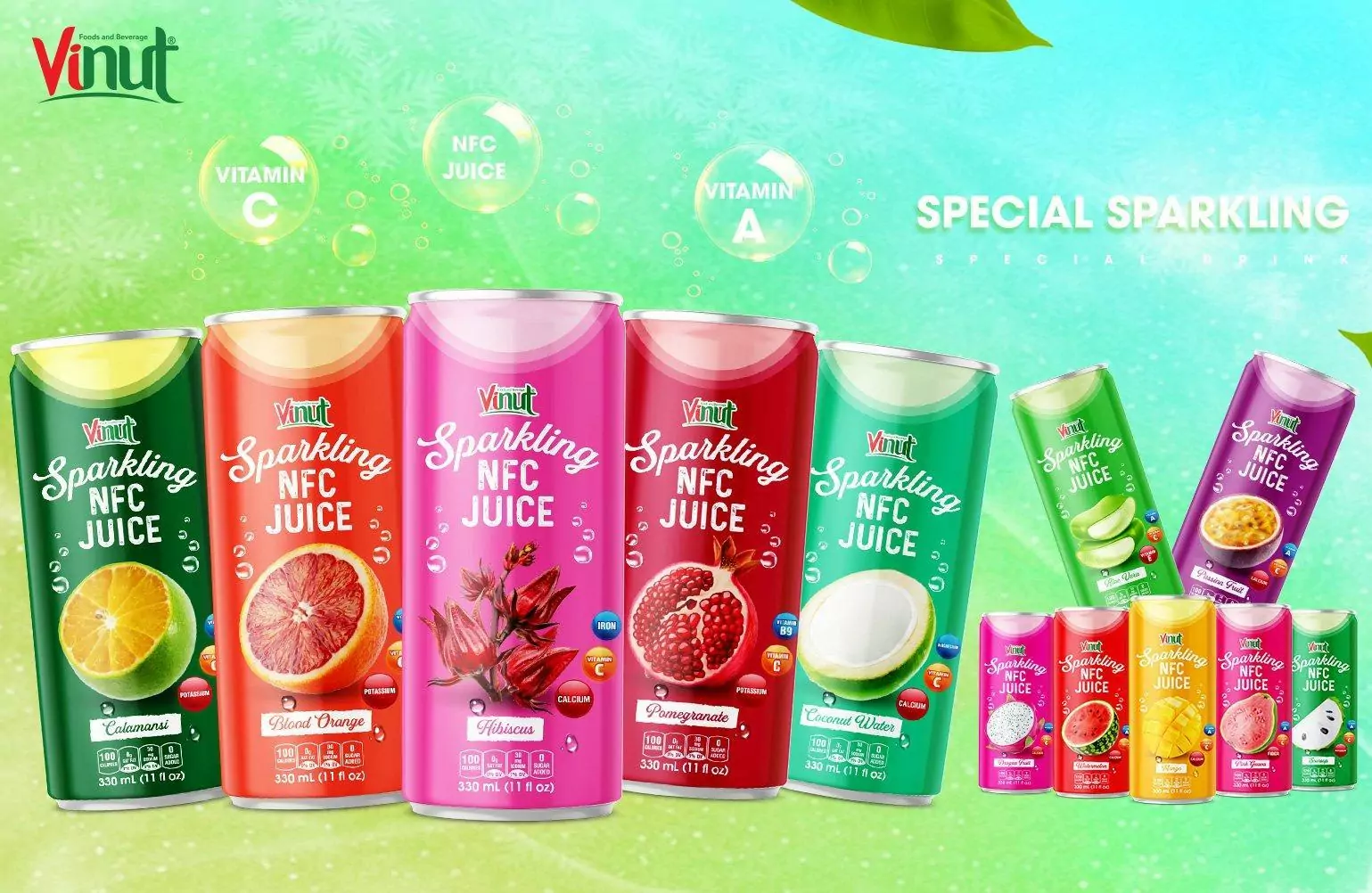
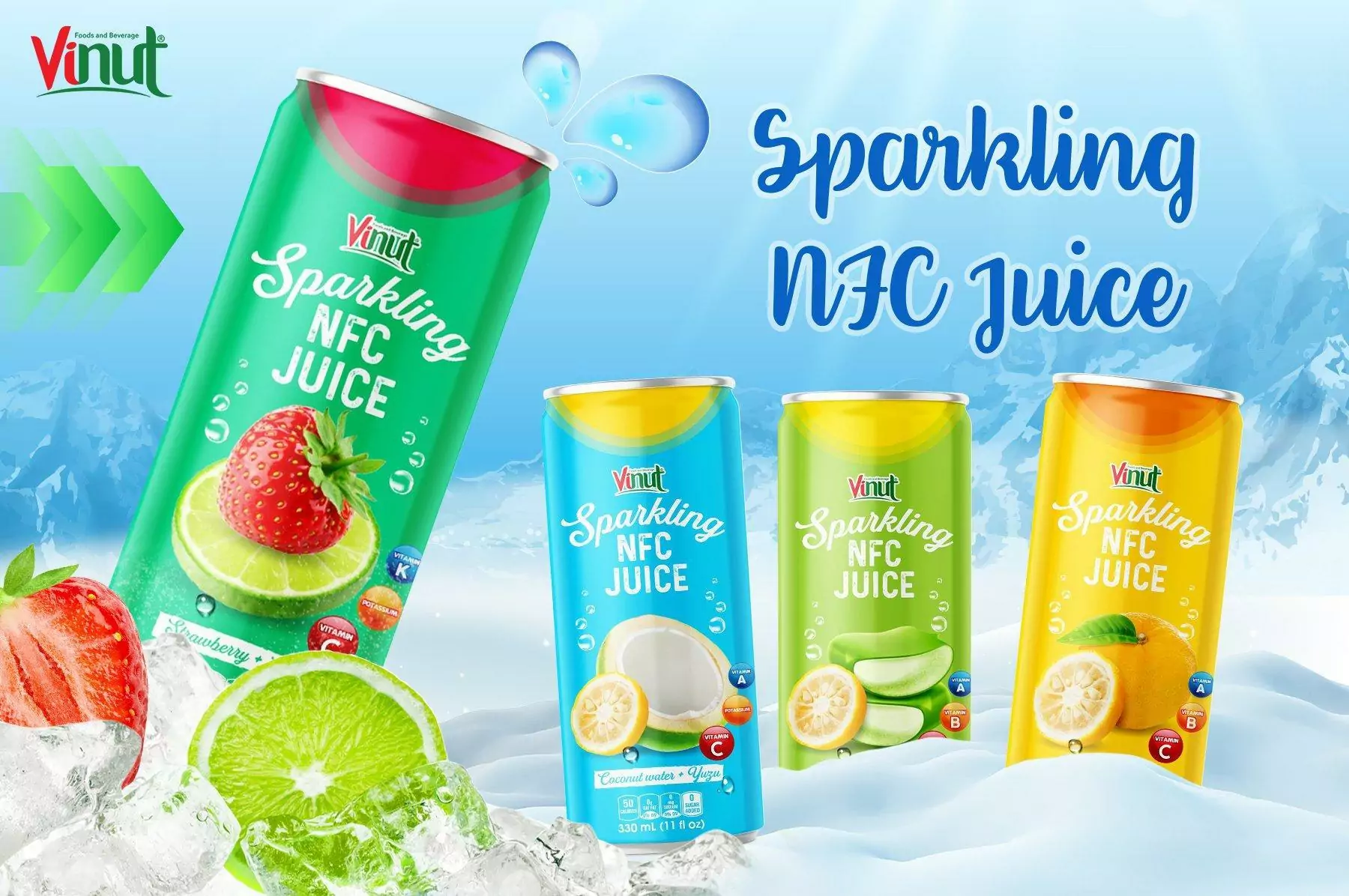
VINUT's Sparkling Drinks collection contains several beverage styles, from water-based variants to sparkling juice-style products. For illustration, the catalogue lists a Mint & Peach Mojito Sparkling Water in a 320 mL can and a sparkling NFC blood-orange juice drink in a 330 mL format. These catalogue names describe product positioning and pack format, not a verified side-by-side nutrition comparison or a promise about juice percentage.
VINUT products
Explore related drinks
View ingredients, sizes and packaging.
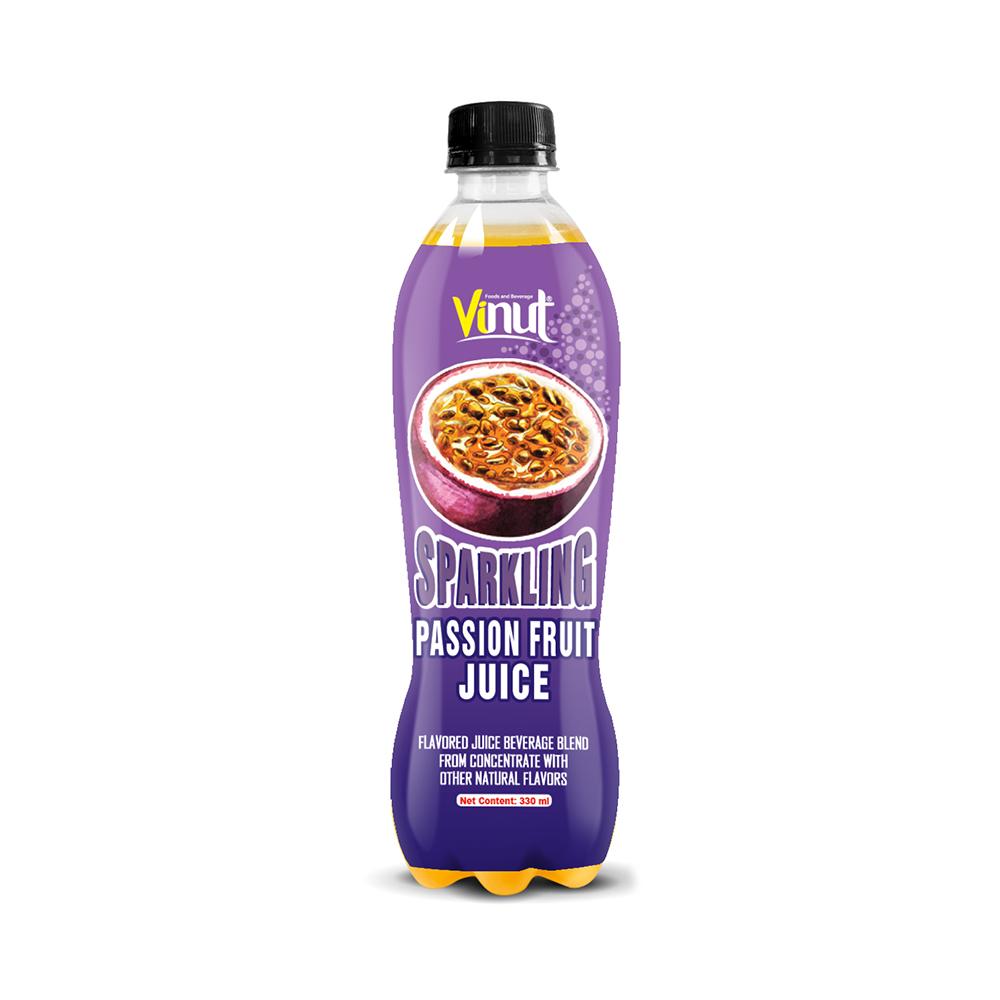
330ml VINUT Bottle Sparkling Passion fruit juice drink
330ml · bottle
View product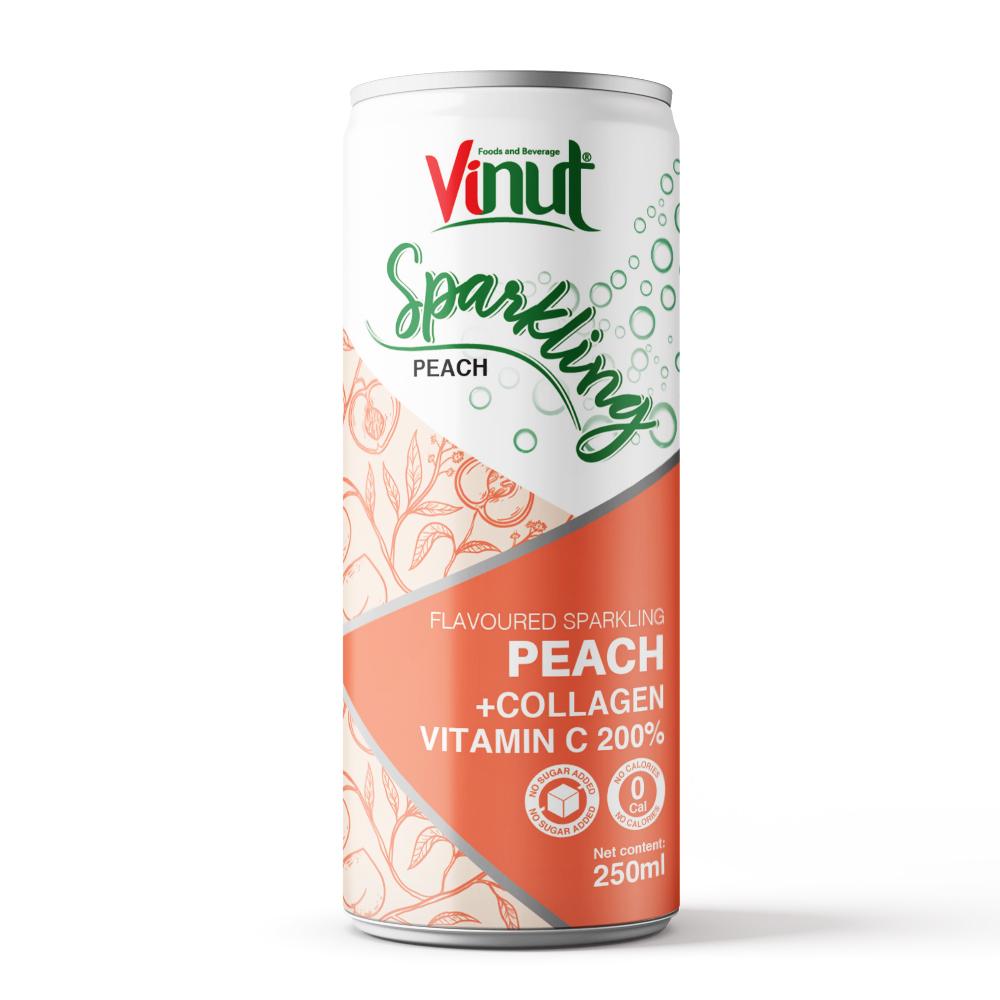
VINUT 250ml Peach with Collagen Sparkling water Vitamin C 200% Made with Real Fruit Juice (No Sugar added)
250ml · bottle
View product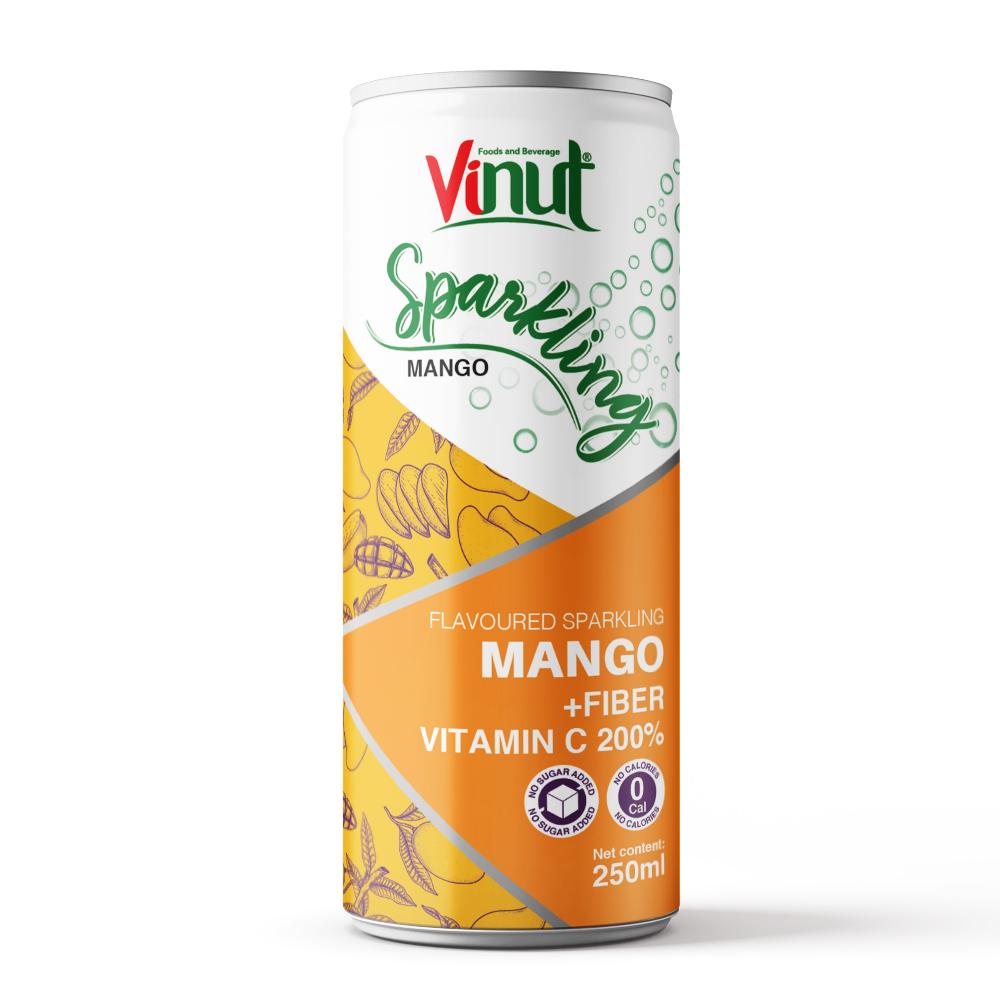
VINUT 250ml Mango with Fiber Sparkling water Vitamin C 200% Made with Real Fruit Juice (No Sugar added)
250ml · bottle
View product
The practical difference
Both drinks fizz because of carbon dioxide, but their liquid bases and other ingredients can differ substantially. Choose sparkling water when a water-forward experience appeals to you, or explore a sparkling fruit drink when you prefer a fruit-focused flavour. In either case, the final decision should come from the actual label, not from the word “sparkling” alone.
FAQ
Can sparkling water contain fruit flavour without containing fruit juice?
Yes. A sparkling water can use flavouring without necessarily containing fruit juice. The exact recipe and any applicable percentage-juice declaration depend on its full label and market. A fruit picture does not establish the juice content.
Does sparkling fruit juice automatically have more sugar than sparkling water?
No. The sugar content of either product depends on its actual ingredients and formulation. Compare Total Sugars and, when applicable, Added Sugars on the same serving or volume basis instead of assuming a whole category is sweeter.
Is soda water always sugar-free?
Plain club soda is typically carbonated water with mineral salts, but products sold under similar names may vary by market and formulation. Use the individual ingredients and nutrition declaration before claiming zero sugar.
Can a sparkling water with added fruit juice be called sparkling water?
Some products are presented as fruit-flavoured sparkling water even when the formulation includes juice. Marketing names and product classifications vary. Read the full ingredients and the relevant local declaration rather than using the name as proof.
Does the word NFC mean a sparkling drink is 100% juice?
No. NFC means Not From Concentrate and refers to a juice processing characteristic. It does not, by itself, establish the finished beverage's juice percentage, sugar content or other ingredients.
Will a drink lose its fizz when poured over ice?
Opening, pouring and leaving a carbonated drink exposed to air allow dissolved CO2 to escape. Ice and serving conditions can affect how quickly the bubbles are lost. Ice also adds water as it melts, which can make the drink taste less concentrated.
About this article
The VINUT editorial team publishes articles about beverage ingredients, product characteristics, and practical information for readers and international buyers.
Sources and references (8)
- VINUT — Soda Water and Sparkling Water, Difference You May Not Know
- The Open University — Fizzy Drinks: CO2 and bubbles
- Schweppes — Club Soda ingredients
- U.S. eCFR — 21 CFR 101.30 percentage juice declaration
- U.S. FDA — Added Sugars on the Nutrition Facts Label
- U.S. FDA — How to Understand and Use the Nutrition Facts Label
- VINUT — Sparkling Drinks product category
- VINUT — Mint & Peach Mojito Sparkling Water 320 mL