
Buyer Briefing
8 min read · 1,529 words
Vegetable juice can provide vitamins, minerals, fluids, antioxidants, and other naturally occurring plant compounds. However, traditional juicing removes much of the dietary fiber found in whole vegetables. Vegetable juice can complement a balanced diet, but it should not completely replace whole vegetables and fruits.
- Vegetable juice can provide vitamins, minerals, and antioxidants.
- Common ingredients include carrots, celery, cucumber, beetroot, and leafy greens.
- Fruit is sometimes added to improve flavor.
- Juicing removes much of the natural dietary fiber.
- Whole vegetables should remain part of the diet.
- Some packaged products can contain added sugar or sodium.
- Vegetable juice can contribute to daily fluid intake.
- There is no universal best time to drink it.
- Vegetable juice should not be treated as a detox or weight-loss solution.
- Reading the nutrition and ingredient labels helps when comparing products.
Listen to the article summary
AI-generated voice · English · 2:51
Read transcript
Vegetable juice is a beverage made by extracting liquid from vegetables, often including ingredients like carrots, celery, spinach, kale, and beetroot. Fruits such as apple or pineapple are sometimes added to enhance flavor. While it offers a convenient way to consume plant-based nutrients, it's important to understand that vegetable juice is not nutritionally identical to eating whole vegetables. Homemade juice allows for greater control over ingredients, while commercial options provide convenience. The nutritional value varies based on ingredients and processing, potentially offering vitamins like A, C, K, folate, potassium, and magnesium, along with naturally occurring antioxidants. For example, carrots provide beta-carotene, and leafy greens offer vitamin K and folate. Potential benefits include providing vitamins and minerals in an easy-to-consume format, supplying naturally occurring antioxidants that protect cells, and helping to increase vegetable variety in one's diet. It can also contribute to daily fluid intake and offers a convenient option for busy lifestyles. However, convenience does not make it nutritionally equivalent to whole vegetables. There are important disadvantages to consider. Traditional juicing removes much of the dietary fiber found in whole vegetables, which is crucial for digestive function and satiety. Fruit blends can increase the sugar content, and some packaged products may contain high levels of added sodium. Additionally, juice may be less filling than whole vegetables, which require chewing and retain more fiber. Therefore, vegetable juice should complement, rather than replace, whole vegetables. Whole vegetables generally retain more fiber and offer greater satiety. There's no universal best time to drink vegetable juice; it can be consumed with breakfast, alongside meals, or as part of a snack. It can be included regularly in a balanced diet, but reliance on it as the primary source of vegetables is not recommended. When choosing a packaged product, it's advised to read the ingredient list, check for added sugar and sodium content, review the serving size, and select products from reliable manufacturers. Claims that vegetable juice aids in "detoxing" or rapid weight loss should be approached carefully. The body has its own systems for processing waste, and weight management depends on overall energy intake, diet quality, physical activity, and other factors. In conclusion, a well-formulated vegetable juice can add variety and convenience to your diet, but it should always be part of a broader eating pattern that includes a variety of whole vegetables and fruits.
Vegetable juice benefits make this colorful beverage an appealing option for people looking to add more plant-based foods to their diet. Made by extracting liquid from vegetables, these drinks can provide vitamins, minerals, and naturally occurring plant compounds.
Popular ingredients include carrots, celery, cucumber, spinach, kale, and beetroot. Fruits such as apple, pineapple, orange, or berries are also sometimes added to create a sweeter and more approachable flavor.
However, vegetable juice is not nutritionally identical to eating whole vegetables. Understanding its benefits and limitations can help you decide how it fits into a balanced diet.
In this article, VINUT explores vegetable juice nutrition, potential benefits, disadvantages, ingredients, and practical tips for enjoying it.
I/ What Is Vegetable Juice?
Vegetable juice is a beverage produced by extracting liquid from one or more vegetables.
Depending on the recipe, it can contain a single vegetable or a combination of different ingredients.
Common vegetables used for juicing include:
Celery
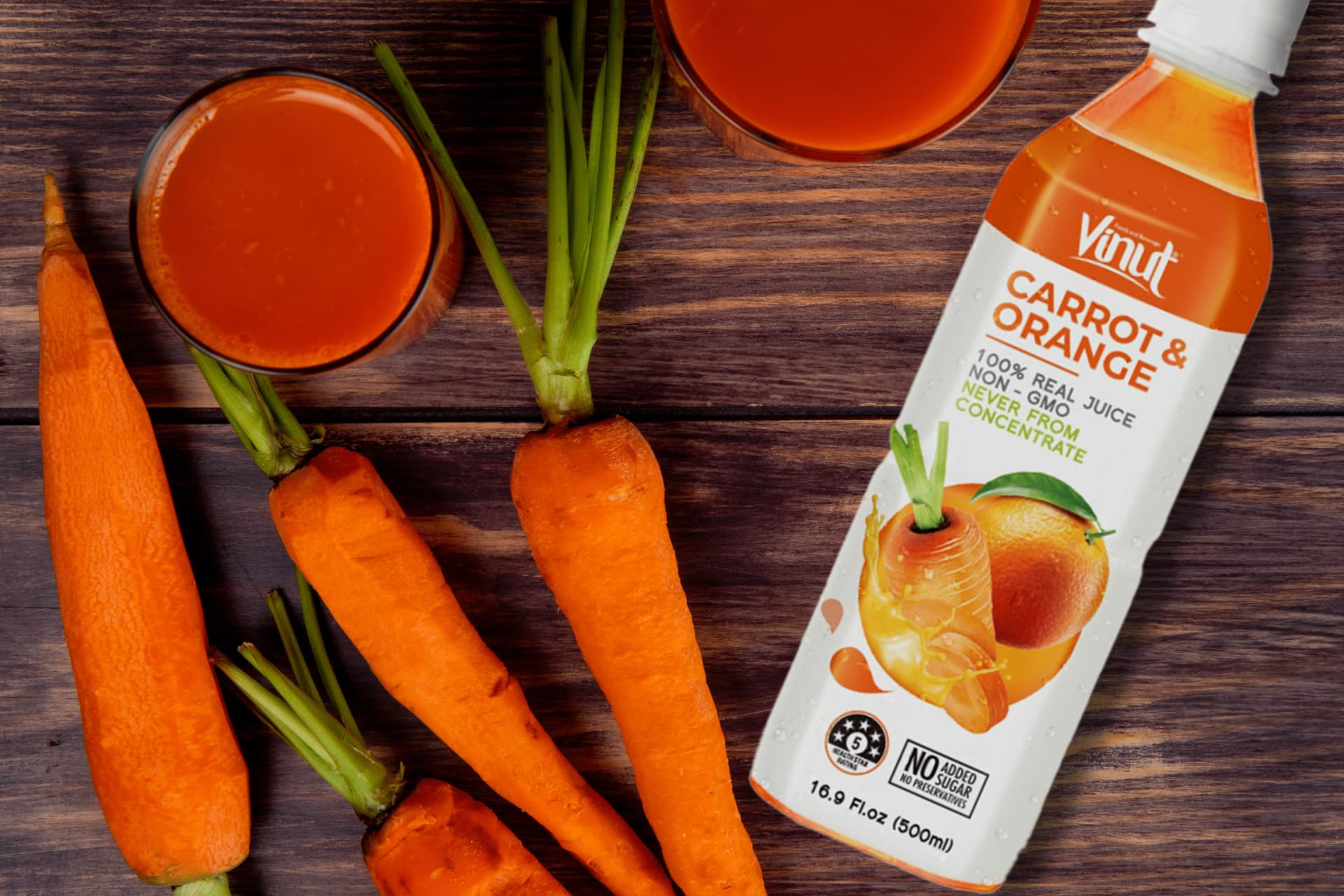
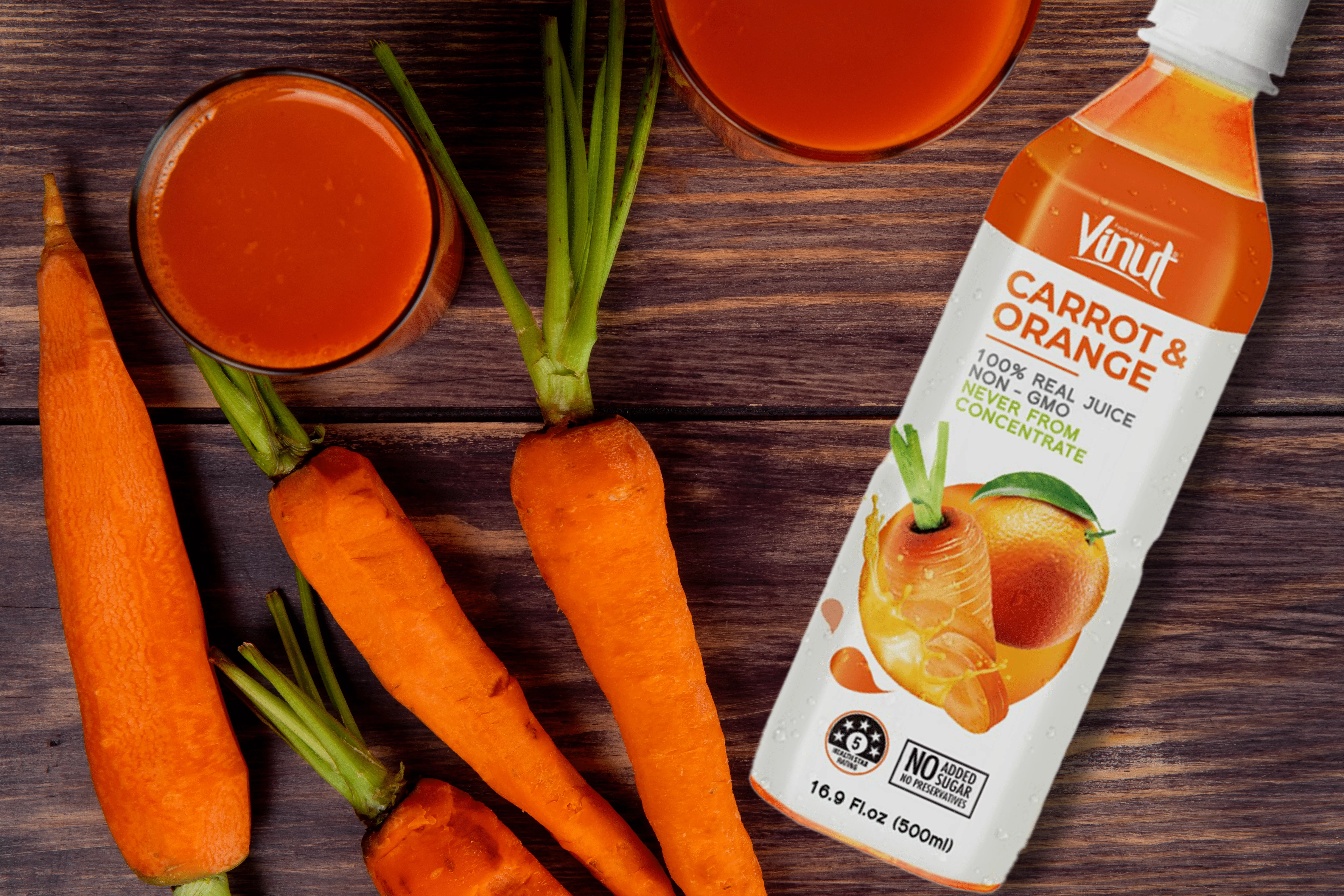
Carrots
Beetroot
Spinach
Kale
Cucumber
Swiss chard
Parsley
Mint
Wheatgrass
Some vegetable juices have an earthy, bitter, or grassy flavor. Fruits are therefore often added to balance the taste.
Popular fruit combinations include:
Apple
Pineapple
Orange
Kiwi
Berries
Lemon
Lime
The result can be a refreshing beverage combining the flavors and nutrients of several plant ingredients.
Homemade vs. Commercial Vegetable Juice
Vegetable juice can be prepared fresh at home with a juicer or purchased as a ready-to-drink product.
Homemade juice gives you greater control over the ingredients. Commercial products, meanwhile, offer convenience and consistent flavor.
When choosing packaged vegetable juice, check the ingredient list, nutrition information, serving size, sugar, and sodium content.
VINUT also develops fruit and vegetable beverages for consumers seeking convenient plant-based drink options.
II/ What Nutrients Are Found in Vegetable Juice?
The nutritional value of vegetable juice depends heavily on the ingredients and processing method.
Different vegetables provide different combinations of nutrients and plant compounds.
Depending on its formulation, vegetable juice may provide:
Vitamin A precursors such as beta-carotene
Vitamin C
Vitamin K
Folate
Potassium
Magnesium
Naturally occurring antioxidants
Various plant compounds
For example, carrots are well known for beta-carotene. Leafy green vegetables can provide vitamin K and folate, while tomatoes contain lycopene.
Juicing several vegetables together can therefore create a beverage with a diverse nutritional profile.
However, processing can change the amount of certain nutrients found in the final drink.
III/ What Are the Potential Vegetable Juice Benefits?
Vegetable juice can provide nutrients and plant compounds in a convenient format.
However, it should complement whole vegetables rather than completely replace them.
1. Provides Vitamins and Minerals
One of the primary vegetable juice benefits is its ability to provide nutrients from plant ingredients in an easy-to-consume beverage.
The exact nutrients depend on the vegetables used.
Carrot-based juices may provide beta-carotene, while leafy-green combinations can provide folate and vitamin K. Many vegetables also provide potassium and other minerals.
2. Provides Naturally Occurring Antioxidants
Vegetables contain numerous antioxidant compounds.
Depending on the ingredients, vegetable juice may contain carotenoids, polyphenols, vitamin C, and other plant compounds.
Antioxidants help protect cells against oxidative stress caused by free radicals.
However, antioxidant content can vary according to the ingredients, freshness, processing method, and storage conditions.
3. Can Help Increase Vegetable Variety
Not everyone finds it easy to include different vegetables in every meal.
Vegetable juice can provide another way to experience a wider variety of plant ingredients.
For example, one beverage might combine carrot, beetroot, celery, cucumber, and leafy greens.
This convenience can make vegetable-based beverages particularly appealing to people with busy lifestyles.
4. Contributes to Daily Fluid Intake
Vegetables such as cucumber, celery, and tomato naturally contain large amounts of water.
Juices made with these ingredients can contribute to daily fluid intake.
However, vegetable juice should not be considered a replacement for plain water.
Water remains an important everyday hydration choice because it provides fluid without additional calories, sugar, or sodium.
5. Can Be Convenient and Easy to Consume
Vegetable juice provides a convenient way to consume vegetable-derived nutrients.
Ready-to-drink products can be especially useful when preparing and juicing fresh vegetables is impractical.
The liquid format is also easy to incorporate into breakfast, lunch, or snacks.
However, convenience does not make juice nutritionally equivalent to whole vegetables.
IV/ What Are the Disadvantages of Vegetable Juice?
Vegetable juice has potential advantages, but there are also important nutritional considerations.
1. Contains Less Fiber Than Whole Vegetables
One of the biggest differences between juice and whole vegetables is dietary fiber.
Traditional juicing separates much of the fibrous pulp from the liquid. The final juice therefore usually contains considerably less fiber than the original vegetables.
Dietary fiber supports normal digestive function and contributes to satiety.
Whole vegetables should remain an important part of the diet even if you regularly drink vegetable juice.
2. Fruit Blends Can Contain More Sugar
Adding fruit can make vegetable juice sweeter and easier to drink.
However, increasing the proportion of fruit can also increase the amount of naturally occurring sugar in the beverage.
This does not mean fruit-containing juice must be avoided. Instead, consumers should consider serving size and the overall formulation.
3. Some Packaged Products Can Be High in Sodium
Certain commercial vegetable juices may contain added salt.
People monitoring sodium intake should check the nutrition label and compare products before purchasing.
Lower-sodium options may be available depending on the product category.
4. Juice May Be Less Filling
Whole vegetables require chewing and usually retain substantially more fiber.
As a result, they may provide greater satiety than juice.
Vegetable juice should therefore complement meals rather than automatically replace nutrient-dense whole foods.
V/ Is Vegetable Juice Better Than Whole Vegetables?
Vegetable juice and whole vegetables can both contribute to dietary variety, but they are not nutritionally identical.
Whole vegetables generally have an important advantage: fiber.
Keeping the entire vegetable retains more of its natural structure and dietary fiber. Juicing removes much of this material.
A simple comparison is:
Vegetable Juice | Whole Vegetables |
|---|---|
Convenient to drink | Require more preparation and chewing |
Can combine several ingredients | Retain natural food structure |
Provides vitamins and plant compounds | Provides vitamins and plant compounds |
Usually contains less fiber | Generally higher in fiber |
Easy to consume quickly | Often more filling |
For most people, the best approach is not choosing one or the other.
Vegetable juice can complement a diet that already includes a variety of whole vegetables and fruits.
VI/ When Is the Best Time to Drink Vegetable Juice?
There is no universal time of day when everyone needs to drink vegetable juice.
It can be consumed at different times depending on personal preference and the rest of the diet.
1. With Breakfast
Vegetable juice can accompany a balanced breakfast.
Pairing it with foods containing protein, healthy fats, and fiber can create a more complete meal.
2. Alongside a Meal
Serving vegetable juice with lunch or another meal is another simple option.
This approach also avoids treating juice as a complete meal replacement.
3. As Part of a Snack
A small serving can also accompany a balanced snack.
For greater satiety, pair it with foods that provide protein or fiber.
Examples include yogurt, nuts, whole grains, or other whole foods.
VII/ Can You Drink Vegetable Juice Every Day?
Vegetable juice can be included regularly in a balanced diet for many people.
However, there is no need to rely on it as the primary source of vegetables.
If you drink vegetable juice frequently, consider the following:
Keep whole vegetables in your diet: They provide important dietary fiber.
Check serving size: Larger servings can increase calorie, sugar, or sodium intake.
Review the ingredient list: Understand the balance between vegetables, fruits, and other ingredients.
Check added sugar: Vegetable juice does not necessarily need additional sweeteners.
Monitor sodium: Some packaged products may contain significant amounts.
Choose variety: Different vegetables provide different nutrients and plant compounds.
Consider your individual needs: People managing certain health conditions may require personalized dietary guidance.
Moderation and dietary variety remain more important than relying on a single beverage.
VIII/ How Do You Choose a Good Vegetable Juice?
Not all vegetable juices have the same nutritional profile.
Before buying a packaged product, check several pieces of information.
1. Read the Ingredient List
Look at which vegetables and fruits are actually included.
Ingredients are generally listed according to their proportion in the product, starting with the largest amount.
2. Check for Added Sugar
Vegetables and fruits already contain naturally occurring carbohydrates.
Checking the label can help identify whether additional sugar or sweeteners have been included.
3. Review Sodium Content
This is especially relevant for vegetable-based juices.
Compare the sodium content between products if limiting salt intake is important to you.
4. Check the Serving Size
Nutrition information applies to a specific serving.
If the bottle contains multiple servings, drinking the entire package changes the total amount of calories, sugar, sodium, and other nutrients consumed.
5. Choose Products From Reliable Manufacturers
Product quality also depends on ingredient sourcing, manufacturing processes, food safety, and storage.
Choose beverages from manufacturers that clearly provide product and nutrition information.
IX/ Does Vegetable Juice Help With Detox or Weight Loss?
Vegetable juice is sometimes marketed around concepts such as "detoxing" or rapid weight loss.
These claims should be approached carefully.
Your body already has organs and biological systems involved in processing and eliminating waste products. A specific juice is not required to "cleanse" the body.
Vegetable juice can be part of a balanced eating pattern. However, drinking juice alone does not guarantee weight loss.
Long-term weight management depends on overall energy intake, diet quality, physical activity, sleep, and other individual factors.
XII/ Conclusion
Vegetable juice benefits include providing a convenient source of vitamins, minerals, fluids, and naturally occurring plant compounds.
Its versatility also allows different vegetables and fruits to be combined into a wide range of flavors. This can make vegetable-based beverages easier to incorporate into different lifestyles.
However, vegetable juice should complement rather than replace whole vegetables. Traditional juicing removes much of the fiber that makes whole vegetables an important part of a balanced diet.
When choosing vegetable juice, consider the ingredients, serving size, sugar, and sodium content. A well-formulated vegetable juice can then become another convenient way to add variety to your overall diet.
FAQ
What are the benefits of vegetable juice?
Vegetable juice can provide vitamins, minerals, antioxidants, fluids, and plant compounds. Its nutritional profile depends on the vegetables and other ingredients used.
Is vegetable juice healthy?
It can be part of a balanced diet when consumed in appropriate portions. Products with excessive added sugar or sodium may be less suitable for frequent consumption.
Can I drink vegetable juice every day?
Vegetable juice can be consumed regularly by many people, but it should complement rather than replace whole vegetables.
Does vegetable juice contain fiber?
Traditional juicing removes much of the vegetable pulp, so juice usually contains substantially less fiber than whole vegetables.
Is vegetable juice better than whole vegetables?
They offer different advantages. Juice is convenient, while whole vegetables retain substantially more fiber and are generally more filling.
When is the best time to drink vegetable juice?
There is no universal best time. It can be consumed with breakfast, alongside meals, or as part of a balanced snack.
Can vegetable juice help with weight loss?
Vegetable juice alone does not cause weight loss. Long-term weight management depends on total dietary intake, physical activity, sleep, and other factors.
Does vegetable juice detox the body?
Vegetable juice provides nutrients and plant compounds, but it is not necessary for "detoxing." The body already has biological systems that process and eliminate waste.
About this article
The VINUT editorial team publishes articles about beverage ingredients, product characteristics, and practical information for readers and international buyers.