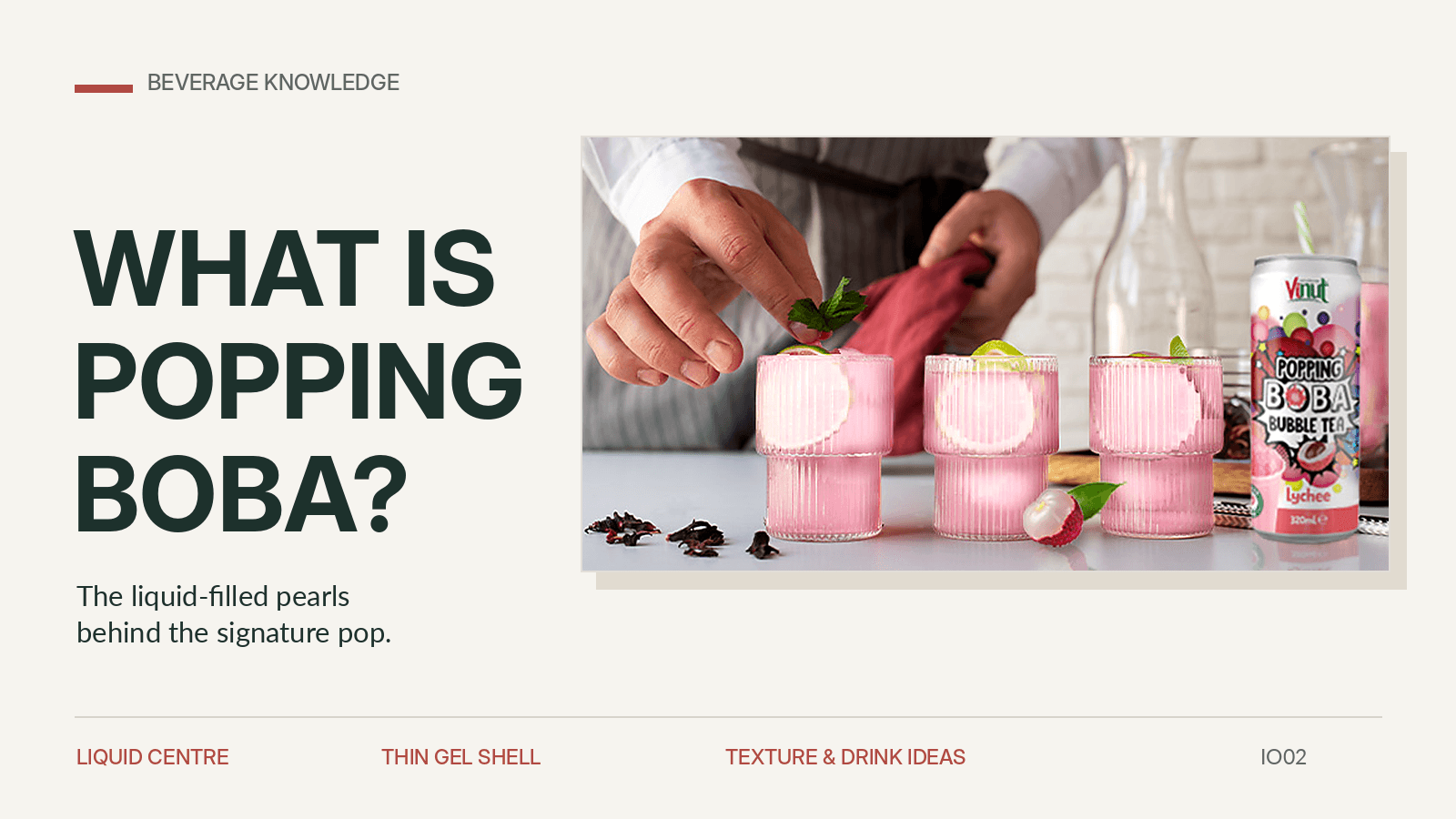

Buyer Briefing
5 min read · 910 words
Popping boba is a liquid-filled drink topping held together by a thin edible gel shell. It bursts when bitten, unlike chewy, starch-based tapioca pearls. The exact filling, nutrition and serving instructions depend on the finished product.
- A thin gel membrane holds the liquid centre.
- Alginate and calcium can form a shell by spherification, but commercial recipes vary.
- Traditional tapioca pearls are chewy cooked starch.
- Nata de coco adds a different chewy gel texture.
- Read the exact topping label for contents, nutrition and serving directions.
Popping boba are small, liquid-filled pearls used as toppings in drinks and desserts. Each pearl has a delicate edible gel shell surrounding flavoured liquid. When bitten, the shell breaks and releases the filling. This “pop” comes from the pearl itself, not from carbon dioxide or the bubbles in a fizzy drink. The contrast with chewy tapioca pearls is the easiest way to recognise it.
What makes popping boba different?
Unlike a solid jelly sweet or a cooked starch ball, popping boba are designed to hold a liquid centre until the shell opens. The pearls may look similar to the dark tapioca balls found in bubble tea, but their texture is different. A popping pearl usually gives a brief burst of liquid, while traditional tapioca pearls offer a longer, chewy bite.
You may also see the terms bursting boba or popping pearls. They describe the same general kind of topping, but they do not establish a specific fruit content, ingredient list or product formulation.
What is inside a popping boba pearl?
It helps to look at the two parts separately:
- Liquid centre: A flavoured liquid that may be based on juice, syrup, tea or another prepared mixture. Its ingredients and fruit content depend on the finished product.
- Thin shell: An edible gel layer that keeps the centre together until the pearl is bitten or pressed.
One well-known way of making this structure is spherification. In a Purdue University demonstration, juice containing sodium alginate is dropped into a calcium chloride solution. Contact with calcium allows a gel layer to form around the droplet. Science Buddies also explains how the conditions of this process affect sphere formation.
This is a useful explanation of the science, not a universal recipe for commercial popping boba. Manufacturers may use different ingredient systems, flavours and production methods. Only the actual product information can establish what a specific pack contains.
Popping boba vs tapioca pearls vs nata de coco
These toppings can all appear in a glass of bubble tea, but they create different eating experiences.
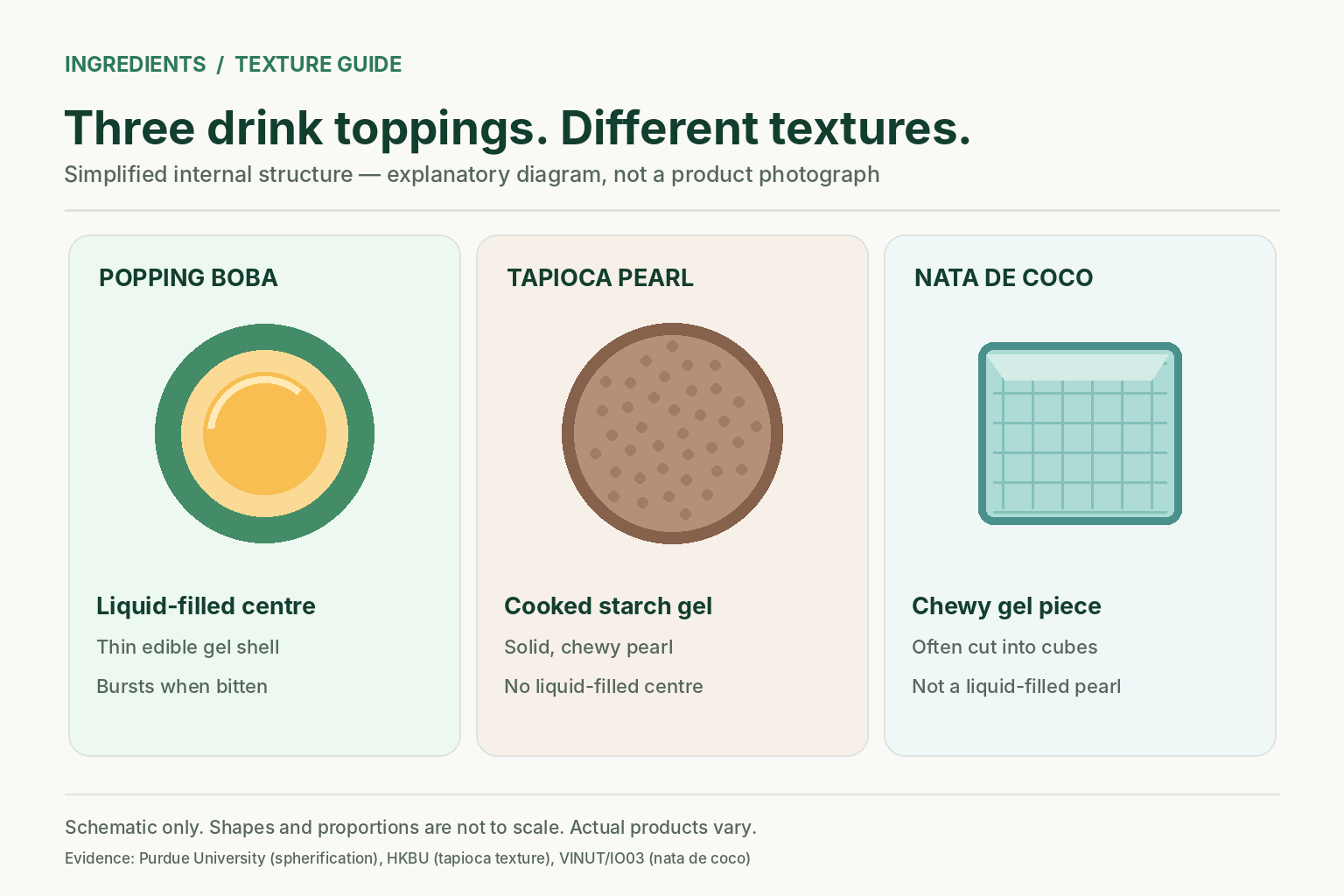
- Popping boba — a liquid burst: A thin gel shell encloses flavoured liquid. The filling releases when the shell breaks. Choose it when you want a contrasting burst within the drink.
- Tapioca pearls — a chewy bite: Traditional pearls are based on tapioca starch and develop their chew through cooking. Hong Kong Baptist University explains the role of starch gelatinisation in this texture.
- Nata de coco — chewy gel pieces: This coconut-water-derived gel is generally served as pieces or cubes rather than liquid-filled spheres. Read VINUT’s guide to nata de coco in drinks for more context.
The best choice is about the texture you want, not an automatic ranking of nutritional value or quality. Appearance alone cannot tell you how much juice or sugar a particular topping contains.
Drink ideas: where does popping boba fit?
A topping should complement the base drink rather than hide its flavour. Here are four ideas to consider, using commercially prepared pearls according to their serving instructions:
- Fruit iced tea: Try a fruit-flavoured pearl with chilled black or green tea. The liquid centre provides a separate burst alongside the brewed tea flavour.
- Fruit juice drink: Add a small portion of compatible pearls to a chilled fruit beverage for an extra textural element. The base drink and pearl filling may have different juice contents.
- Cold sparkling drink: Combine the pearls with a carbonated base when the topping’s instructions permit it. The drink supplies the fizz, while the pearls supply the burst.
- Smoothie or yogurt drink: Serve suitable pearls as a topping rather than assuming they should be blended. Check the ingredients and any dairy or allergen requirements of the complete drink.
These are serving ideas, not tested recipes or claims about a particular VINUT product. If you prefer a step-by-step preparation project, use a separate popping boba recipe guide rather than treating this ingredient explainer as a formula.

How to read a popping boba label
Before choosing a topping, use the pack to answer four practical questions:
- What is the liquid made from? Check the ingredient list and any declared juice percentage. A fruit-flavour name or image is not proof that the centre is 100% fruit juice.
- Which gelling ingredients are used? Sodium alginate and calcium can explain the process, but they should not be assumed to appear on every commercial label.
- What is the complete product composition? Look for actual nutrition information, relevant allergen statements and dietary claims. Do not infer these from the topping category.
- How should it be served and stored? Follow the manufacturer’s directions for the exact pack, especially preparation, temperature and handling after opening.
Use clean utensils when serving and avoid applying cooking directions for tapioca pearls to a different ready-to-serve topping. If the pack does not give enough information for a particular intended use, check with its supplier rather than guessing.
The main takeaway
Think of popping boba as liquid inside a thin gel shell. That one structural difference explains why it bursts while tapioca pearls and nata de coco are chewy. Choose the topping for its intended texture, then use the actual label to understand the filling, ingredients and serving requirements. To explore beverage bases, browse the VINUT beverage catalogue without assuming that every drink shown contains popping boba.
FAQ
Does mango-flavoured popping boba necessarily contain mango juice?
No. A flavour name identifies the intended taste, not a guaranteed quantity or percentage of fruit juice. Check the ingredient list and any explicit juice-content declaration on the actual pack before describing its filling as mango juice.
Should I boil packaged popping boba like tapioca pearls?
Do not assume the preparation is the same. Some packaged popping pearls are intended for direct serving, while traditional tapioca pearls are commonly cooked to develop their chewy texture. Follow the instructions for your particular topping and do not boil it unless the manufacturer directs you to.
Can popping boba be served in hot tea or coffee?
Suitability for hot drinks depends on the specific product and its serving instructions. If hot service is not covered by the label, do not assume the pearls will keep their intended texture. A cooled tea or other permitted cold base is a simpler option.
Will popping boba make a still drink fizzy?
No. The burst happens when the thin gel layer opens and releases the liquid filling. It does not add carbonation to the surrounding drink. To make a fizzy drink, select an appropriately carbonated beverage base separately.
How should I keep leftover popping boba after opening the package?
Follow the actual manufacturer's opened-pack storage directions, including any required refrigeration and use-by period. Use clean serving utensils and keep the pack properly closed as directed. There is no reliable single shelf life that applies to every product.
Are all popping boba pearls vegan, dairy-free or gluten-free?
No category-wide assurance is possible. An alginate-based gelling method does not establish the full commercial recipe or possible cross-contact. Check the finished product's ingredient and allergen information, and any verified certification relevant to your dietary needs.
About this article
The VINUT editorial team publishes articles about beverage ingredients, product characteristics, and practical information for readers and international buyers.