

Buyer Briefing
5 min read · 902 words
Grape juice is a sweet, antioxidant-containing beverage made by pressing grapes. One cup of unsweetened juice has about 150 calories and roughly 35–40 g of sugar, along with potassium and polyphenols. It can fit into a balanced diet in moderation, but whole grapes offer more fiber.
- Grape juice contains polyphenol antioxidants and potassium, plus a small amount of iron.
- Vitamin C is often added during processing, so check the label.
- One cup of unsweetened juice has about 150 calories, and sweetened versions can reach 200 or more.
- A cup contains roughly 35–40 g of sugar, so moderation matters.
- Choose 100% juice without added sugar, and pair it with whole fruit for fiber.
Listen to the article summary
AI-generated voice · English · 2:11
Read transcript
Grape juice, a popular beverage, is made by pressing fresh grapes and can be enjoyed alone or as a base for other drinks. VINUT explores its nutritional aspects, noting that sweetness varies with grape type, ripeness, and whether sugar has been added. It's important to distinguish between "100% juice" and "juice drink" or "juice cocktail" by checking labels. One cup, or about 240 milliliters, of unsweetened grape juice typically contains around 150 calories and 35 to 40 grams of sugar, mostly naturally occurring. It provides a useful amount of potassium, which supports blood pressure and muscle function, and a small amount of iron. Grape juice also contains plant compounds like polyphenols and flavonoids, which act as antioxidants. Purple grape juice, specifically, may contain small amounts of resveratrol. While these compounds are being studied for potential links to heart and metabolic health, grape juice should not be considered a treatment for any disease. Naturally, grape juice contains only small amounts of vitamin C, though many commercial products are fortified with it, so checking the label is key. Because grape juice is relatively high in sugar and low in fiber, drinking large amounts regularly can contribute to weight gain and blood sugar spikes. For this reason, whole grapes are generally considered the better everyday choice, as they offer more fiber and are less concentrated in sugar per serving, promoting greater satiety. Dietary guidelines suggest keeping fruit juice intake to a small daily portion, typically about one small cup or less per day, and prioritizing whole fruit for most fruit servings. When choosing grape juice, opt for 100% juice with no added sugar and consume it in modest portions as part of a balanced diet. If you have diabetes or other dietary restrictions, it's advisable to consult a healthcare professional.
Grape juice is a popular beverage made from the juice of fresh grapes. It is enjoyed by people of all ages, and it is a refreshing and delicious alternative to other sweet drinks. Grape juice can be found in various forms, including concentrated, frozen, or freshly squeezed. In this article, VINUT explores what grape juice is, its nutritional benefits, and how many calories and how much sugar are in a cup, so you can decide how it fits into your diet.
1. What Is Grape Juice?
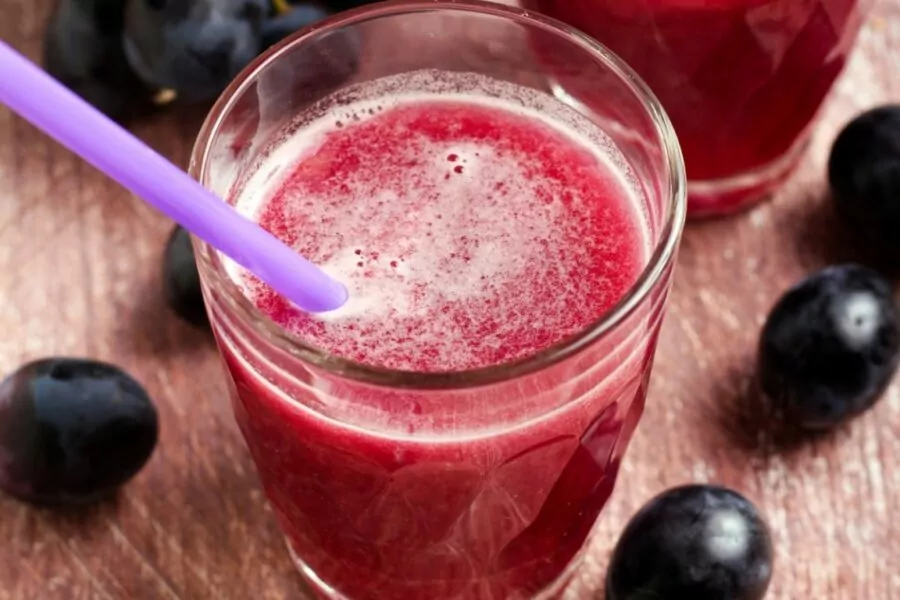
Grape juice is a liquid extracted from grapes by pressing them. It can be consumed as a standalone drink or used as a base for other beverages, and it is also the starting point for wine. After the grapes are crushed and pressed, the juice is typically filtered and may be pasteurized. Depending on the process, skins and seeds may be partly or fully separated. Purple grape juice, for example, gets much of its color and polyphenols from the skins.
Grape juice is typically sweet, although sweetness varies with the grape variety, ripeness, and whether sugar has been added during production. Always check the label: "100% juice" and "juice drink" or "juice cocktail" are very different products.
Key points:
Grape juice is a liquid extracted from grapes by pressing them.
It can be enjoyed on its own or used as a base for other beverages.
Sweetness depends on the grape type, ripeness, and any added sugar.
2. What Are the Nutritional Benefits of Grape Juice?
Grape juice provides several nutrients and plant compounds. Approximate values for one cup (about 240 ml) of unsweetened juice are shown below, though they vary by brand and grape variety. You can check exact figures in USDA FoodData Central.
Nutrient (per 1 cup, unsweetened) | Approximate amount | Why it matters |
|---|---|---|
Calories | ~150 kcal | Energy, mostly from natural sugars |
Sugar | ~35–40 g | Naturally occurring; watch portions |
Potassium | ~250–300 mg | Supports blood pressure and muscle function |
Iron | Small amount | Helps carry oxygen in the blood |
Polyphenols | Varies (higher in purple juice) | Plant antioxidants |
2.1 What Antioxidants Are in Grape Juice?
Grapes contain polyphenols and flavonoids, and purple grape juice may also contain small amounts of resveratrol. These plant compounds act as antioxidants, helping neutralize free radicals that contribute to oxidative stress. Researchers continue to study their potential links to heart and metabolic health, but grape juice should not be viewed as a treatment or preventive measure for any disease. For an overview of how antioxidants work in a balanced diet, see the Harvard Nutrition Source.
2.2 Does Grape Juice Contain Vitamin C?
Naturally, grape juice contains only small amounts of vitamin C. Many commercial products are fortified with added vitamin C, which is why labels often show a high percentage of the daily value. Vitamin C supports a healthy immune system and helps the body absorb iron from plant-based foods. To get more of it from whole foods, explore fruits that are naturally high in vitamin C.
2.3 Is Grape Juice a Good Source of Potassium?
Yes, grape juice provides a useful amount of potassium, a mineral that helps regulate blood pressure and supports normal muscle and nerve function.
2.4 How Much Iron Is in Grape Juice?
Grape juice contains a small amount of iron, which is needed to transport oxygen and produce red blood cells. It is not a major iron source, so it should not replace iron-rich foods.
3. How Many Calories and How Much Sugar Are in Grape Juice?
The calories in grape juice depend on the grape variety, whether sugar or sweeteners have been added, and how much you drink. General guidelines:
One cup of unsweetened grape juice contains around 150 calories.
One cup of sweetened grape juice may contain 200 calories or more, depending on added sugar.
A cup typically has around 35–40 g of sugar, most of it naturally occurring.
Because grape juice is relatively high in sugar and low in fiber, drinking large amounts regularly can contribute to weight gain and blood sugar spikes. If you are watching your calorie intake, choose unsweetened varieties and keep portions modest.
3.1 Is Grape Juice Healthier Than Whole Grapes?
Whole grapes are generally the better everyday choice. Approximate values are shown below, based on typical USDA data; check the label or database for precise numbers.
Per typical serving (approx.) | Grape juice (1 cup) | Whole grapes (1 cup) |
|---|---|---|
Calories | ~150 kcal | ~105 kcal |
Sugar | ~35–40 g | ~23 g |
Fiber | Under 1 g | ~1.5 g |
Satiety | Lower | Higher |
Whole grapes provide more fiber and are less concentrated in sugar, so they keep you fuller. Juice is convenient, but it is best treated as an occasional drink rather than a replacement for whole fruit.
3.2 How Much Grape Juice Should You Drink?
Many dietary guidelines, including the Dietary Guidelines for Americans, suggest keeping fruit juice to a small daily portion and getting most fruit servings from whole fruit. As a practical rule, aim for about one small cup (roughly 240 ml) or less per day, choose 100% juice with no added sugar, and check with a healthcare professional if you have diabetes or other dietary restrictions.
4. Conclusion
Grape juice is a tasty beverage that offers polyphenol antioxidants, potassium, and, in many products, added vitamin C. It is also calorie- and sugar-dense, so it works best as an occasional part of a balanced diet rather than a daily staple. Choose 100% juice without added sugar, keep portions modest, and enjoy whole fruit for fiber. If you like the convenience of a ready-to-drink option, explore VINUT's range of 100% fruit juice.
What Else Should You Read About Healthy Drinks and Nutrition?
FAQ
Is grape juice good for you?
In moderation, 100% grape juice provides polyphenol antioxidants and potassium, but it is also high in natural sugar and low in fiber, so portion size matters.
How many calories are in a cup of grape juice?
One cup of unsweetened grape juice has roughly 150 calories, while sweetened versions can reach 200 or more.
How much sugar is in grape juice?
A cup typically contains around 35–40 g of sugar, mostly naturally occurring, so check the label for added sugars.
Is grape juice healthier than whole grapes?
Whole grapes are generally the better choice because they provide fiber and are less concentrated in sugar per serving.
How much grape juice should I drink per day?
Most dietary guidance suggests keeping fruit juice to about one small cup (roughly 240 ml) or less per day, alongside whole fruit.
About this article

The VINUT editorial team publishes articles about beverage ingredients, product characteristics, and practical information for readers and international buyers.